

Traveler holding passport, boarding pass, and phone with travel insurance at an airport check-in area
Will Travel Insurance Cover Flight Changes?

Last month, a friend of mine got stuck with a $450 fee when she had to postpone her Vegas trip. Her father went into emergency surgery three days before departure. She called me furious: "I thought my travel insurance covered this!" It did—but only after she jumped through specific hoops to prove it.
Flight changes drain your wallet fast. Airlines charge anywhere from $75 to $300 in fees alone, and that's before counting fare increases that can double your costs. Whether insurance picks up this tab isn't a simple yes or no. Three things determine coverage: why you're making the change, which policy you boughta, and how well you document everything.
Here's the disconnect: most people think buying travel insurance means flexibility to modify plans whenever needed. Wrong. Insurers separate airline-forced changes from ones you request yourself. They'll scrutinize your reason and match it against a specific list of acceptable scenarios. Miss the mark? You're paying out of pocket despite having coverage.
How Travel Insurance Handles Flight Changes
Think of travel insurance as having two separate lanes—one for changes airlines impose, another for changes you initiate. Which lane you're in determines everything about your reimbursement.
Airlines mess with schedules constantly. When they push your departure back five hours, cancel your nonstop and rebook you with two connections, or shift your flight to a different day entirely, you're in the airline-initiated lane. Policies generally handle these situations by reimbursing what you lose beyond what the carrier refunds. Miss your prepaid Colosseum tour in Rome because United pushed your arrival to the next day? Insurance typically covers that $125 tour you can't get back from the tour company.
Your side of things works differently. Need to reschedule because you got the flu? That might qualify. Want to leave three days earlier because you're not enjoying your destination? That won't. Personal-reason changes receive coverage exclusively when your situation matches specific scenarios written into your policy documents—serious illness, immediate family death, jury duty, mandatory work obligations the boss won't excuse.

Author: Dylan Mercer;
Source: visitmuseumcampussouth.com
Here's what actually happens when you file: You submit a claim with receipts and proof documents. An adjuster reviews whether your reason appears on the covered list. They verify your costs, check what the airline already refunded, then calculate the gap. You get that difference, minus whatever deductible your policy carries.
One thing catches people constantly: insurance never doubles up payments. Delta already refunded your ticket? Great—but don't expect insurance to pay you again. These policies fill coverage gaps, not hand out bonus money.
When Travel Insurance Covers Airline Schedule Changes
Airlines tweak times daily. Your 10:15 AM departure becomes 10:45 AM. Does that matter for insurance purposes? Usually not. Policies require changes big enough to genuinely disrupt your trip before they'll process claims.
What Counts as a Significant Schedule Change
"Significant" has actual definitions, and they vary between insurance companies. Here's what typically qualifies:
Three-hour shifts represent the standard threshold for most policies. Your flight leaving at 7 AM gets moved to 10 AM? That crosses the line. Some insurers drop this to two hours on international routes where connections matter more. Others raise it to six hours for domestic flights. Pull out your policy—the exact number matters when you're sitting at hour 2.5 of a delay.
Complete cancellations always count, period. Doesn't matter if the airline immediately books you on another flight. When they cancel your confirmed reservation, that triggers coverage for knock-on costs—the hotel night you now need, the dinner reservation you'll miss, the rental car day you're paying for without being there.
Route modifications involving different airports flip the switch too. Booked into LaGuardia but they switched you to Newark? That's substantial. Signed up for nonstop service but now you're connecting through two cities? Covered. Equipment swaps that bump you to tomorrow's flight because the smaller plane has no room? Same deal.
I've seen policies cover situations where airlines change arrival times by less than three hours specifically because the new timing made travelers miss cruise departures or pre-paid transfers. Context matters. A two-hour change that makes you miss an entire cruise might still qualify even if the policy says "three hours."

Author: Dylan Mercer;
Source: visitmuseumcampussouth.com
Documentation Required for Claims
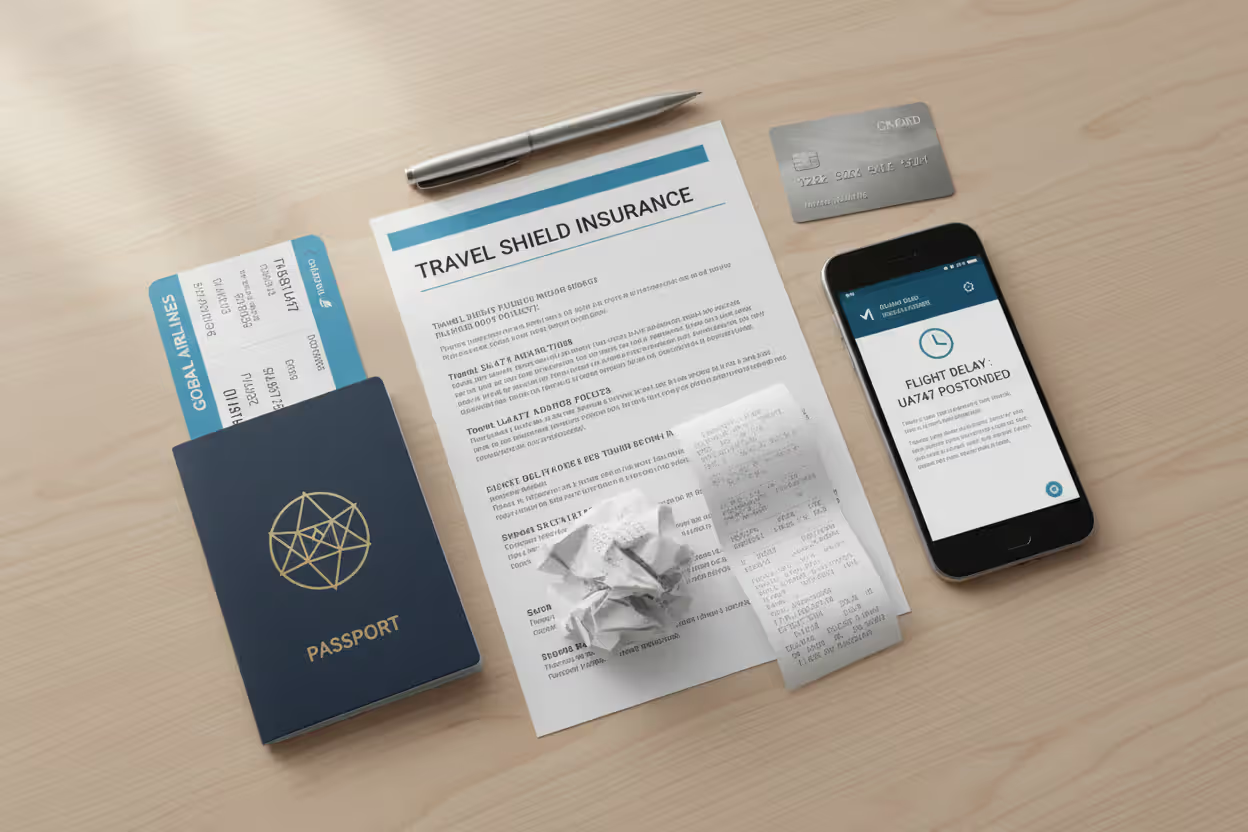
Claims live or die on paperwork. You need every scrap of evidence showing what changed, when you learned about it, and what it cost you.
Start with the airline's notification. Screenshot that text message or email the instant you receive it. Carriers send these alerts, then purge them from systems. Grab it immediately. If you learned about the change through the airline app, screenshot those screens too—date stamps visible.
Print your original booking confirmation showing the flights you actually purchased. Then grab the new itinerary showing what the airline changed them to. You're establishing before/after evidence.
Call the airline and specifically request a letter stating they modified your schedule. Say: "I need written documentation of this schedule change for insurance purposes." Agents know this request. Most airlines generate these letters through customer service portals, but phone reps can email them too. This letter becomes crucial evidence because it's the airline formally admitting they changed things.
Every additional cost needs a receipt. Extra hotel night? Receipt with confirmation number. Meals during an unexpected 8-hour layover? Keep those fast food receipts. Taxi to a different airport because your connection vanished? Receipt. Prepaid tour you missed? Cancellation confirmation showing no refund. Stack this evidence like you're building a legal case, because essentially you are.
Your credit card statement helps too. It proves what you originally paid and when. If the airline credited your account for anything, screenshot that transaction or get a statement showing the credit. Insurers only cover actual losses, so they'll deduct any money the airline already returned.
Author: Dylan Mercer;
Source: visitmuseumcampussouth.com
Coverage for Voluntary Flight Changes
Now we're in trickier territory. When you need to change flights for personal reasons, coverage narrows dramatically. Standard policies cover voluntary changes only when specific, unforeseeable events force your hand.
Sudden serious illness tops the covered list. We're not talking about a headache or mild cold. Your kid spikes a 104-degree fever? Covered. You throw out your back and physically can't sit on a plane? Covered. You're simply tired and want to postpone? Not covered. The medical issue must be severe enough that a reasonable person would cancel travel plans, and you'll need a doctor's note on letterhead stating you're medically unable to travel during your scheduled dates.
Family death or critical illness triggers coverage universally. Your mother has a stroke the day before your Cancun trip? Every policy covers changing your flight to be with her. This extends to immediate family—parents, siblings, spouse, children. Your second cousin twice removed? Probably not, unless your specific policy defines family more broadly. The insurer will want a death certificate or hospital documentation proving the emergency.
Employer mandates count in many policies, but documentation proves everything. Your boss suddenly requires you to attend a critical meeting during your approved vacation? You'll need a letter on company letterhead explaining the work obligation and confirming your vacation was previously approved. The requirement must be truly mandatory—not "encouraged to attend" but "required to attend or face disciplinary action."
Jury duty summons, subpoenas, military deployment orders—these all typically qualify. Natural disasters that make your destination legally inaccessible or your home uninhabitable might trigger coverage too. Hurricane destroyed the resort where you're staying? Usually covered. Hurricane is approaching but hasn't hit yet and you're just nervous? Depends on the policy's severe weather provisions.
What definitely won't work: changing your mind about the destination, booking a better deal elsewhere, relationship breakups (unless you're canceling a honeymoon after calling off the wedding), wanting different flight times for convenience, minor work preferences, or general schedule changes you saw coming.
Pre-existing conditions create another hurdle. Have chronic back pain that flares up before your trip? Most policies exclude this unless you bought insurance within 10-21 days of your first trip payment and your condition was stable during the lookback period—usually 60 to 180 days before purchase.
Types of Travel Insurance That Include Flight Change Protection
Different policy types offer wildly different coverage levels. Picking the wrong one means paying for protection you don't actually get.
| Policy Type | Covers Flight Changes? | Personal-Reason Changes | Airline-Caused Changes | What You'll Pay |
| Trip Cancellation | Sometimes | Only specific listed reasons | Yes, when substantial | 4-8% of trip cost |
| Trip Interruption | Sometimes | Only specific listed reasons | Yes, when substantial | 5-9% of trip cost |
| Cancel For Any Reason | Yes | Yes, but 50-75% reimbursement max | Yes, full coverage when substantial | 8-12% of trip cost |
| Flight Insurance Only | Limited | Almost never | Yes, flight costs only | $15-$75 per ticket |
Standard trip cancellation forms the base layer most travelers buy. These policies reimburse prepaid, non-refundable costs when you cancel before traveling—assuming your reason appears on the approved list. For flights specifically, this means if you cancel original tickets due to an approved reason and book new ones, the policy covers what you lost on the original tickets after subtracting whatever the airline refunded, plus change fees if applicable.
Trip interruption coverage kicks in after you've already started traveling. Already in Paris but your house floods back in Seattle? Trip interruption covers changing your return flight to get home early, including change fees and potentially premium costs for last-minute booking. Some policies even cover extra costs to get home faster, like upgrading to business class on the only flight with availability.
Cancel For Any Reason policies represent maximum flexibility but come with catches. CFAR genuinely lets you cancel or change for any reason whatsoever—you got bored with the idea of going, found a cheaper option, decided to extend your stay, whatever. The catch? You only get 50-75% reimbursement, not 100%. You must purchase CFAR within 10-21 days of your initial trip deposit. You'll pay 40-60% more in premiums. But if you value flexibility above all else, CFAR delivers.
Flight-only insurance products focus exclusively on air travel rather than your entire trip. These standalone policies cover airline-caused schedule changes, delays, and cancellations but typically ignore hotels, tours, cruises, or other components. They cost less than comprehensive coverage—$25 instead of $200—but protect less too.
Credit card travel benefits surprise many travelers who don't realize they already have coverage. Premium travel cards—think Chase Sapphire Reserve, American Express Platinum—often include trip cancellation and interruption benefits when you buy flights with the card. Coverage varies wildly by issuer and card tier. My Chase Sapphire Preferred covers up to $10,000 per trip for cancellations due to covered reasons. Check your card's benefits guide or call the number on the back.

Author: Dylan Mercer;
Source: visitmuseumcampussouth.com
Common Exclusions and Limitations
Even comprehensive policies have boundaries. These exclusions deny more claims than anything else.
Buyer's remorse never, ever qualifies under standard coverage. Changed your mind about visiting Nashville? Found Miami tickets $200 cheaper three days after booking Dallas? Simply don't feel like traveling anymore? Standard policies offer zero help. Only CFAR addresses these scenarios, and even then you're eating 25-50% of costs.
Fare differences between original and replacement flights get complicated. Original ticket cost $400, replacement costs $900. Most policies cover the change fee—say $200—but whether they cover the $500 fare difference depends on why you're changing and what your policy says. Some cap fare difference coverage at specific amounts ($500 maximum). Others exclude fare differences entirely unless you're rebooking last-minute due to an emergency where expensive flights are your only option.
"Better deal" situations get denied instantly. Found cheaper flights after booking? Discovered an airline sale? Want to switch carriers for better service? Insurance doesn't reward you for shopping around post-purchase. Coverage protects against losses from unforeseen problems, not opportunities to upgrade your arrangements.
Convenience changes—preferring different times, avoiding layovers, flying from a closer airport—fall completely outside standard coverage boundaries. These reflect personal preferences rather than insurable events.
I see this constantly—travelers assume their policy covers any reason they might want to change flights. Reality check: standard policies have extremely specific triggering events. Read your covered reasons list before purchasing, not after you need to file a claim. The disappointment when someone discovers their reason isn't covered? Totally preventable with five minutes of reading beforehand
— Maria Gonzalez
Known circumstances at purchase time never qualify. Booking a flight while knowing you might need to change it for an upcoming work commitment? That's not unforeseeable, so changes related to that commitment won't be covered. Hurricane already tracking toward Cancun when you bought insurance? Storm-related changes probably won't qualify under that policy.
Pre-existing medical conditions get excluded unless you meet very specific requirements. Chronic condition flares up and prevents travel? Standard policies won't cover resulting changes unless you bought insurance within the window after your first trip payment and your condition was stable during the lookback period.
Airline-offered alternatives create limitations too. Airline offers free changes because they modified your schedule, but you refuse and book with a competitor at higher cost? Insurance probably won't cover the extra expense. Insurers expect you to minimize losses by accepting reasonable alternatives carriers provide.
How to File a Flight Change Claim
Filing correctly makes the difference between quick reimbursement and lengthy denial appeals. Follow this sequence exactly.
Call your insurer immediately when you know you need to change flights. Most policies require notification within 24-72 hours of the triggering event. You don't need all documentation ready yet—just call and say "I need to file a claim for a flight change due to [reason]." This notification protects your coverage rights even if you submit formal paperwork later.
Check airline policies before changing anything. What will they refund? Do they offer free changes for your situation? If so, accept it—insurance won't duplicate airline compensation. Document whatever the airline offers: free change but you pay fare difference? Screenshot that. Full refund? Save the confirmation. No help at all? Document that too.
Gather documentation the instant you can. Medical emergency? Get the doctor's note that same day while you're in the office. Death? Order multiple death certificates immediately. Work obligation? Request the employer letter before leaving the office. Jury summons? Scan it now. Fresh documentation is easier to obtain and carries more credibility than records you scramble for weeks later.
Change your flight and keep absolutely every receipt. Change fee confirmation. New ticket confirmation. Fare difference charged to your card. If you booked with a different airline because your original carrier couldn't accommodate new dates, write a brief explanation of why before you forget details.
Complete the claim form thoroughly. Most insurers provide online portals where you upload documents and fill out digital forms. Answer every question. Don't skip sections thinking they don't apply—let the adjuster make that call. Half-completed forms delay processing by weeks while insurers request missing information.
Submit everything simultaneously rather than sending documents over several weeks. One package should include: original trip itinerary, insurance purchase confirmation, original flight receipts, documentation proving your covered reason, all airline correspondence about changes or refunds, new flight receipts, and any other relevant paperwork. Complete organized submissions process in days; scattered document dumps take months.
Expect two to six weeks for straightforward claims. Complicated situations that need additional verification take longer—I've seen claims drag three months when medical documentation required clarification.
Reimbursement arrives via check or direct deposit. The amount equals eligible costs minus airline refunds, credits, or compensation, minus your deductible. Denial letters must explain exactly why in writing. Appeal by providing additional documentation or clarification addressing their specific concerns.
Pro tip nobody mentions: photograph everything. Airline departure board showing your cancellation? Photo. Weather conditions if relevant? Photo. Medical facility entrance showing you were there? Photo. Physical evidence is harder to dispute than written statements alone and shows you're serious about documentation.

Author: Dylan Mercer;
Source: visitmuseumcampussouth.com
Frequently Asked Questions
Related Stories
Read more

Read more




The content on this website is provided for general informational and educational purposes only. It is intended to offer guidance on travel insurance topics, including coverage options, premiums, deductibles, trip cancellation protection, travel medical insurance, baggage coverage, travel delays, emergency medical evacuation, and related travel protection matters. The information presented should not be considered legal, medical, financial, or professional insurance advice.
All articles and explanations published on this website are for informational purposes only. Travel insurance policies can vary between providers, and details such as coverage limits, exclusions, reimbursement conditions, waiting periods, eligibility requirements, and claim outcomes may differ depending on the insurer, policy type, destination, traveler age, health status, and trip details.
While we strive to keep the information accurate and up to date, this website makes no guarantees regarding the completeness or reliability of the content. Use of this website does not create a professional relationship. Visitors should review the official policy documents provided by insurance companies and consult with licensed insurance professionals or qualified advisors before making decisions about travel insurance coverage.