
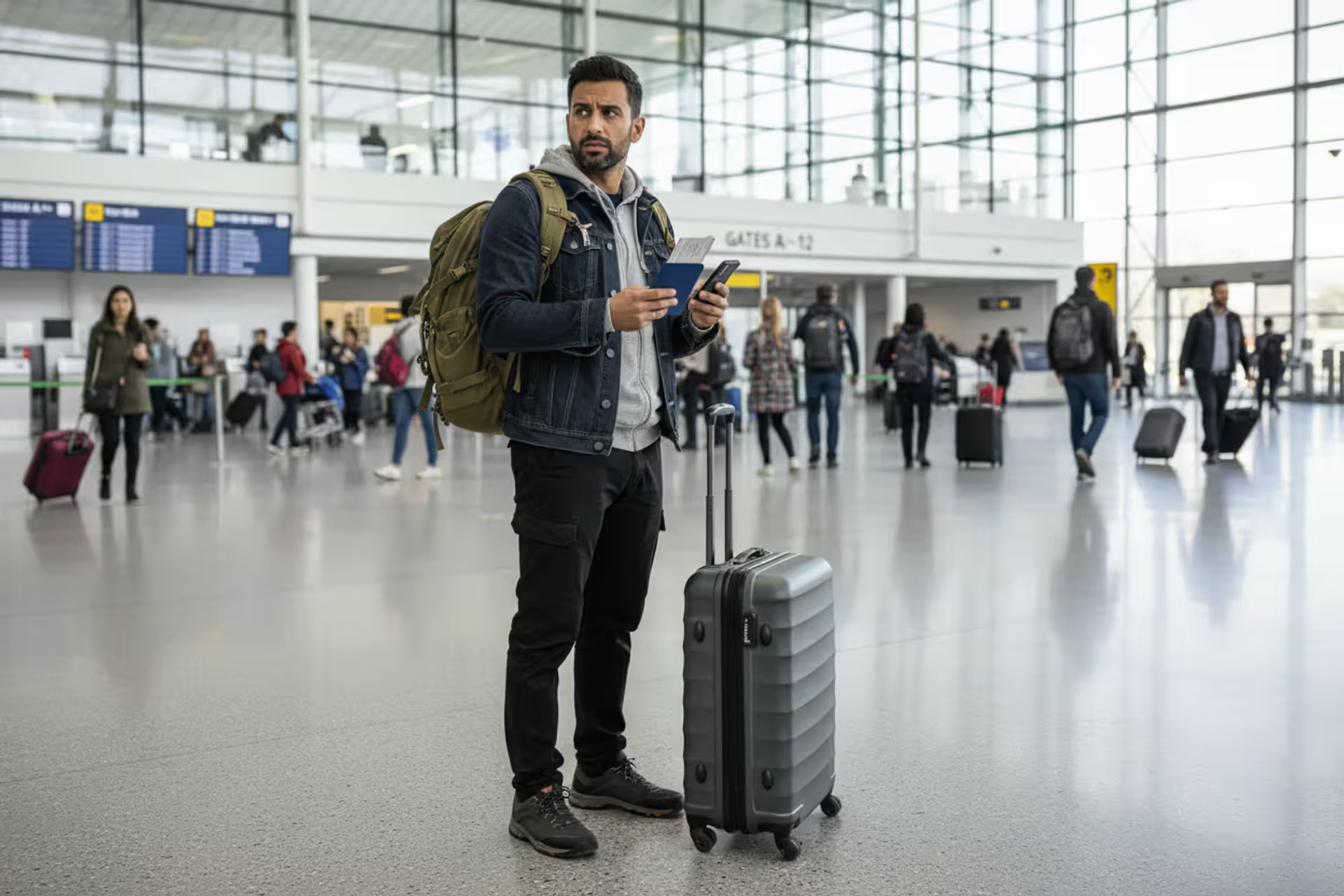
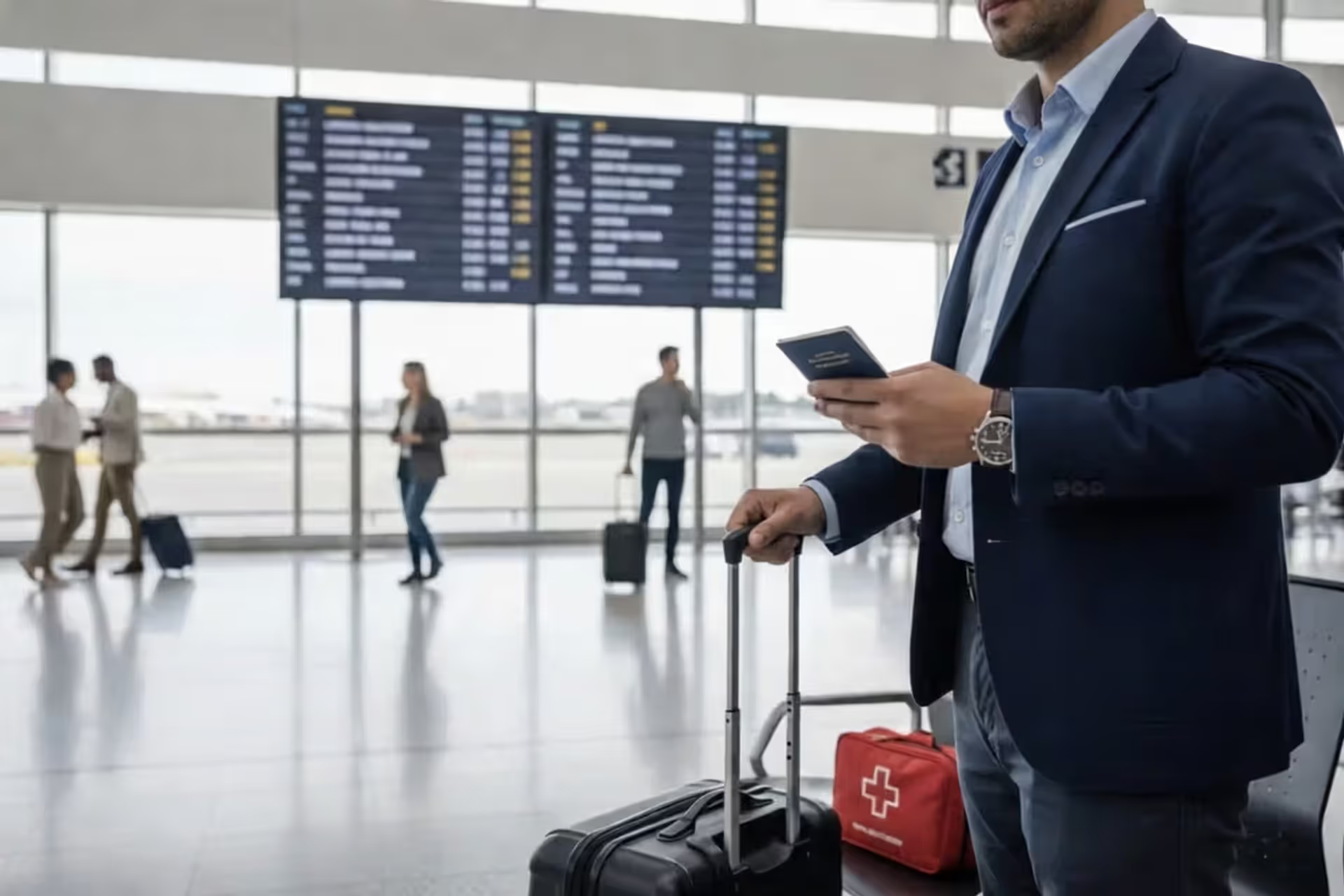
Traveler protecting personal belongings in an airport terminal
Does Travel Insurance Cover Theft of Your Belongings?

Losing your belongings to theft during a trip can turn a dream vacation into a nightmare. Whether you're exploring European cities known for pickpockets or staying in unfamiliar hotels, understanding what protection you have matters before something goes wrong.
Most comprehensive travel insurance policies include some form of theft coverage, but the devil lives in the details. Coverage varies dramatically between providers, and many travelers discover too late that their stolen laptop or missing jewelry falls outside their policy's scope. Knowing exactly what your plan covers—and what it doesn't—can mean the difference between recovering your losses and paying out of pocket.
What Types of Theft Does Travel Insurance Cover
Travel insurance theft protection typically falls under baggage and personal effects coverage. This component reimburses you when someone steals your belongings during your trip, though specific scenarios determine whether your claim gets approved.
Stolen Luggage and Personal Items
When thieves take your checked or carry-on luggage, most policies step in to reimburse you for the contents. This applies whether someone steals your bag at the airport, from a train overhead rack, or while you're checking into your hotel. The coverage extends to items inside the luggage—clothing, toiletries, medication, and other personal effects you packed for your trip.
Airlines provide limited liability for lost or delayed bags, but they rarely cover theft adequately. Your travel insurance fills this gap, offering higher reimbursement limits and covering a broader range of scenarios. For instance, if someone grabs your bag from a café while you're ordering coffee, airline coverage won't help, but your travel policy likely will.
Pickpocketing and Bag Snatching
Street theft represents one of the most common claims under travel insurance policies. If a pickpocket lifts your wallet in Barcelona or a thief on a motorbike snatches your purse in Rome, theft coverage in travel insurance typically reimburses you for the stolen items—provided you meet certain conditions.
The key factor here involves reasonable care. Insurers expect you to keep valuables secure and within sight. Leaving your phone on a restaurant table while you use the restroom might not qualify as exercising reasonable care, potentially voiding your claim. But having your pocket picked on a crowded metro, despite your vigilance, generally falls within covered scenarios.

Author: Ethan Holloway;
Source: visitmuseumcampussouth.com
Hotel Room Break-Ins
When someone breaks into your hotel room and steals your belongings, travel insurance usually covers the loss. This includes items taken from hotel safes, though you'll need proof the safe was properly locked and functioning. Some policies extend coverage to vacation rentals and Airbnb properties, while others restrict protection to licensed hotels—check your specific policy language.
Coverage for theft from accommodations often requires you to demonstrate forced entry. If you left your door unlocked or gave someone your room key, insurers may deny the claim. Always request a police report and incident report from the hotel management, as both documents become critical when filing your claim.
What Travel Insurance Typically Excludes from Theft Coverage
Understanding exclusions prevents unpleasant surprises when you file a claim. Insurers build specific limitations into policies to manage risk and prevent fraud.
Unattended items represent the most common exclusion. If you leave your bag on a beach while swimming or your laptop in a coffee shop while stepping outside, most policies won't cover the theft. Insurers define "unattended" differently—some consider items unattended if you can't see them for even a few minutes, while others allow brief absences if the location seems secure.
Electronics and valuables in checked luggage rarely receive coverage. Policies explicitly state you must carry expensive items like laptops, cameras, and jewelry in your carry-on bag. Even if an airline employee steals from your checked bag, your claim will likely be denied if you violated this rule.
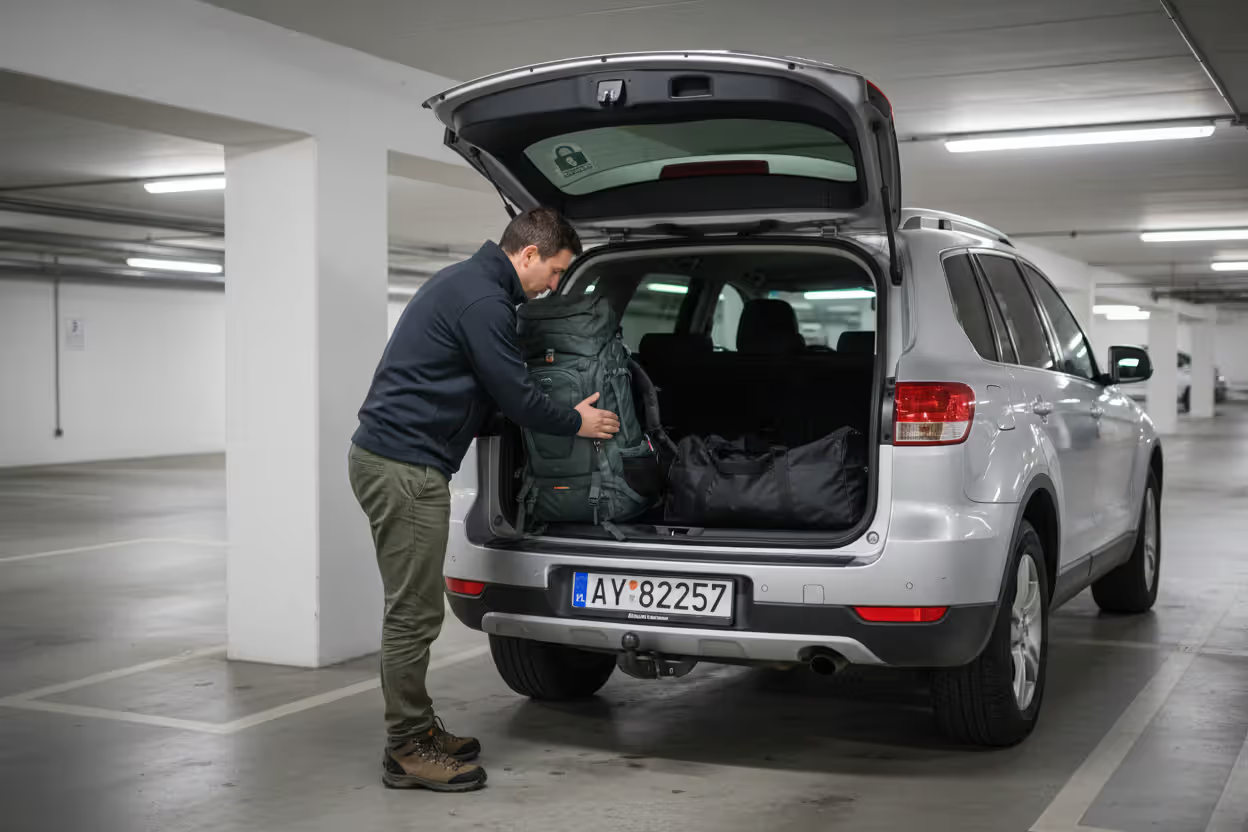
Theft from rental cars creates another coverage gap. Most travel insurance policies exclude items stolen from vehicles entirely, or they require the vehicle was locked and items were hidden in the trunk. Leaving a shopping bag visible on the backseat almost guarantees claim denial.
Failure to report theft to local police within 24 hours typically voids your coverage. This requirement exists even when reporting seems pointless—you know you won't recover your stolen phone in a foreign country, but without that police report, your insurer won't pay. Some travelers skip this step to avoid hassle, then discover their claim gets automatically rejected.
Mysterious disappearance doesn't count as theft. If you simply can't find your watch and suspect someone took it, but you have no evidence of actual theft, insurers won't cover it. You need to demonstrate that theft occurred, not just that an item went missing.
How Much Does Travel Insurance Pay for Stolen Items
Coverage limits and payout structures vary significantly across providers. Understanding these numbers helps you set realistic expectations and decide whether to purchase additional coverage.
Most policies cap total baggage and personal effects coverage between $1,000 and $3,000 per trip. This represents the maximum amount you can claim for all stolen items combined, regardless of their actual value. If thieves steal $5,000 worth of belongings, you'll only recover up to your policy's stated limit.
Per-item limits create another restriction. Even with a $2,500 total coverage limit, your policy might cap individual items at $250 or $500. This means your $1,200 camera only receives a $500 reimbursement at most. These per-item caps particularly affect travelers carrying expensive equipment or multiple valuable items.
Depreciation reduces payouts further. Insurers typically reimburse actual cash value, not replacement cost. Your two-year-old laptop might cost $1,800 to replace new, but the insurer calculates its depreciated value at $900 and pays accordingly. Some premium policies offer replacement cost coverage, which pays to replace items with new equivalents, but these cost more upfront.
Deductibles apply to most theft claims. You might have a $50 or $100 deductible, meaning the insurer subtracts that amount from your total payout. Combined with per-item limits and depreciation, a claim for $1,500 in stolen goods might net you only $600 after deductions.
Theft Coverage Limits: Major US Travel Insurance Providers
| Provider | Maximum Total Coverage | Per-Item Limit | Electronics Coverage | Typical Deductible |
| Allianz Travel Insurance | $1,000–$2,500 | $250–$500 | $500 max | $50 |
| Travel Guard | $1,500–$3,000 | $300–$750 | $750 max | $50–$100 |
| Travelex Insurance | $1,000–$2,000 | $250–$400 | $400 max | $50 |
| Seven Corners | $1,500–$5,000 | $500–$1,000 | Varies by plan | $0–$100 |
| Generali Global Assistance | $1,000–$2,500 | $250–$500 | $500 max | $50 |
| WorldTrips | $500–$2,500 | $200–$500 | $500 max | $50–$250 |
Note: Coverage amounts vary by specific plan tier. Higher-premium plans generally offer better limits.
How to File a Theft Claim with Your Travel Insurance
Filing a successful claim requires organization and prompt action. Missing a step or deadline can result in denial, even when your theft clearly falls within coverage.
Documentation You Need
Start gathering evidence immediately after discovering the theft. Photograph the scene if possible—a broken hotel room lock, a slashed bag, or the location where the theft occurred. These images support your claim narrative.
Create a detailed inventory of stolen items. List each item with its description, purchase date, and approximate value. Include serial numbers for electronics when possible. The more specific you can be, the better. "Black backpack with clothes" won't cut it—you need "North Face Recon backpack, black, purchased March 2025 for $129, containing two pairs of jeans (Levi's 514, $60 each), three shirts (brands and values), one pair of hiking boots (Merrell Moab, $135)."
Gather receipts or proof of purchase when possible. If you're traveling, you might not have physical receipts, but credit card statements, email confirmations, or photos of items before your trip help establish ownership and value. Many frequent travelers now photograph expensive items with serial numbers visible before trips specifically for this purpose.

Author: Ethan Holloway;
Source: visitmuseumcampussouth.com
Police Report Requirements
Visit the local police station as soon as you discover the theft. Don't wait until you return home—most policies require reporting within 24 hours of the incident. Language barriers make this challenging in foreign countries, but police in tourist areas usually have experience with these reports.
The police report must include specific details: what was stolen, when and where the theft occurred, and the circumstances. Generic reports that simply say "items stolen" may not satisfy your insurer. Request a copy of the report immediately, as obtaining it later from another country becomes exponentially harder.
Some destinations charge fees for police reports or make the process deliberately difficult. Pay the fee and persist through the bureaucracy. Without this documentation, your claim dies before it starts.
Claim Submission Timeline
Contact your insurance provider within 24 to 48 hours of the theft, even before you have all documentation. Most insurers offer 24/7 claims hotlines. This initial notification starts your claim and ensures you receive guidance on required documentation.
Submit your complete claim package within the timeframe specified in your policy, typically 20 to 90 days after returning from your trip. This package includes the police report, itemized list of stolen property, proof of ownership, receipts, your trip itinerary, and any other documentation the insurer requests.
Follow up regularly. Claims adjusters handle hundreds of cases, and yours can easily stall without periodic contact. Keep records of all communications, including dates, times, and the names of representatives you speak with.
When to Add Extra Coverage for High-Value Items
Standard travel insurance theft limits leave significant gaps for travelers carrying expensive equipment or jewelry. If your belongings exceed typical coverage caps, additional protection makes financial sense.
Professional photographers, videographers, and content creators routinely travel with $10,000 or more in camera gear. A standard policy's $2,500 limit with $500 per-item caps barely covers one lens. These travelers need scheduled personal property riders that specifically list and insure individual items at their full value.
Jewelry presents particular challenges. Most policies cap jewelry coverage at $250 to $500 total, regardless of actual value. Your engagement ring alone might exceed your entire policy limit. Scheduled jewelry coverage through your travel insurer or homeowners policy extends appropriate protection.
Laptops and tablets used for business create another vulnerability. If you're traveling with a $3,000 MacBook Pro plus an iPad, standard per-item limits won't cover their full value. Some travel insurance providers offer electronics coverage upgrades that increase per-item limits specifically for computers and cameras.
Sports equipment like golf clubs, skis, or scuba gear often exceeds standard limits. Specialized sports equipment coverage adds protection specifically for these items, including coverage for rental equipment if yours is stolen and you need replacements to continue your trip.
The cost-benefit calculation depends on your risk tolerance and item values. Adding $5,000 in scheduled coverage might cost an extra $50 to $100 on your travel insurance premium. If you're carrying $8,000 in photography equipment, that extra premium provides substantial peace of mind.
The biggest mistake travelers make is assuming their coverage matches their needs without reading the actual policy limits. I've seen countless claims where someone lost a $2,000 camera but only received $500 because they didn't understand their per-item cap. Before you travel with anything valuable, pull out your policy and read the baggage coverage section carefully. If the numbers don't work, upgrade your coverage or leave expensive items home
— Rebecca Martinez
Common Mistakes That Void Theft Coverage
Even travelers who purchase comprehensive coverage sometimes lose their right to reimbursement through preventable errors.
Leaving items visible in vehicles ranks as the most common mistake. You stop for lunch, leave your bag on the passenger seat, and return to a broken window. Most policies either exclude vehicle theft entirely or require items be locked in the trunk and out of sight. The five seconds it takes to put bags in the trunk could save you thousands.
Delayed reporting kills otherwise valid claims. You discover your wallet missing on Tuesday but don't report it to police until Friday because you're busy enjoying your trip. Your policy required reporting within 24 hours. Claim denied. Set a mental rule: discover theft, report immediately, worry about inconvenience later.
Insufficient documentation undermines legitimate claims. You list "clothes" worth $800 but provide no details about what was stolen or proof you owned these items. Insurers need specifics to process claims. Vague inventories suggest inflated or fraudulent claims, triggering automatic denials.
Not reading policy exclusions before traveling creates nasty surprises. You assume your rental car theft is covered, but your policy specifically excludes it. You thought mysterious disappearance counted as theft, but your policy requires evidence of actual theft. Thirty minutes reading your policy before your trip prevents hours of frustration after a loss.
Failing to exercise reasonable care gives insurers an easy denial. You left your phone charging at an airport outlet and walked away. You set your purse down at a busy market and turned your back. Insurers expect you to maintain control of your belongings. If your actions seem careless to an average person, expect your claim to be rejected.
Exceeding coverage limits without realizing it happens frequently. You packed $4,000 worth of belongings but bought a policy with a $1,500 limit. Everything gets stolen. You receive $1,500 minus deductible, not the full value of your loss. Calculate your total trip value before purchasing coverage, not after filing a claim.
Author: Ethan Holloway;
Source: visitmuseumcampussouth.com
FAQ
Travel insurance provides valuable protection against theft, but it works best when you understand exactly what you're buying. The difference between a successful claim and a denied one often comes down to reading your policy carefully, documenting your belongings before you travel, and following the rules when theft occurs.
Coverage limits matter more than most travelers realize. That comprehensive policy might seem expensive, but if it caps theft coverage at $1,000 with $250 per-item limits, you're still vulnerable if you travel with valuable equipment. Calculate the total value of what you're packing, compare it against your policy limits, and upgrade coverage or leave expensive items home when the numbers don't align.
The claims process rewards preparation and prompt action. Take photos of valuable items with serial numbers visible before your trip. Keep receipts or purchase records accessible. If theft occurs, report it to police immediately, contact your insurer within 24 hours, and document everything thoroughly. These steps take minimal time but dramatically increase your chances of a successful claim.
Remember that travel insurance theft coverage complements, rather than replaces, common sense security practices. Use hotel safes for valuables you're not carrying. Keep bags within sight in public spaces. Don't leave items visible in vehicles. Lock your accommodations. The best claim is the one you never have to file because you prevented the theft in the first place.
For travelers carrying high-value items, standard coverage rarely suffices. Scheduled personal property riders, electronics upgrades, or separate valuable items policies fill the gaps that basic travel insurance leaves open. The modest additional premium buys substantially better protection and peace of mind.
Ultimately, stolen items travel insurance works when you match your coverage to your needs, understand the limitations and exclusions, and follow the rules if you need to file a claim. Taking time to get these details right before you travel saves frustration and financial loss if the worst happens during your trip.
Related Stories
Read more
Read more

The content on this website is provided for general informational and educational purposes only. It is intended to offer guidance on travel insurance topics, including coverage options, premiums, deductibles, trip cancellation protection, travel medical insurance, baggage coverage, travel delays, emergency medical evacuation, and related travel protection matters. The information presented should not be considered legal, medical, financial, or professional insurance advice.
All articles and explanations published on this website are for informational purposes only. Travel insurance policies can vary between providers, and details such as coverage limits, exclusions, reimbursement conditions, waiting periods, eligibility requirements, and claim outcomes may differ depending on the insurer, policy type, destination, traveler age, health status, and trip details.
While we strive to keep the information accurate and up to date, this website makes no guarantees regarding the completeness or reliability of the content. Use of this website does not create a professional relationship. Visitors should review the official policy documents provided by insurance companies and consult with licensed insurance professionals or qualified advisors before making decisions about travel insurance coverage.