
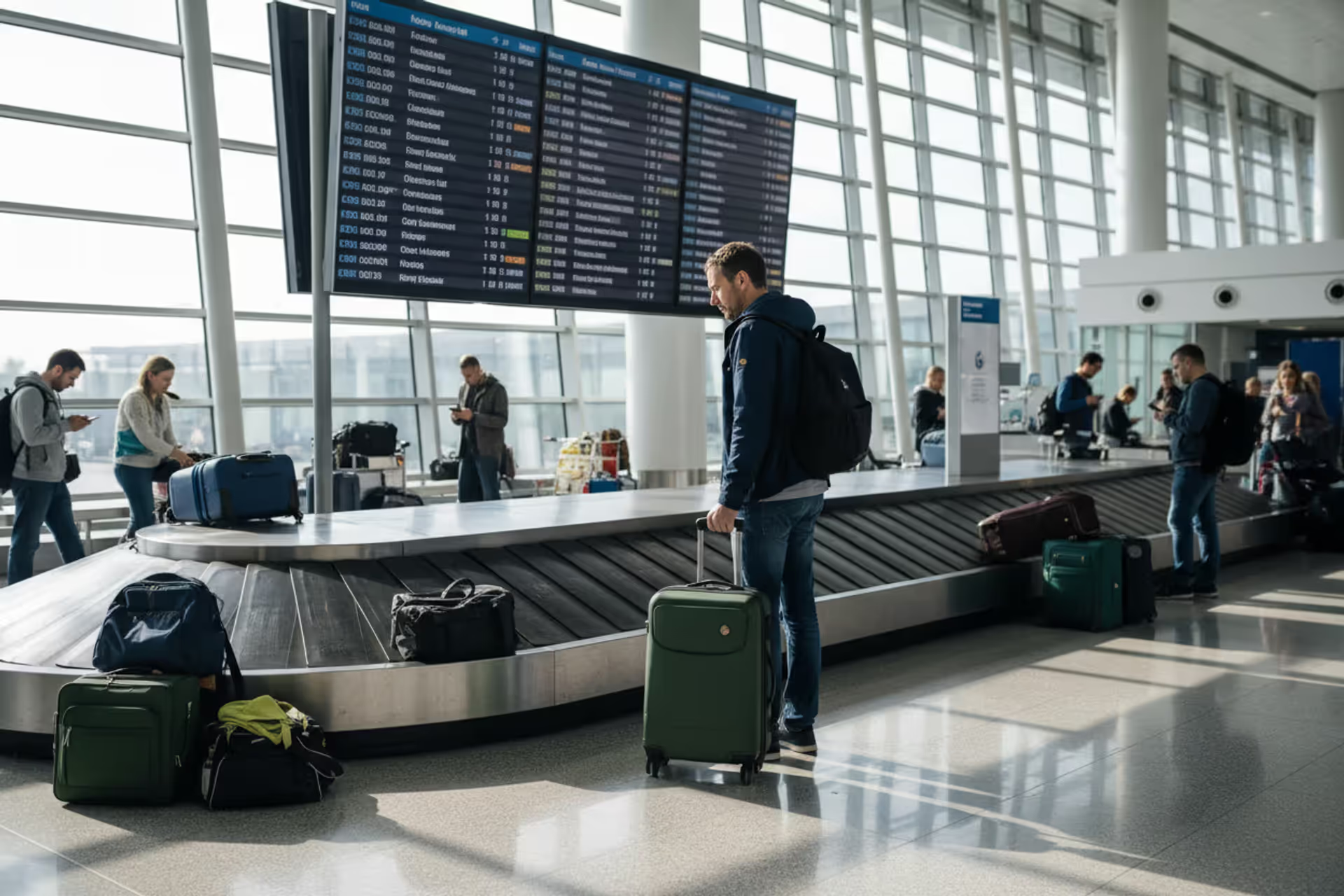
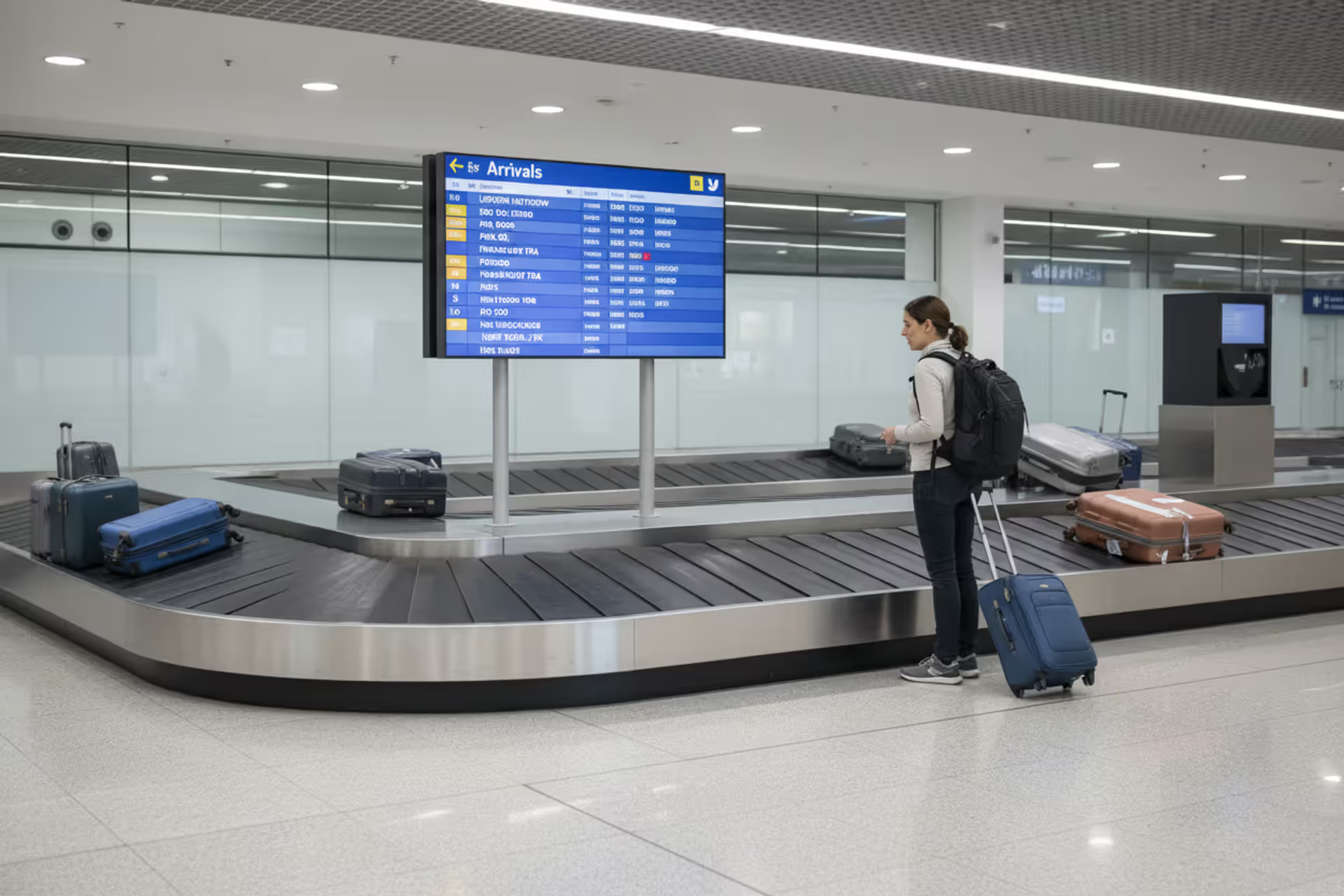
Traveler waiting at airport baggage carousel for missing luggage
Travel Baggage Insurance Guide

Picture this: you're standing at carousel seven in Barcelona, watching the same beat-up duffel bag circle past for the twentieth time. Your suitcase? Nowhere. Or maybe it shows up three days into your five-day vacation. Worse yet, it arrives cracked open with your camera lens in pieces.
According to 2025 Department of Transportation tracking, airlines fumbled roughly 7 bags per 1,000 passengers. When you're the unlucky statistic, baggage insurance covers replacement purchases, emergency clothing runs, and all the chaos missing luggage creates.
Here's what most people miss: you might not need a separate policy at all. Hidden coverage through your Visa card or State Farm policy could already protect you. Meanwhile, others drop $200 on insurance that won't pay out because they didn't read the jewelry exclusions.
What follows breaks down actual costs from five major carriers, shows you when buying protection pencils out financially, and flags the policy traps that kill legitimate claims. We're skipping the sales pitch—you'll get numbers that matter and gaps that cost money.
What Is Travel Baggage Insurance?
Think of this as a safety net that catches you financially when your luggage situation goes sideways. Lost bags. Stolen belongings. Damage that ruins your stuff. Delays that force you into emergency shopping sprees at airport boutiques. All covered.
You buy a policy before leaving home. Something happens to your bags. You file documentation. The company cuts you a check based on depreciated value—not what you originally paid, but what those items are worth today.
Airlines have legal obligations, sure. Federal regulations require US carriers to compensate up to $3,800 per traveler domestically. International flights fall under the Montreal Convention, which sets caps around $1,780 per passenger. Sounds reasonable until you realize these maximums aren't per-bag. And airlines? They'll fight you on valuations, citing obscure fine print that mysteriously appears when you file claims.
Baggage policies fill those holes. Your stuff stays protected whether you're flying Delta, boarding Carnival cruises, or riding Amtrak. Checked suitcases qualify. So do items you carry on—iPads, Nikon cameras, whatever you keep within reach.
Author: Dylan Mercer;
Source: visitmuseumcampussouth.com
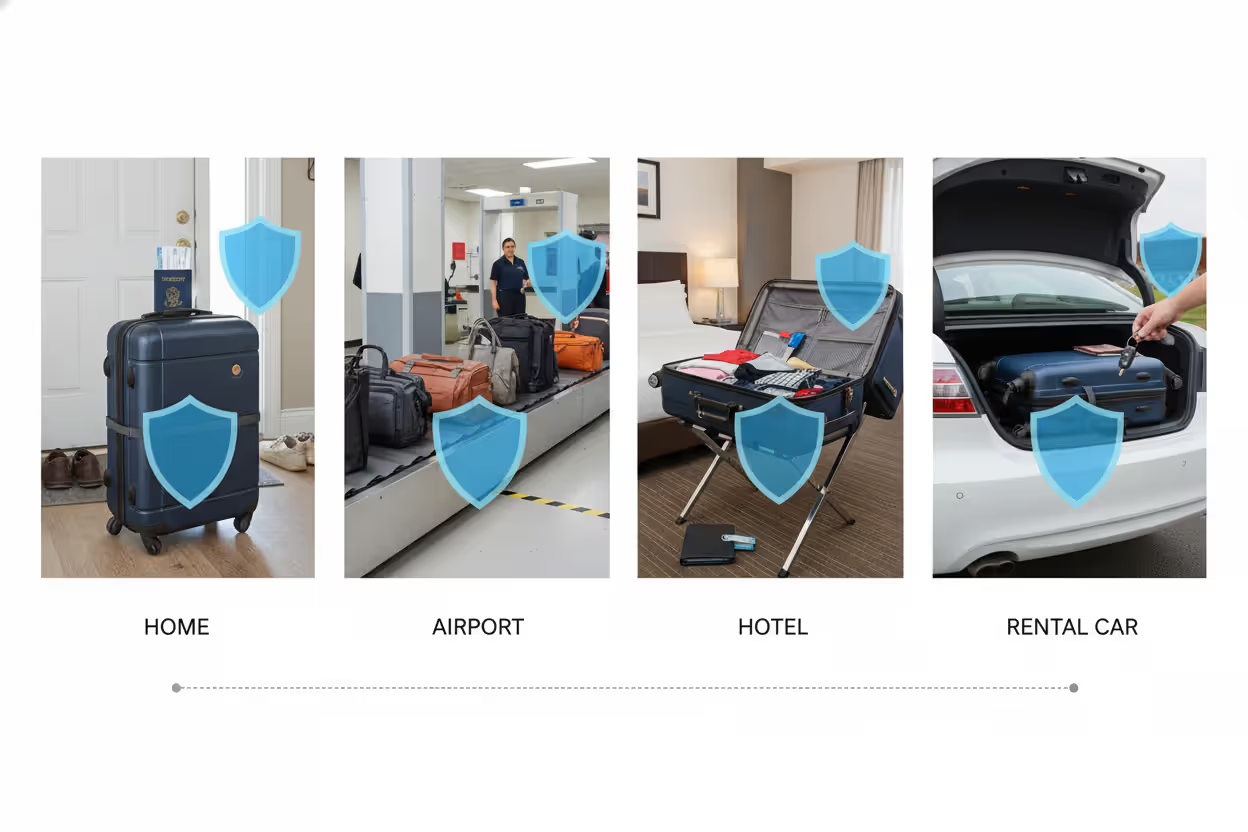
The coverage starts when you walk out your front door. It continues until you return home. Airports, Marriotts, Enterprise rental counters, everywhere between departure and return—much broader protection than what airlines provide, which only applies to bags they've officially accepted as checked luggage.
You'll find policies through companies like Allianz or World Nomads, booking platforms including Expedia, or occasionally direct from airlines (though carrier-sold options often contain tighter restrictions that benefit them, not you).
What Does Baggage Insurance Cover?
Travel insurance baggage protection handles three distinct scenarios. Each carries different rules. Each creates different headaches.
Lost or Stolen Baggage Coverage
Luggage permanently vanishes. Airlines officially declare it gone after 21 days—that's their magic number. Or thieves grab it from your Hilton room. Maybe it disappears from Berlin's train station while you're grabbing bratwurst. You receive compensation for contents.
Here's the catch: payment reflects depreciated value, not replacement cost. This distinction changes everything for expensive items. That North Face jacket you bought for $250 two years back? The adjuster assigns it $100 current value. Maybe less. Electronics depreciate fastest—laptops, cameras, and phones typically drop 20% to 30% annually. Some policies apply even steeper depreciation schedules.
Per-item maximums create the second obstacle. Standard policies cap single items at $250–$500. You packed your $1,200 MacBook Pro? You'll collect $500 tops. Doesn't matter if you saved original receipts, included protective cases, babied that machine—$500 maximum.
Total coverage usually stops between $1,500 and $3,000 per person. Add up everything in your suitcase at depreciated values and that ceiling arrives quickly.
What won't get covered: currency beyond $50–$100, gift cards, concert passes, cannabis (doesn't matter if Colorado legalized it), medications lacking proper documentation, valuables you can't prove owning. One woman filed a designer handbag claim—rejected completely. No purchase proof. No authenticity verification. Zero dollars.
Timing deadlines matter enormously. Report theft to local police within 24 hours. Submit claims to your carrier within whatever window your policy specifies—typically 30 days, sometimes less. Blow those cutoffs and you forfeit everything. No exceptions. No sympathy.
Damaged Baggage Protection
Your Samsonite tumbles off the conveyor looking like it survived a demolition derby. You unzip it. Your Canon lens split down the middle. This protection covers repairs or replacements.
Both luggage shells and contents qualify. Wheels snap off your $300 roller bag? File for it. Airlines pulverize belongings inside? Claim those too.
The complication: immediate reporting requirements—usually 24 hours for checked baggage shells, 72 hours for contents. Airlines exploit these windows ruthlessly. Skip inspecting your bag right at baggage claim and filing damage reports before leaving the airport? The airline frequently denies compensation. Baggage insurance gives you slightly more breathing room but still demands quick action.
Normal wear doesn't count. Scratches, scuffs, broken zippers from regular use? Your problem. Fragile items poorly packed won't qualify either. Carriers expect adequate cushioning for glass, ceramics, delicate electronics. Toss a wine bottle in your suitcase unwrapped and it shatters? You're absorbing that loss. No appeal.
Pre-existing damage causes headaches too. If your roller bag already had cracks pre-trip, proving additional damage occurred during travel becomes your burden. Good luck with that.
Baggage Delay Reimbursement
Your luggage takes an unplanned detour. You're unpacking in Miami while your suitcase explores Denver. Travel insurance baggage delay hands you cash for essentials while waiting.
Trigger periods vary wildly by policy and geography. International trips frequently activate after 6–12 hours. Domestic delays might demand 12–24 hours before unlocking coverage. This variance matters immensely. Three-day weekends with 24-hour triggers become worthless since your bag often arrives before hitting that threshold.
Reimbursement caps stay modest—typically $100 to $500 total. You can purchase toiletries, underwear, basic shirts, medication replacements, similar necessities. Luxury items? Rejected immediately. One businessman tried claiming a $200 steakhouse dinner because his luggage held his meeting clothes. Denied—restaurants don't count as essentials according to his adjuster.
Keep every receipt. Including $5 purchases. Insurers demand itemized proof for each transaction. Bank statements by themselves won't satisfy them. They want physical receipts showing what you bought, where, when. Photograph receipts immediately because thermal paper fades within days.
Here's an oddity: if bags arrive after 48 hours, you might collect delay reimbursement first. Should they never appear and the airline declares permanent loss, you then file a separate lost baggage claim. The insurer deducts your delay payment from your lost baggage settlement. You can't get paid twice for identical losses. Makes sense, but travelers often miss this.

Author: Dylan Mercer;
Source: visitmuseumcampussouth.com
Do You Need Baggage Insurance for Travel?
Sometimes yes. Often no. Three elements determine whether buying coverage makes financial sense.
Your credit card potentially already provides this. Chase Sapphire Reserve protects up to $3,000 per trip for delays exceeding six hours—exclusively if you charged plane tickets to that exact card. American Express Platinum supplies similar benefits under different terms. Capital One Venture handles delays after six hours with $100 daily for three days maximum.
The trap: benefits arrive with conditions buried in 40-page PDFs nobody reads. Certain cards exclude domestic flights completely. Others demand 12-hour delays before activating. Many refuse coverage when you booked using miles instead of cash. Phone your card issuer about your specific itinerary. Don't trust marketing copy that glosses over restrictions. Ask directly: "I'm flying from Atlanta to Rome with a connection in New York on April 15th. I charged tickets to this card. What exact coverage do I have?"
Review your homeowners or renters policy. Property insurance typically protects belongings stolen globally, subject to your deductible. That $500 or $1,000 deductible frequently exceeds what you'd collect from a $2,000 baggage policy anyway.
The drawback: homeowners policies skip baggage delay—only permanent loss or theft qualifies. Plus filing claims can spike premiums or trigger non-renewal. Using property insurance for a $600 luggage loss might cost hundreds extra in elevated premiums across three years. Run the math before filing.
Your trip characteristics drive the decision. International flights mishandle bags at roughly double domestic rates. Connections through JFK, O'Hare, or Heathrow increase odds your bag chooses alternate routes. Checking expensive gear multiplies financial exposure.
Cruises present unique challenges. Luggage misses ship departure? You're stuck buying replacements at port boutiques where T-shirts hit $40 and sunscreen reaches $25. That modest $300 delay reimbursement suddenly carries more weight.
Your packing habits matter equally. Carry-on-only travelers face minimal risk—you control bags throughout the journey. Never leave your sight. Checking two large suitcases stuffed with valuables? Risk profile just jumped.
One decision approach: calculate packed value, multiply by loss probability (roughly 0.7% per trip with connections), compare that expected loss against premium costs. Packing $3,000 in equipment means your statistical expected loss equals about $21. Insurance costing $45 means paying double expected value—but you're purchasing protection against catastrophic loss, not average outcomes.
Business travelers hauling presentation gear and expensive suits usually benefit from protection. Budget backpackers carrying worn clothes and a $200 phone can probably pass. Families checking multiple bags land somewhere between—at least one bag experiencing delays becomes likelier with four or five bags traveling.
How Much Does Travel Insurance Baggage Cover Cost?
Standalone baggage policies typically run $20–$50 for week-long trips. Comprehensive packages combining medical, cancellation, and baggage protection cost $100–$300+ depending on trip price, duration, and destination. Baggage protection usually adds 10%–20% to base premiums.
Multiple variables affect pricing:
Coverage limits: Policies topping out at $3,000 total cost more than $1,500 caps. Makes sense. Higher per-item limits (say, $1,000 versus $250) bump premiums by 15%–25%.
Trip duration and location: Two weeks in Europe costs more than four Florida days. International trips carry higher risks—more connections, longer flights, more chances for bags going astray.
Deductible selection: Choosing a $250 deductible instead of $0 can slash premiums 20%–30%. Remember though: you're covering that $250 out of pocket before insurance pays anything. Might be worth it. Might not.
Traveler age and group size: Insuring four family members costs more than solo coverage. Basic math. Some carriers add surcharges for travelers past 65 (though this affects medical coverage more than baggage).
Here's how major US carriers stack up for a hypothetical scenario—one adult, one-week international trip:
| Insurance Provider | Single Item Cap | Trip Total Cap | Delay Money Available | Delay Wait Time (Hours) | Estimated Premium |
| Allianz Global Assistance | $500 | $2,000 | $300 | 12 | $35 |
| Travel Guard (AIG) | $500 | $2,500 | $500 | 12 | $42 |
| Travelex Insurance Services | $400 | $1,500 | $200 | 6 (international) | $28 |
| World Nomads | $1,000 | $3,000 | $400 | 12 | $48 |
| Nationwide Mutual Insurance | $500 | $2,000 | $300 | 24 | $32 |
Prices reflect 2026 estimates for a $3,000 trip. Actual costs shift based on specific trip details and selected options.
These figures expose trade-offs. World Nomads hits $48—the priciest option here—but you're getting the strongest limits. Crucial if you're hauling expensive Nikon gear. Travelex comes in at just $28 and handles international delays after six hours versus 12. Helps on quick trips. But Travelex caps total coverage at $1,500, potentially leaving you underinsured. Nationwide's $32 premium looks appealing until you spot the 24-hour delay trigger. Basically pointless on short trips where bags might arrive in 18 hours.
Annual multi-trip policies make sense for frequent travelers. Expect $150–$300 yearly for unlimited trips, with each trip limited to 30–60 consecutive days. Taking four or more insured trips annually makes annual policies cheaper than buying separate coverage each time.
How to Choose the Right Baggage Travel Insurance

Author: Dylan Mercer;
Source: visitmuseumcampussouth.com
Selecting coverage demands matching policies to what you're actually packing and where you're heading. Begin by listing packed items with estimated replacement values.
Match coverage limits to your belongings. Total everything in your suitcase at depreciated value—not original purchase prices. Those $120 jeans from two years ago? Maybe worth $50 today. Calculate total packed value. Purchase coverage at least 20%–30% higher accounting for forgotten or undervalued items.
Watch per-item limits closely. Packing a $1,500 laptop, $900 camera, and $600 tablet means you need policies with per-item limits of at least $1,000. Otherwise you'll face major shortfalls. Most travelers overlook this until filing claims. Then surprise.
Scrutinize delay terms carefully. A 24-hour trigger fails if you're landing at your destination after a 10-hour journey. You need bags within those 24 hours regardless. Hunt for six-hour triggers on international trips. Twelve hours maximum domestically. Verify reimbursement amounts cover realistic expenses—$100 barely handles basic toiletries and underwear at airport shops where everything costs triple normal prices.
Hunt for exclusions that could torpedo claims. Every policy excludes certain items. Standard exclusions across policies:
Currency beyond $50–$100. Documents and tickets. Business samples or merchandise. Perishable food. Plants. Live animals. Vehicles and boats. Contact lenses. Prescription medications (though some policies cover these with proper documentation). Eyeglasses (excluded or capped at $50–$100). Hearing aids. Artificial limbs. Dentures. Contraband or illegal items (marijuana included, state laws irrelevant). Sporting equipment like firearms, golf clubs, surfboards without special riders. Losses due to war. Government confiscation. Illegal activities. Intentional acts by you.
Watch for "mysterious disappearance" clauses buried in policies. Your jacket vanished but you're uncertain where or when? Some carriers deny claims because you cannot prove a covered event—theft, airline loss—actually occurred. It just disappeared. That's your problem.
Understand custody requirements. Some policies exclusively cover baggage while in common carrier custody. Meaning airline, cruise line, or train company control. Bags get stolen from Enterprise rentals or Vrbo properties? You might lack coverage. Other policies offer broader protection covering theft anywhere during your trip. Read this section thoroughly. It matters.
Compare deductibles against likely claim amounts. A $250 deductible saves money upfront but devours a huge chunk of modest claims. Your typical checked bag holds $800 worth of stuff? That deductible means collecting only $550. Not exactly life-changing money. For expensive travelers packing $3,000+ in gear, deductibles make more sense since you're still collecting significant money after the deductible.
Verify claims process before buying. Must you exhaust airline compensation first, or can you file directly? What's the documentation deadline? Can you file claims online, or must you mail paperwork like it's 1995? Some carriers settle claims in 10 days. Others drag out for two months. Reviews reveal this information quickly.
Sites like Squaremouth and InsureMyTrip let you compare multiple quotes side-by-side. Filter by baggage limits. Read customer reviews—focus on claims experiences, not purchase process feedback. A company might have slick marketing and a beautiful website but terrible claims service where adjusters find creative reasons to deny legitimate claims.
Travelers consistently overpay for coverage they don't need while ignoring gaps in what they're buying. Match your highest-value items against per-item caps first. If those don't line up, either get a better policy or accept you're self-insuring part of your belongings. Don't just buy the most expensive policy assuming it covers everything—read what you're actually getting
— Jennifer Marks
How to File a Baggage Insurance Claim
Claims get rejected constantly because travelers skip steps or blow deadlines. Follow this process exactly.
First step: Report problems immediately. At airports, file a Property Irregularity Report (PIR) with the airline before leaving baggage claim. This document remains mandatory for insurance claims. No PIR? No claim approval in most cases. Record the reference number. Safeguard your copy like it's cash.
For theft outside airline custody, file a police report within 24 hours. Document the report number and officer information. Many travelers skip this step. Major mistake guaranteeing denial.
Second step: Contact your insurer fast. Most policies demand notification within 24–72 hours after discovering problems. Use the claims hotline or online submission portal. Miss your carrier's required notification window? They'll reject your claim entirely even if otherwise valid. Complete coverage forfeiture.
Third step: Compile documentation. You'll need:
Policy number and trip booking confirmation. Airline PIR or police report with case numbers. Original purchase receipts for lost items (credit card records work as backup, though adjusters prefer actual receipts). Photos showing damaged bags or belongings. Receipts for emergency purchases during delays. For high-value items, provide serial numbers, model information, or appraisals.
The receipts component causes the most headaches. Many travelers don't keep receipts for clothing or everyday items purchased months earlier. Bank records help but aren't always sufficient. For electronics, locate original receipts or order confirmation emails. Carriers want proof you owned a specific model, not just "a laptop."
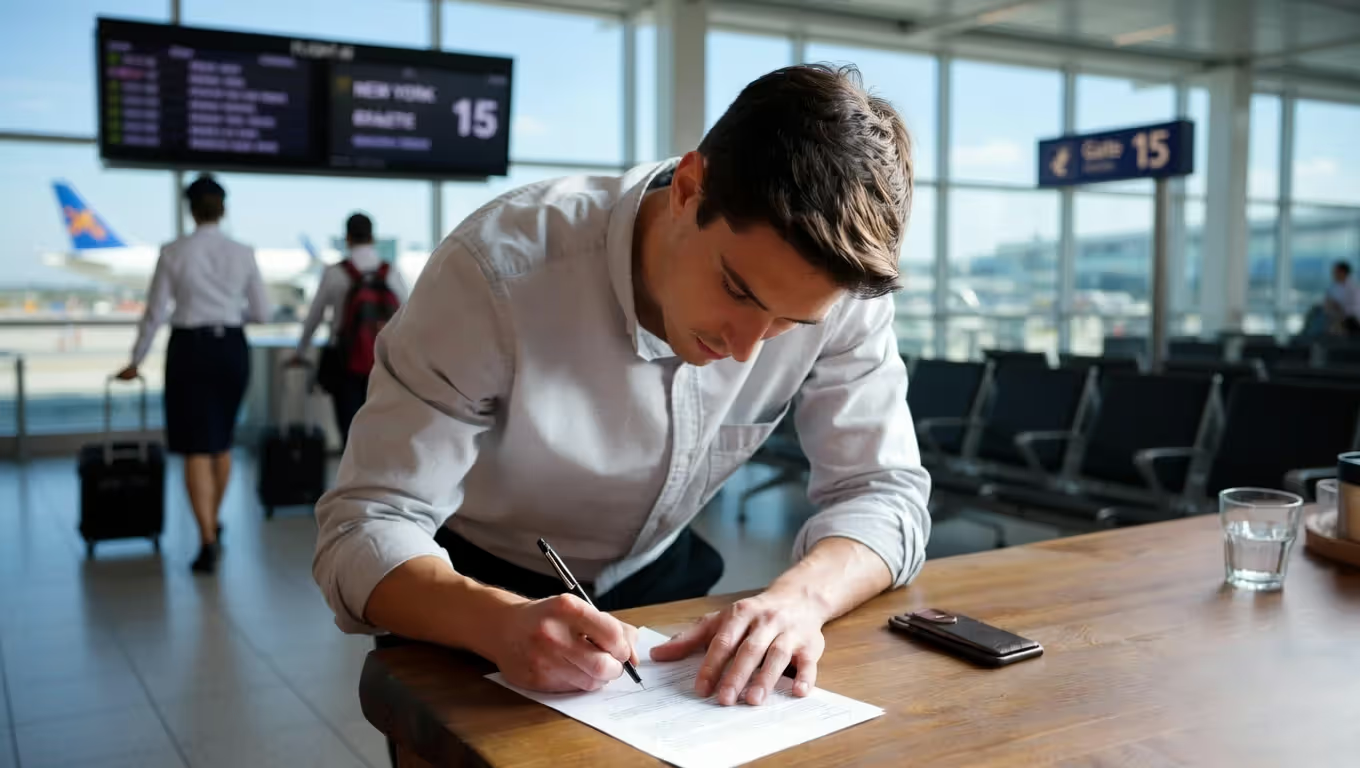
Fourth step: Complete claim forms thoroughly. Be specific. Don't write "clothing items." List "two pairs Levi's jeans, one wool cardigan from J.Crew, three cotton T-shirts from Target, one pair Nike running shoes." Include approximate purchase dates and original costs. Vague claims get lowballed or rejected.
For delays, attach each receipt separately. Annotate purchases and why you needed them during the delay. Explain yourself clearly.
Fifth step: Follow up actively. Carriers usually acknowledge claims within 5–10 business days. Full decisions typically take 30 days, though complex cases stretch to 60 days or longer. Haven't heard back within stated timeframes? Contact your adjuster. Don't wait passively. Document every conversation—date, time, representative name, discussion points. Create a paper trail.
Mistakes killing claims:
Not obtaining PIR or police reports accounts for about 40% of denials. Waiting beyond notification deadlines kills another chunk. Lacking ownership proof for claimed items. Not realizing per-item limits until after filing. Forgetting to update your carrier if airlines eventually compensate you—you cannot collect from both.
Real scenario: A traveler's bag got delayed 18 hours. She bought $275 in essentials. Filed a claim. Received full reimbursement. Two weeks later, the airline offered $150 as goodwill compensation. She accepted airline money without notifying her insurer. Six months later, she filed another claim for a different trip. During that process, the carrier discovered the previous double payment. They demanded repayment plus penalties. It nearly resulted in fraud charges. Don't be this person.
Author: Dylan Mercer;
Source: visitmuseumcampussouth.com
Frequently Asked Questions About Travel Insurance Baggage
Baggage insurance solves a specific problem: protecting your financial investment in belongings when luggage goes missing, arrives damaged, or gets delayed long enough disrupting your trip. Not essential for every traveler. But it serves a clear purpose for those carrying valuable items, navigating complex international connections, or facing above-average mishandling risks.
The decision boils down to matching coverage to your real exposure. Start by auditing what you already have through credit cards and property insurance. Then identify gaps. Packing $2,500 in electronics and clothing but your credit card only covers $1,000? You've found a $1,500 gap potentially justifying additional coverage.
Choose policies by comparing per-item limits against your most valuable belongings. Don't just eyeball total coverage caps. A $3,000 policy with $250 per-item limits won't help much losing a $1,200 laptop. Verify delay triggers match your itinerary length. Read exclusions carefully. Fine print determines what you'll actually collect when filing claims.
When filing claims, documentation and speed separate quick payment from months of frustration. Obtain your PIR or police report immediately. Notify your carrier within their deadline. Provide detailed receipts and descriptions. Follow up persistently. Squeaky wheels get greased.
Smart baggage coverage functions as a backstop against scenarios you cannot easily absorb financially. Not as replacement for common-sense precautions like packing valuables in carry-ons when possible, keeping medication and essential documents with you, securing bags in hotels.
Calculate your risk. Compare it against coverage costs. Purchase protection matching your specific trip. Skip coverage you don't need. Fill gaps where your exposure exceeds what you can comfortably self-insure. That approach keeps your luggage—and your wallet—protected without wasting money on redundant coverage.
Related Stories
Read more
Read more

The content on this website is provided for general informational and educational purposes only. It is intended to offer guidance on travel insurance topics, including coverage options, premiums, deductibles, trip cancellation protection, travel medical insurance, baggage coverage, travel delays, emergency medical evacuation, and related travel protection matters. The information presented should not be considered legal, medical, financial, or professional insurance advice.
All articles and explanations published on this website are for informational purposes only. Travel insurance policies can vary between providers, and details such as coverage limits, exclusions, reimbursement conditions, waiting periods, eligibility requirements, and claim outcomes may differ depending on the insurer, policy type, destination, traveler age, health status, and trip details.
While we strive to keep the information accurate and up to date, this website makes no guarantees regarding the completeness or reliability of the content. Use of this website does not create a professional relationship. Visitors should review the official policy documents provided by insurance companies and consult with licensed insurance professionals or qualified advisors before making decisions about travel insurance coverage.