
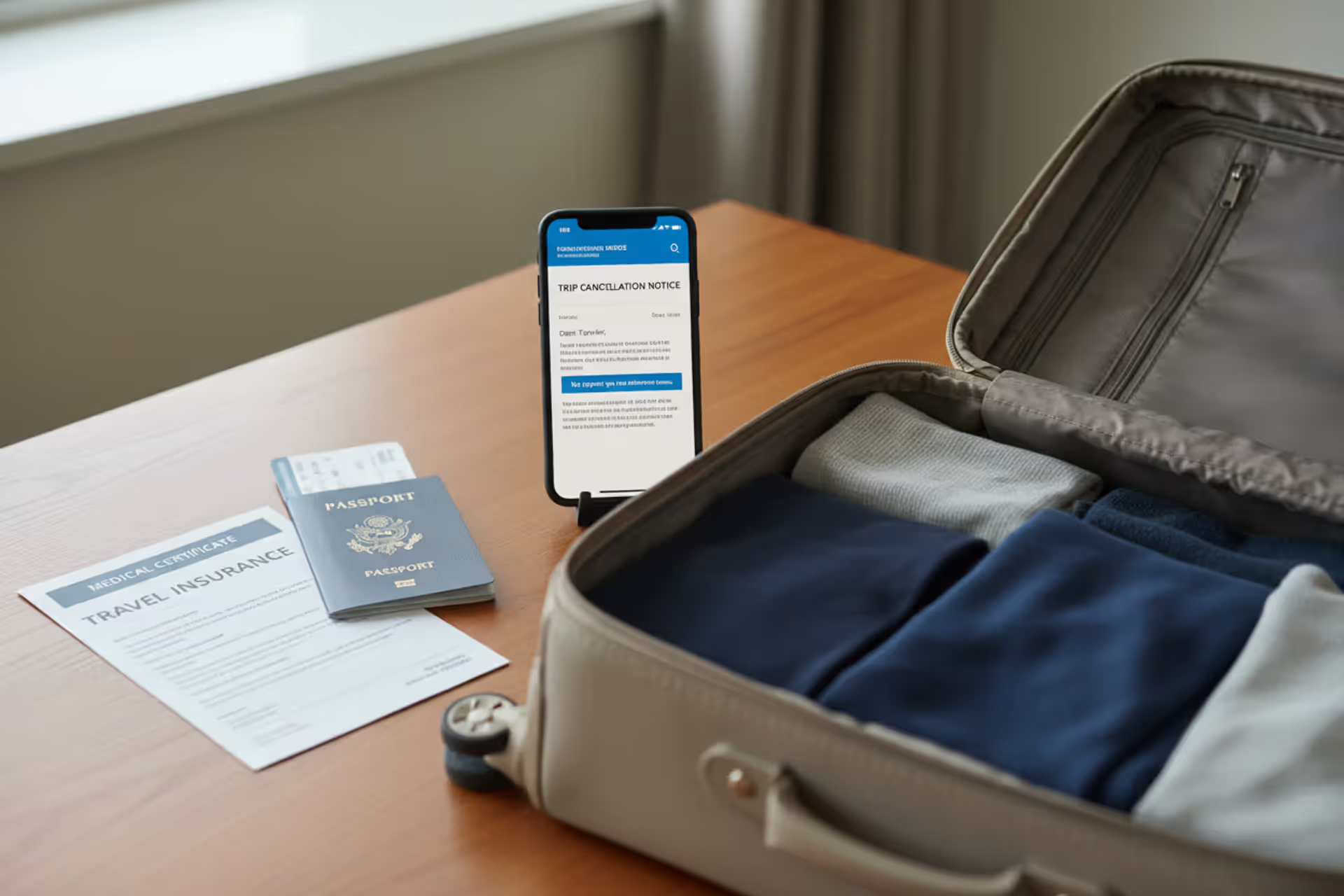
Travel insurance documents and canceled trip planning items on a table
Does Travel Insurance Cover Cancellation Due to Illness?

Picture this: You've spent $4,500 on a Mediterranean cruise, counting down the days, and then—boom—your doctor diagnoses you with shingles three days before departure. You're in pain, contagious, and definitely not boarding that ship. Now you're wondering if your $340 travel insurance policy will actually give you that money back.
The short answer? Maybe. Whether you'll see a dime depends on policy fine print, timing, paperwork quality, and how well your specific situation matches what insurers consider a "covered illness." Plenty of legitimately sick travelers get denied because they missed a crucial detail or didn't document their condition properly.
Let's break down exactly what makes the difference between getting reimbursed and losing thousands.
How Travel Insurance Handles Illness-Related Cancellations
Here's the basic setup: You book a trip, buy a policy, something medical goes sideways, and the insurer pays back what you'd otherwise lose to cancellation fees. Simple enough—except insurers define "something medical" much more narrowly than most travelers expect.
Your policy reimburses prepaid, non-refundable costs when a covered medical event forces you to bail before departure. Notice those qualifiers: "covered" and "non-refundable." Already we're adding conditions.
Travel insurance illness claims aren't triggered by feeling under the weather or deciding you'd rather not fly with a cough. The medical situation needs real teeth—serious enough that a doctor explicitly tells you not to travel, or you wind up hospitalized, or you're physically incapable of making the journey. That sniffle that's "probably turning into something"? Not going to cut it. Pneumonia that lands you in the ER on IV antibiotics? That'll work.
Once you realize you can't go, contact your insurer right away—ideally before canceling anything. They'll walk you through their documentation checklist and tell you which expenses need special handling. Then you cancel your reservations, collect your medical paperwork, and submit everything through their claims portal. An adjuster reviews it all, matches your situation against policy language, and either cuts a check or sends a denial letter.
Most insurers give you somewhere between 20 and 30 days after cancellation to file. Miss that window and your claim dies regardless of how sick you were.

Author: Dylan Mercer;
Source: visitmuseumcampussouth.com
Which Illnesses Qualify for Trip Cancellation Coverage
Insurers look for sudden, unexpected medical events serious enough to make travel impossible or dangerous. Appendicitis that requires emergency surgery? Absolutely covered. A heart attack? Yes. Fracturing your leg in three places? They'll pay.
But "sudden and unexpected" carries weight here. The condition can't be something you knew about or were monitoring when you bought the policy. If your back has been bothering you for weeks and finally gives out the day before your ski trip, that's not unexpected—that's a predictable outcome of an ongoing issue.
Chronic conditions get tricky. Let's say you've managed Type 2 diabetes successfully for years. Your A1C numbers have been stable, you take your meds religiously, and then—out of nowhere—you develop diabetic ketoacidosis four days before departure and need hospitalization. That sudden deterioration of a previously stable condition might qualify. But if you've been struggling with unstable blood sugar for months and it finally crashes, insurers will argue this wasn't unexpected.
Mental health coverage has improved, but severity still matters. An acute psychiatric crisis requiring emergency hospitalization—like a sudden psychotic break or suicidal ideation that needs inpatient care—will typically be covered now. Generalized anxiety about flying or feeling too depressed to enjoy your vacation won't qualify. The bar sits at "requires immediate professional psychiatric intervention," not "feeling really stressed."

Author: Dylan Mercer;
Source: visitmuseumcampussouth.com
Pre-Existing Medical Conditions and Waivers
Pre-existing conditions sink more claims than anything else. Insurers define these as health issues you received treatment for, took medication for, or experienced symptoms from during a "lookback period"—usually anywhere from 60 to 180 days before buying your policy.
Had a cortisone injection for knee pain 90 days before purchasing insurance? If your knee swells up and prevents your hiking trip, expect a denial. Saw your cardiologist for chest pain 120 days ago? That heart condition is pre-existing, even if you felt fine afterward.
The workaround: pre-existing condition waivers. These eliminate the exclusion, but you've got to jump through hoops. Buy your policy within 10 to 21 days of your first trip payment (the initial deposit, not the final balance). Insure 100% of your trip's cost. And be medically cleared to travel when you purchase—you can't already be sick or awaiting test results for something serious.
What surprises people: the waiver doesn't create unlimited coverage. It protects you if a known, stable condition suddenly worsens. It won't cover conditions that were actively unstable or under investigation when you bought coverage. Purchased your policy while waiting for a biopsy result? That condition stays excluded even with the waiver.
COVID-19 and Pandemic-Related Illness
By 2026, most mainstream insurers treat COVID-19 the same as influenza or strep throat. Test positive three days before your flight, get a doctor's note recommending you don't travel, and you're covered—assuming everything else checks out (you bought the policy before exposure, met all timing requirements, etc.).
But watch out for pandemic-specific exclusions that still lurk in cheaper policies. Some budget plans exclude claims related to government travel bans, mandatory quarantines, or destination closures due to disease outbreaks. Crucially, fear of getting sick—even during a raging outbreak—never qualifies. You need an actual diagnosis and medical documentation.
Policy language around variants and epidemic-related complications varies wildly. One insurer might cover quarantine-related cancellations while another explicitly excludes them. Read the certificate of insurance, not the marketing materials, before buying.
Who Must Be Ill for Coverage to Apply
Good news: coverage extends beyond just you. Insurers recognize that serious family illnesses legitimately derail travel plans.
Most policies cover cancellations when these people get sick:
Anyone listed on your policy as a traveler. If you're insuring a family of four and one person gets hospitalized, everyone can cancel and file claims.
Immediate family not traveling with you. Your mom has a stroke two days before your departure? You can cancel even though she wasn't coming on the trip. Same goes for kids, siblings, or your spouse. Parents-in-law usually qualify too, though some insurers get picky about defining "immediate family."
Travel companions on separate policies. You and your college buddy are sharing a room but bought separate insurance. He tears his ACL playing basketball—can you cancel? Sometimes yes, sometimes no. Stricter policies require companions to be named in your documentation when you purchase. Others are more flexible but still need proof you were actually traveling together.
Business partners for work trips. If your co-founder's medical emergency makes your conference appearance pointless, some policies let you cancel. This typically needs supporting documentation proving the business relationship and why the trip serves no purpose without them.
Documentation matters enormously here. You'll need birth certificates for family relationships, marriage licenses for spouses, business incorporation papers for partners. "She's like a sister to me" doesn't work without legal proof.
One more thing: the sick person needs to be properly sick. If your brother has a bad cold but never sees a doctor, that won't justify your cancellation claim. Insurers want evidence of actual medical care—office visits, hospital stays, or at minimum a documented physician consultation.
By failing to prepare, you are preparing to fail
— Benjamin Franklin
Documentation Required to File an Illness Cancellation Claim
Will travel insurance cover cancellation due to illness? Honestly, the answer depends more on your paperwork game than how sick anyone actually was. Insufficient documentation kills more legitimate claims than questionable medical situations.
Here's what you absolutely need:
A detailed physician's statement. Not a scribbled note saying "John is sick." You need official letterhead, the specific diagnosis (bonus points for including ICD-10 codes), exact treatment dates, and clear language explaining why travel became medically inadvisable. "Patient should avoid air travel due to risk of blood clots post-surgery" works. "Patient doesn't feel well enough to travel" doesn't. Include your doctor's license number and direct contact info—adjusters sometimes verify these.
Supporting medical records. Hospital admission paperwork if you were inpatient. Lab results showing positive COVID tests or abnormal bloodwork. Prescription records for medications started because of the acute illness. Emergency room discharge summaries. These corroborate your doctor's letter and prove medical intervention actually happened.
Relationship documentation. Claiming for a parent's illness? Attach your birth certificate. Spouse? Marriage license. Business partner? Corporate documents showing shared ownership or partnership agreements. Traveling companion? Email chains, shared booking confirmations, or joint itinerary documents proving you planned the trip together.
Complete booking records. Every receipt, confirmation email, and invoice showing what you paid and when. Highlight the non-refundable portions and cancellation penalties. If you booked through multiple vendors—flights on one site, hotel on another, tours through a third—you need documentation from each one.
Proof of cancellation and penalties. Letters or emails from airlines, hotels, and tour operators confirming your cancellation date, any refund they processed, and penalties they assessed. This demonstrates you actually canceled and shows exactly what money you lost.
Your policy purchase receipt. Timestamp evidence proving when you bought insurance relative to your booking date and illness onset. This establishes you didn't buy coverage after learning about the medical problem—a guaranteed denial.
Gather everything before submitting your claim. Adjusters don't like piecemeal submissions. Incomplete claims trigger requests for additional information, and if you miss their deadline to respond (often just 10 business days), they'll auto-deny and you'll spend months fighting the decision.

Author: Dylan Mercer;
Source: visitmuseumcampussouth.com
Common Reasons Illness Cancellation Claims Get Denied
Even genuinely sick travelers get rejection letters when they trip over policy technicalities or documentation requirements.
Timing problems. You bought insurance March 15. Your doctor's notes show you complained of symptoms March 12. Denied—the condition existed before coverage began, even if you didn't know it yet. Or you filed your claim 35 days after canceling when your policy specified a 30-day deadline. Denied—procedural violation, case closed.
The illness wasn't serious enough. You twisted your ankle and it's swollen and painful. But you could still board a plane with crutches and navigate your destination. Insurers expect conditions that genuinely prevent travel, not just make it uncomfortable. Their adjusters are looking for physician statements saying "medically contraindicated" or "patient unable to travel," not "patient would be more comfortable staying home."
Pre-existing condition exclusions. This tops the denial list. Your "sudden" kidney stone attack? Well, you saw a urologist 75 days ago about kidney pain, and your policy's lookback period is 90 days. Pre-existing—denied. Unless you qualified for and secured the pre-existing condition waiver upfront, you're stuck.
Vague or insufficient medical documentation. Generic doctor's notes saying "patient under my care" without specifics about diagnosis, treatment, or travel advisability get rejected. So do situations where you can't produce actual medical records—just your description of being sick. Adjusters need independently verifiable medical evidence, not your word that you were too ill to travel.
The condition was specifically excluded. Some policies exclude complications from elective procedures. Others exclude injuries from high-risk activities listed in the fine print (skydiving, mountain climbing, motorcycle riding). Pregnancy complications might be excluded unless you purchased maternity coverage. If your illness stems from an excluded cause or activity, documentation quality won't save your claim.
You didn't minimize your losses. Insurance contracts require you to mitigate damages. If you knew two weeks before departure that you couldn't travel but waited until the last minute to cancel (losing more money to steeper penalties), insurers might reduce your reimbursement or deny the claim entirely. Once you're certain the trip is off, cancel immediately.
Types of Travel Insurance That Cover Illness Cancellation

Author: Dylan Mercer;
Source: visitmuseumcampussouth.com
Not all covered illness trip insurance is created equal. You've got options that vary dramatically in coverage breadth, cost, and hassle factor.
Comprehensive travel insurance packages bundle trip cancellation with medical coverage, baggage protection, trip interruption, and delays. These typically run 5% to 10% of your total trip cost—so $500 to $1,000 on a $10,000 vacation. They cover cancellation for a specific list of reasons spelled out in the policy, including most serious illnesses. To access maximum benefits (like pre-existing condition waivers), you generally need to buy within 14 to 21 days of your initial trip deposit.
Cancel For Any Reason (CFAR) coverage is the nuclear option. It lets you cancel for literally any reason whatsoever—including illnesses that wouldn't normally qualify, cold feet, bad vibes, whatever—and recover 50% to 75% of prepaid expenses. The catch? You must buy it within 10 to 21 days of your first trip payment, insure 100% of trip costs (not just the non-refundable portions), and usually cancel at least two full days before scheduled departure.
CFAR costs an extra 40% to 60% on top of comprehensive plan premiums—so if your base plan was $500, add another $200 to $300. Worth it? Absolutely, if you're traveling with iffy health, visiting a seriously ill relative, or just want complete flexibility. The tradeoff: higher upfront cost and partial reimbursement. Even with an approved claim, you're eating 25% to 50% of losses.
Credit card travel protections sometimes include trip cancellation as a cardholder benefit, typically requiring you to pay for the entire trip with that card. These often cover serious illness but cap coverage lower—maybe $1,500 to $10,000 per trip versus $50,000+ for standalone policies. The definitions of "covered conditions" can be tighter too. Check your specific card's benefit guide thoroughly because coverage varies wildly. A basic Chase card offers different protection than a premium Amex Platinum.
Specialized medical travel policies prioritize emergency medical care and evacuation during your trip but sometimes include basic trip cancellation for medical reasons. These work well if your regular health insurance travels with you but won't cover medical evacuations or foreign hospital bills. The trip cancellation component is usually limited compared to comprehensive plans.
| Illness Situation | Usually Covered? | What Documentation You'll Need |
| Severe flu requiring hospital admission | Yes | Hospital intake forms, discharge summary, doctor's letter explaining why travel was impossible |
| Pre-existing cardiac condition that unexpectedly deteriorates | Only if you secured the pre-existing condition waiver | Cardiologist's detailed statement, recent test results showing acute change, records proving waiver eligibility was met |
| Psychiatric emergency requiring inpatient mental health care | Yes (most current policies include this) | Psychiatric evaluation report, inpatient admission records, psychiatrist's statement |
| Your parent suffers a stroke and is hospitalized | Yes | Hospital admission paperwork, attending physician's statement, your birth certificate |
| Positive COVID test with doctor-ordered isolation | Yes (standard in 2026 policies) | Lab results showing positive test, physician's written quarantine order, medical assessment notes |
| Minor cold or upset stomach without medical treatment | No | None—condition doesn't meet severity threshold |
Frequently Asked Questions About Illness and Trip Cancellation
So does travel insurance cover cancellation due to illness? Yes—when you buy the right policy at the right time, get sick in the right way (sudden and unexpected), and document everything correctly. Those qualifiers matter more than people realize.
The difference between getting your money back and losing thousands often comes down to boring details: buying coverage within 14 days of your deposit, keeping pristine medical records, filing claims promptly, and understanding that "feeling too sick to travel" and "being medically advised not to travel" are completely different things in insurance-land.
Pre-existing condition waivers eliminate the biggest claim-killer but require strict timing. Cancel For Any Reason upgrades cost more but remove most of the guesswork and documentation stress—you're essentially paying extra for simplicity and flexibility.
The travelers who successfully claim illness cancellations share common habits: they buy policies immediately after booking trips, they read the actual certificate of insurance (not just the marketing summary), they contact their insurer before canceling anything, and they treat documentation like a legal proceeding—because essentially, it is.
Spend 30 minutes understanding your policy before you need it, not when you're sick and stressed and trying to figure out if you qualify. That small time investment could mean the difference between recovering $5,000 or absorbing the loss yourself.
Related Stories

Read more

Read more




The content on this website is provided for general informational and educational purposes only. It is intended to offer guidance on travel insurance topics, including coverage options, premiums, deductibles, trip cancellation protection, travel medical insurance, baggage coverage, travel delays, emergency medical evacuation, and related travel protection matters. The information presented should not be considered legal, medical, financial, or professional insurance advice.
All articles and explanations published on this website are for informational purposes only. Travel insurance policies can vary between providers, and details such as coverage limits, exclusions, reimbursement conditions, waiting periods, eligibility requirements, and claim outcomes may differ depending on the insurer, policy type, destination, traveler age, health status, and trip details.
While we strive to keep the information accurate and up to date, this website makes no guarantees regarding the completeness or reliability of the content. Use of this website does not create a professional relationship. Visitors should review the official policy documents provided by insurance companies and consult with licensed insurance professionals or qualified advisors before making decisions about travel insurance coverage.