

Traveler at airport holding passport and travel insurance documents
Travel Insurance COVID Coverage Guide

When COVID-19 sent the travel industry into freefall in early 2020, millions of travelers watched their vacation deposits vanish. Today's landscape looks different—but not simpler. Getting covered requires understanding which policies actually protect you and which leave gaps that'll cost thousands.
How COVID Changed Travel Insurance Policies
Think back to January 2020. Insurers wrote policies that mentioned neither pandemics nor coronaviruses. Why would they? SARS stayed mostly regional. H1N1 didn't ground flights. Nobody imagined borders slamming shut worldwide.
Then March happened. Claims flooded in—$2.5 billion worth in the first quarter alone, according to industry data. Insurers panicked. By April 2020, nearly every carrier slapped pandemic exclusions onto new policies. You couldn't buy COVID coverage at any price.
This lasted about eighteen months. Travelers stopped buying insurance that excluded the primary risk. Competitors who reintroduced COVID coverage gained market share. By fall 2021, most insurers reversed course and started covering COVID like influenza or food poisoning.
But there's a catch—actually, several catches. Today's policies cover COVID only under specific circumstances. The "known event" rule became ironclad: you can't insure against something that's already happened. If your destination has COVID restrictions when you click "purchase," those restrictions become excluded from your coverage, even if they worsen later.
The pandemic also birthed new products. Cancel For Any Reason riders jumped from obscure add-ons to bestsellers. Quarantine benefits—unheard of before 2020—now appear in most comprehensive plans. Some carriers introduced pandemic-specific riders that plug holes standard policies miss.
What Travel Insurance COVID Cover Includes
Think of COVID coverage like a Swiss cheese slice—substantial, but full of holes. Where you're covered matters as much as whether you're covered.
COVID Medical Expenses While Traveling
You test positive on day three of your Rome vacation. Your fever spikes to 103°F. An Italian hospital admits you for four days. Without travel medical insurance, you're facing a $15,000-$30,000 bill that Medicare won't touch and your domestic insurer might partially deny.
Good travel medical coverage treats COVID like appendicitis or a broken leg. Hospital rooms? Covered. ER visits? Covered. The antiviral medication that costs $800? Covered. Most comprehensive policies provide $50,000 to $500,000 in benefits, depending on which tier you select.

Author: Olivia Prescott;
Source: visitmuseumcampussouth.com
Emergency evacuation benefits kick in when local hospitals can't handle severe cases. Let's say you're diving in Cozumel and develop respiratory failure. The nearest ECMO machine sits in Houston. Evacuation coverage charters a medical jet—$125,000 for that flight—and handles the transport costs your regular insurance absolutely will not cover.
Here's what catches people: assuming their Blue Cross or Aetna plan works in Bali the same way it works in Baltimore. It doesn't. Medicare provides zero international coverage. Most employer health plans offer limited or no benefits abroad, leaving you personally liable for six-figure medical bills.
Trip Cancellation Due to COVID Diagnosis
Your PCR test comes back positive 48 hours before your flight to Barcelona. You've prepaid $6,800 for flights, hotels, and a cooking class. The airline offers rebooking but charges $450 per ticket in change fees. The boutique hotel keeps your deposit.
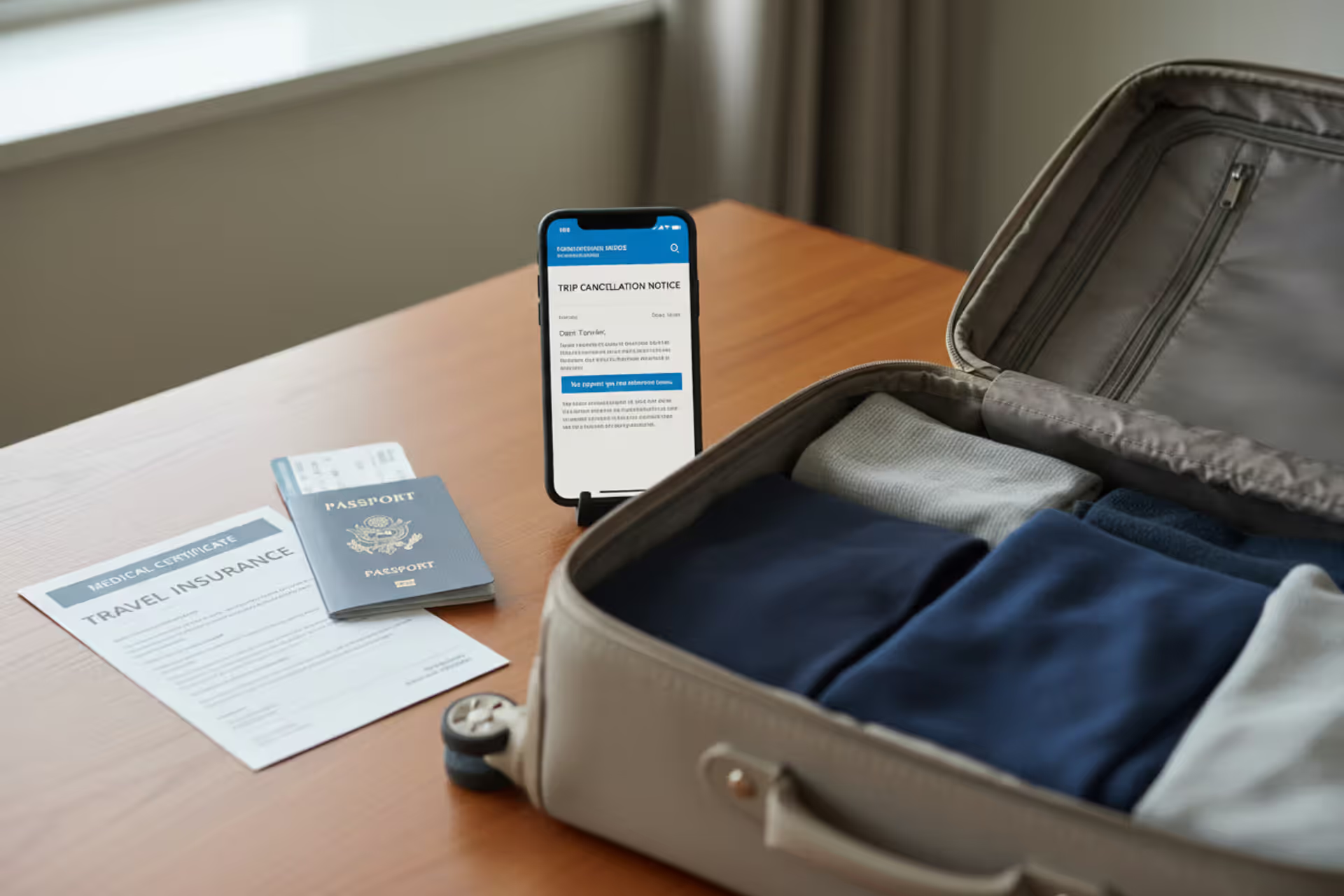
Trip cancellation coverage with COVID protection refunds those nonrefundable costs. You'll need documentation—a positive test from a legitimate provider (no home test photos), dated within your policy's specified window. Most insurers want that test within 48-72 hours of your scheduled departure.
Coverage extends beyond just you. Your travel partner tests positive? You can cancel and claim reimbursement. Your business partner who was joining you in London gets COVID? Covered. Your elderly parent requires hospitalization right before your departure? That triggers coverage too.
Trip interruption mirrors this protection mid-journey. Test positive in Prague on day five of ten? The policy covers your extended hotel stay while you isolate, change fees for rebooking your flight home, and reimbursement for the unused portion of your trip. Keep every receipt—you'll need documentation for each claimed expense.
Quarantine and Isolation Costs
This benefit didn't exist before 2020 because it didn't need to. Now it addresses a uniquely pandemic-era problem: local authorities forcing you to isolate in a hotel room for days or weeks.
You're exposed to COVID on your cruise. Port authorities in Auckland test everyone, find you positive, and mandate ten days of hotel quarantine. You're stuck paying $250 per night plus meals. Quarantine coverage reimburses these costs up to daily limits—typically $100-$300 daily for 10-14 days maximum.
Critical distinction: this covers unexpected quarantine orders during your trip, not entry requirements you knew about beforehand. If Thailand requires all arrivals to quarantine five days and you book anyway, that's not covered. The benefit activates only when authorities surprise you with isolation orders after you've arrived.

Author: Olivia Prescott;
Source: visitmuseumcampussouth.com
What COVID Travel Insurance Does Not Cover
Exclusions trip up more travelers than any other policy aspect. Understanding these gaps prevents expensive surprises.
"I'm nervous about traveling during COVID" doesn't count as a covered reason. Neither does "case counts are rising at my destination" or "I'm worried about the new variant." You need objective, documentable circumstances—a positive test, physician orders, or another specifically listed reason. Generalized anxiety about pandemic conditions won't trigger benefits.
Government advisories create complicated exclusions. Say the State Department issues a Level 3 advisory for Egypt on March 1st. You purchase travel insurance on March 5th for an April trip. Any COVID-related disruptions affecting Egypt typically become excluded because the advisory predated your purchase. The sequence matters enormously: advisories issued after you buy coverage generally don't affect your protection.
Pre-existing condition clauses apply to COVID just like diabetes or heart disease. Had COVID in December? Buying coverage in February for a March trip? If complications from that December infection derail your March travel, you might face a denial. Most policies include 60-180 day lookback periods. However, purchasing within 10-21 days of your first trip payment—and meeting other specified requirements—usually waives these exclusions.
Vaccination requirements create their own exclusions. If France requires proof of vaccination for entry and you can't provide it, your resulting cancellation isn't covered. Policies expect you to meet all entry requirements. Your personal medical decisions remain yours, but insurers won't pay for consequences of not meeting destination mandates.
CFAR riders change this equation. These optional add-ons reimburse 50-75% of prepaid costs when you cancel without any specific reason, as long as you cancel at least 48 hours before departure. Changed your mind? Covered. Uncomfortable with COVID risk? Covered. Found cheaper flights? Covered. You'll pay 40-60% extra for this flexibility, but it eliminates nearly all exclusions.
How to Choose Travel Insurance That Covers COVID

Author: Olivia Prescott;
Source: visitmuseumcampussouth.com
Marketing materials lie. Well, not lie exactly—they emphasize benefits and bury exclusions. Smart shopping means reading what insurance companies wish you wouldn't.
Skip the sales page entirely. Request the Certificate of Insurance or policy wording—the actual contract document. Open it and search for "COVID," "pandemic," "epidemic," and "coronavirus." Note where these terms appear. Some policies mention COVID only in the exclusions section, meaning they don't actually cover it despite marketing claims suggesting otherwise.
Look for specific covered reasons. Good policies explicitly list "COVID-19" or "coronavirus" among covered illnesses for trip cancellation, interruption, and medical benefits. Vague language like "covered illness" without naming COVID leaves room for claim denials.
Pay attention to purchase windows. Most comprehensive benefits—particularly pre-existing condition waivers—require buying coverage within 14-21 days of your initial trip payment. Book flights on January 10th but wait until February 5th to buy insurance? You've likely missed critical benefits. That window starts with your very first trip-related payment, whether that's airfare, hotel deposits, or tour bookings.
Match medical limits to destination costs. Healthcare in Thailand costs less than healthcare in Switzerland. A $50,000 medical limit might handle a week-long Bangkok hospital stay but barely covers three days in Geneva. Scandinavian countries, Japan, and Switzerland demand higher limits—I'd recommend $100,000 minimum for these destinations, $250,000 if you're over 60.
Medical evacuation deserves special attention. This single benefit can cost more than all other medical care combined. A medical flight from Asia to North America runs $150,000-$300,000. Your policy should include at least $250,000 in evacuation coverage for international trips, preferably $500,000.
Check documentation requirements before you travel. Some insurers demand positive tests from specific laboratory types—PCR only, no rapid antigen tests. Others require physician statements using exact language. Discovering these requirements while sick in a foreign country guarantees frustration. Know what documentation you'll need and how to obtain it at your destination.
I've reviewed thousands of denied claims. The overwhelming majority fail because travelers assumed their policy covered COVID without reading the actual terms. The differences between insurers—particularly around timing rules and what documentation they'll accept—can mean the difference between receiving $8,000 and receiving nothing. Marketing summaries don't tell you this. The certificate of insurance does
— Sarah Mitchell
Cost Factors for COVID Cancellation Travel Insurance
COVID coverage doesn't cost extra anymore—it's baked into standard pricing. But several factors dramatically affect what you'll pay.
Your total trip cost drives everything. Insurers calculate premiums as a percentage of prepaid, nonrefundable expenses. That percentage typically ranges from 4-10% depending on coverage level and your age. Book a $3,000 trip? Expect $120-$300 for comprehensive coverage. Planning a $15,000 African safari? Budget $600-$1,500 for insurance. The math scales linearly—double your trip cost, double your premium.
Destination risk influences pricing more than most travelers realize. Ecuador? Reasonable premiums. Switzerland? Higher premiums despite Switzerland's superior healthcare, because Swiss medical care costs three times more than Ecuadorian care. Insurers adjust pricing based on claims data showing what medical care actually costs in different countries.
Age creates the biggest premium variations. A 30-year-old and 70-year-old buying identical coverage for the same trip pay wildly different premiums—often the older traveler pays 2-3x more. Why? Older travelers file more medical claims and those claims cost more. Some carriers cap coverage at age 75 or 80. Others continue coverage but require medical questionnaires.
Coverage tiers multiply costs. Basic trip cancellation policies covering only cancellation benefits and minimal medical care ($25,000-$50,000) cost least. Comprehensive plans adding emergency evacuation, quarantine coverage, and high medical limits ($250,000-$500,000) cost significantly more. CFAR riders add another 40-60% to your base premium.
Timing affects cost less than you'd think. Buying coverage today versus buying it three months from now (assuming your trip is still months away) costs roughly the same. But early purchase protects you from events occurring between now and departure. That's the real advantage—not price savings, but time coverage.
| Coverage Type | What's Covered | Common Exclusions | Typical Cost Impact |
| Trip Cancellation | Nonrefundable expenses when you test positive before departure; family illness; destination lockdowns imposed after purchase | Anxiety about traveling; advisories predating purchase; voluntary changes | Base cost: 4-6% of trip cost |
| Medical Expenses | Hospital care, doctor visits, medications for COVID contracted while traveling | COVID within pre-existing lookback period; care available through domestic insurance | Included in comprehensive plans; adds 2-3% for medical-only coverage |
| Emergency Evacuation | Transport to adequate facility or home when local care insufficient for severe COVID | Non-emergency transport; evacuation from destinations with pre-existing advisories | Adds 1-2%; recommend $250,000+ limits |
| Quarantine Coverage | Hotel, meals, essentials during mandatory isolation ($100-$300 daily for 10-14 days typically) | Pre-departure quarantine requirements known at purchase; voluntary isolation | Adds 0.5-1% |
| Cancel For Any Reason | 50-75% reimbursement when canceling without covered reason (must cancel 48+ hours pre-departure) | Last-minute cancellations; partial trip modifications | Adds 40-60% to base cost |
When to Buy COVID Medical Travel Insurance Coverage
Timing determines what you can claim and whether certain benefits even apply.
Buy insurance within 10-21 days of your first trip payment—whether that's an airline ticket, hotel deposit, or tour booking—to unlock time-sensitive benefits. This window triggers pre-existing condition waivers. Miss it and recent COVID infections might disqualify you from coverage.
Let me be specific about "initial trip deposit." You book a flight in January. You add hotels in February. You purchase show tickets in March. When does your coverage window start? January—with that first flight purchase. Insurers define "initial deposit" as your very first financial commitment to the trip, regardless of what other components you add later.
Waiting until closer to departure doesn't save money. Premiums reflect trip cost, coverage level, and your age—not how far away your departure sits. You'll pay the same premium in January for a June trip as you'd pay in May for that same June trip. But waiting exposes you to events occurring in those intervening months.
Real example: You book an Italy trip in February for June departure but don't buy insurance. In April, you test positive for COVID and develop complications. In May, you try buying insurance for your June trip. Every insurer will now exclude coverage related to your April COVID diagnosis because it falls within their lookback period. Had you purchased in February, you'd have been covered.
Multi-trip annual policies make sense for frequent travelers. These plans cover unlimited trips within a year, with each trip limited to a specified duration (typically 30-60 days). Take three or more trips annually? Annual coverage usually costs less than buying separate single-trip policies and guarantees continuous protection without coverage gaps.
Watch your destination's COVID situation after purchasing, but understand that changing conditions rarely justify cancellation under standard policies. Rising case counts don't trigger coverage. You need objective measures: government-imposed travel bans, destination lockdowns, or your own positive test. CFAR riders provide flexibility that standard policies don't—that's why they cost 40-60% extra.
Frequently Asked Questions About Travel Insurance and COVID
Insurance evolved from excluding COVID entirely in early 2020 to treating it like any covered illness by 2022. That evolution created genuine protection—but also complexity hidden in timing rules, documentation requirements, and exclusion clauses most travelers never read.
Your ideal coverage depends on circumstances: where you're going, how much you're spending, your age, your health, how much risk keeps you awake at night. A $2,000 weekend trip to Mexico needs different protection than a $15,000 three-week journey through Asia. A healthy 30-year-old faces different risks than a 70-year-old managing chronic conditions.
Buy coverage within 10-21 days of your first trip-related payment—whether that's airfare, deposits, or anything else—to access time-sensitive benefits like pre-existing condition waivers. Read the actual Certificate of Insurance, not marketing summaries that emphasize benefits and bury exclusions. Confirm COVID appears in covered reasons sections, not just exclusions. Understand what documentation your insurer requires before you leave, not when you're sick abroad trying to file a claim.
COVID proved travel involves unpredictable risks that can cost thousands or tens of thousands when they materialize. Smart insurance doesn't eliminate those risks—it prevents them from becoming financial disasters. Protection exists in 2026, but only if you know which policies actually deliver what they promise
Related Stories
Read more

Read more




The content on this website is provided for general informational and educational purposes only. It is intended to offer guidance on travel insurance topics, including coverage options, premiums, deductibles, trip cancellation protection, travel medical insurance, baggage coverage, travel delays, emergency medical evacuation, and related travel protection matters. The information presented should not be considered legal, medical, financial, or professional insurance advice.
All articles and explanations published on this website are for informational purposes only. Travel insurance policies can vary between providers, and details such as coverage limits, exclusions, reimbursement conditions, waiting periods, eligibility requirements, and claim outcomes may differ depending on the insurer, policy type, destination, traveler age, health status, and trip details.
While we strive to keep the information accurate and up to date, this website makes no guarantees regarding the completeness or reliability of the content. Use of this website does not create a professional relationship. Visitors should review the official policy documents provided by insurance companies and consult with licensed insurance professionals or qualified advisors before making decisions about travel insurance coverage.