

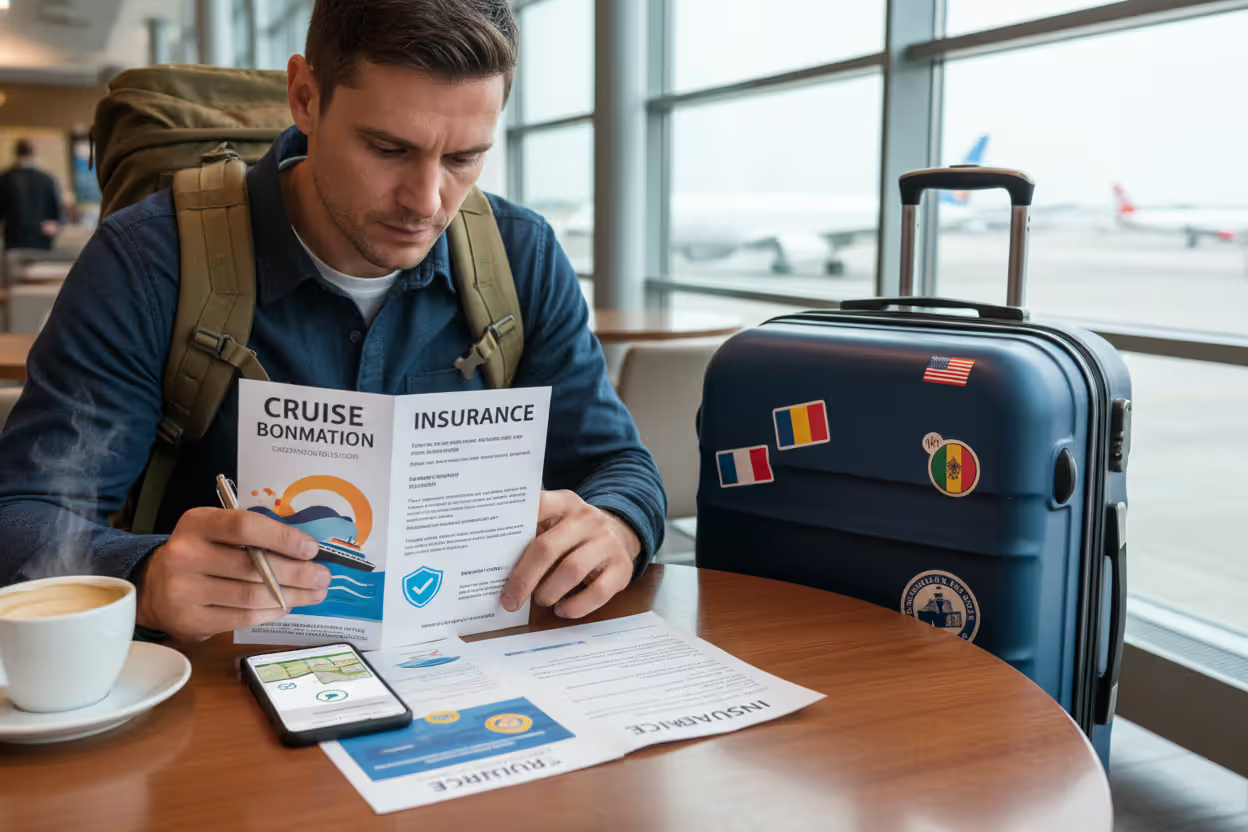
Traveler comparing travel insurance options before a trip
When to Buy Travel Insurance for Your Trip?

Most travelers book their trip and then wonder whether they should purchase travel insurance immediately or wait. The answer isn't always straightforward, but timing can mean the difference between comprehensive protection and significant coverage gaps that leave you financially exposed.
The sweet spot for purchasing travel insurance typically falls within 10 to 21 days after making your initial trip deposit. This window unlocks critical benefits that disappear if you wait too long. But the right timing also depends on your trip type, health status, and specific coverage needs.
Why Timing Matters for Travel Insurance Coverage
When should you get travel insurance? The answer directly impacts which protections you'll receive. Unlike car or home insurance, travel insurance includes time-sensitive benefits that require action within specific windows.
Pre-existing medical condition waivers represent the most significant timing consideration. If you have diabetes, high blood pressure, or any documented health issue, most insurers will exclude coverage for complications related to these conditions—unless you buy your policy within their specified timeframe, typically 10 to 21 days of your initial trip payment.
Cancel for any reason (CFAR) coverage follows similar rules. This premium upgrade lets you cancel your trip for reasons not covered under standard policies and receive 50-75% of your prepaid, non-refundable expenses. Insurers require you to purchase CFAR within 10 to 30 days of your initial deposit, and you must insure 100% of your prepaid trip costs.
Travel insurance timing also affects supplier default protection. If you book a cruise or tour package, coverage for financial default of the travel supplier only applies when you purchase insurance shortly after booking. Wait too long, and you won't be covered if your tour operator goes bankrupt before departure.
Author: Dylan Mercer;
Source: visitmuseumcampussouth.com
The competitive pricing window matters too. Insurers calculate premiums based partly on the time between purchase and departure. Buying early doesn't necessarily save money, but waiting until the last minute can trigger higher rates or limit your options.
Best Time to Purchase Travel Insurance After Booking
The 10 to 21 day window after your initial trip deposit represents the optimal purchase period for most travelers. This timeframe unlocks maximum benefits while giving you enough time to research policies and compare options.
When should i get travel insurance after booking a cruise? Within 14 days of your first payment. Cruise lines often require deposits months in advance, and this early payment starts your coverage clock ticking. Missing the 14-day mark means forfeiting the pre-existing condition waiver, which matters significantly for older travelers or anyone with documented health issues.
For international flights and package tours, the same principle applies. Your "initial trip deposit" means the first payment that puts you at financial risk—whether that's a $500 deposit on a $5,000 tour or full payment for airline tickets purchased nine months out.
The Pre-Existing Condition Waiver Window
Pre-existing condition waivers eliminate the most common reason for claim denials. Without this waiver, insurers can deny medical claims if your condition relates to anything documented in your medical history during the lookback period (typically 60 to 180 days before purchasing insurance).
Here's a real scenario: A 67-year-old traveler books a Mediterranean cruise for $8,000, paying a $2,000 deposit. She has well-controlled high blood pressure and takes daily medication. Six weeks later, she purchases travel insurance. Three weeks before departure, she experiences chest pain and her doctor advises against traveling. She cancels the cruise and files a claim for her $8,000 in non-refundable costs.
The insurer denies the claim because her chest pain relates to her pre-existing cardiovascular condition, and she purchased insurance outside the 14-day window. Had she bought coverage within 14 days of her deposit, the pre-existing condition waiver would have covered her claim in full.

Author: Dylan Mercer;
Source: visitmuseumcampussouth.com
The waiver requirements vary by insurer but typically include: - Purchase within 10 to 21 days of initial trip deposit - Insure 100% of prepaid, non-refundable trip costs - Be medically able to travel when purchasing the policy
Cancel for Any Reason Coverage Requirements
CFAR coverage provides the ultimate flexibility, covering cancellations for reasons like work conflicts, family concerns, or simply changing your mind. This premium add-on costs 40-60% more than standard policies but returns 50-75% of your non-refundable expenses.
How early to get travel insurance with CFAR? Most insurers require purchase within 10 to 30 days of your initial deposit. Squaremouth, a leading comparison site, notes that approximately 10% of travelers add CFAR to their policies, with the percentage climbing to 25% for high-value trips over $10,000.
Additional CFAR requirements include: - Cancel at least 48 hours before departure - Insure 100% of prepaid trip costs - Purchase the full policy (CFAR is an upgrade, not standalone coverage)
A business traveler books a $3,500 conference trip to London four months in advance. She purchases insurance with CFAR within 15 days of booking. Six weeks before departure, her company announces a major client presentation scheduled during her conference dates. She cancels the trip and recovers $2,625 (75% of her costs) through CFAR coverage. Without it, this wouldn't qualify as a covered reason under standard trip cancellation.
How Early Is Too Early to Get Travel Insurance
Booking a dream vacation 12 months in advance raises the question: should you buy insurance immediately? Generally, purchasing more than six months before departure offers minimal advantages and some potential drawbacks.
Trip costs often change between booking and departure. You might add excursions, upgrade your hotel, or book additional nights. Each addition requires updating your policy or purchasing supplemental coverage. Buying too early means managing multiple policy adjustments.
Medical situations can evolve. If you buy insurance 10 months before travel while healthy, then develop a medical condition seven months before departure, that condition becomes "pre-existing" for your policy. The pre-existing condition waiver you secured by buying early only covers conditions that existed before you purchased insurance—not conditions that develop afterward.
Financial considerations matter. Travel insurance for a $7,000 trip might cost $350 to $500. Paying this cost 11 months early ties up money that could remain in your savings account. Unlike refundable trip deposits, insurance premiums are only refundable during a brief review period (typically 10 to 15 days after purchase, and only if you haven't departed and haven't filed a claim).
The exception: cruises and tours requiring full payment 90 to 120 days before departure. If you must pay $12,000 three months out, purchase insurance shortly after that payment to protect the full amount. Don't wait until two weeks before sailing.
Last-Minute Travel Insurance: What You Can Still Get
Travel insurance before departure—even the day before—remains available, but with significant limitations. Last-minute policies provide emergency medical coverage, baggage protection, and travel delay benefits, but exclude most trip cancellation scenarios.
Purchasing insurance 72 hours before departure typically means: - No pre-existing condition waiver - No CFAR coverage - Limited trip cancellation (usually only for covered reasons like hospitalization, not minor illness) - Full emergency medical and evacuation coverage - Standard baggage and travel delay benefits

Author: Dylan Mercer;
Source: visitmuseumcampussouth.com
A traveler books a last-minute flight to Mexico City departing in 48 hours. She purchases a $75 policy that won't cover trip cancellation but provides $50,000 in emergency medical coverage and $500 for baggage delay. During her trip, she develops severe food poisoning requiring hospitalization. Her policy covers the $3,200 hospital bill and $800 in additional accommodation costs during recovery.
Same-day insurance purchases work for spontaneous travelers who need medical coverage abroad but have minimal non-refundable trip costs. A business traveler with a company-paid, changeable ticket needs emergency medical coverage more than trip cancellation protection.
Some insurers impose waiting periods for last-minute purchases. A policy bought three days before departure might include a 48-hour waiting period for trip cancellation benefits, though emergency medical coverage typically begins immediately.
Common Mistakes When Timing Your Travel Insurance Purchase
The travelers who face the most difficult claims situations are those who understood they needed insurance but didn't realize timing mattered. They bought a policy, assumed they were protected, then discovered critical exclusions that would have been covered had they purchased just two weeks earlier
— Stan Sandberg
Real-world timing errors cost travelers thousands in denied claims. Understanding these scenarios helps you avoid similar mistakes.
Waiting for final payment: A family books a Disney vacation with a $500 deposit in January for a July trip. They wait until making final payment in May to purchase insurance, assuming the 14-day window applies to final payment. Wrong. The clock started with the January deposit. They forfeit the pre-existing condition waiver and CFAR eligibility.
Buying before booking: An enthusiastic traveler purchases annual multi-trip insurance in March, then books a cruise in April. The cruise line goes bankrupt in June. Her claim is denied because supplier default coverage requires purchasing insurance within days of trip payment, not before.
Assuming employer coverage is sufficient: A consultant relies on his corporate travel accident policy and doesn't purchase additional insurance within the optimal window. When his mother falls ill two days before his international conference, he must cancel. His employer policy covers accidental death and dismemberment, not trip cancellation. He loses $4,200 in non-refundable expenses.
Purchasing too many small policies: A traveler books flights, hotels, and tours separately over three months, buying separate insurance for each component. She pays $180 in total premiums for fragmented coverage with gaps. A single comprehensive policy purchased after her first booking would have cost $130 and provided better protection.
Missing the departure date deadline: Most policies must be purchased before departure from home. A traveler on a two-week East Coast trip decides to extend with a Caribbean cruise. He tries buying cruise coverage while already traveling. Insurers deny the application because he's already departed his primary residence.
Travel Insurance Timing by Trip Type
Different trips demand different timing strategies. This table outlines optimal purchase windows based on trip characteristics.
| Trip Type | Ideal Purchase Window | Coverage Priority | Why Timing Matters |
| Cruise | 10-14 days after deposit | Pre-existing waiver, supplier default | Cruises require early deposits; lines occasionally face financial issues; medical waivers critical for older cruisers |
| International Flight | 14-21 days after booking | Emergency medical, CFAR | Medical coverage abroad essential; CFAR valuable for long-advance bookings; flight changes less risky than cruise cancellations |
| Adventure/Extreme Sports | 7-14 days after deposit | Hazardous activity coverage, emergency evacuation | Specialized coverage requires early purchase; evacuation from remote areas costs $50,000+; verify activity coverage before buying |
| All-Inclusive Package | 10-21 days after deposit | Supplier default, pre-existing waiver | Tour operators face higher bankruptcy risk; comprehensive medical coverage needed; early purchase protects full package value |
| Business Travel | 1-7 days before departure | Trip interruption, baggage | Corporate policies often cover basics; personal policy fills gaps; cancellation less critical with flexible tickets |
| Last-Minute Booking | Immediately at booking | Emergency medical, baggage | Limited cancellation benefit; medical coverage abroad crucial; same-day purchase acceptable for medical/baggage only |
When to buy travel insurance depends heavily on your trip structure. A $15,000 African safari booked 11 months in advance requires different timing than a $800 weekend flight to Las Vegas booked three weeks out.
Frequently Asked Questions About Travel Insurance Timing
The question of when to buy travel insurance has a clear answer for most travelers: within 10 to 21 days of making your initial trip deposit. This window maximizes your coverage benefits, unlocks pre-existing condition waivers, and preserves your option to add CFAR coverage.
Timing matters more for some travelers than others. A 70-year-old booking a $12,000 river cruise should purchase insurance within 14 days of deposit, no exceptions. A healthy 25-year-old booking a $600 domestic flight has more flexibility, though buying at booking still makes sense to avoid forgetting.
The costliest mistake isn't buying insurance too early or too late—it's failing to understand how timing affects your specific coverage needs. Before clicking "purchase" on your next trip, determine your initial trip payment date, add 14 days to your calendar, and commit to buying insurance before that deadline passes.
Your next trip deserves protection matched to your actual risks. Understanding when to buy travel insurance transforms a confusing decision into a straightforward step in your travel planning process—one that could save you thousands if the unexpected occurs.
Related Stories

Read more

Read more


The content on this website is provided for general informational and educational purposes only. It is intended to offer guidance on travel insurance topics, including coverage options, premiums, deductibles, trip cancellation protection, travel medical insurance, baggage coverage, travel delays, emergency medical evacuation, and related travel protection matters. The information presented should not be considered legal, medical, financial, or professional insurance advice.
All articles and explanations published on this website are for informational purposes only. Travel insurance policies can vary between providers, and details such as coverage limits, exclusions, reimbursement conditions, waiting periods, eligibility requirements, and claim outcomes may differ depending on the insurer, policy type, destination, traveler age, health status, and trip details.
While we strive to keep the information accurate and up to date, this website makes no guarantees regarding the completeness or reliability of the content. Use of this website does not create a professional relationship. Visitors should review the official policy documents provided by insurance companies and consult with licensed insurance professionals or qualified advisors before making decisions about travel insurance coverage.