
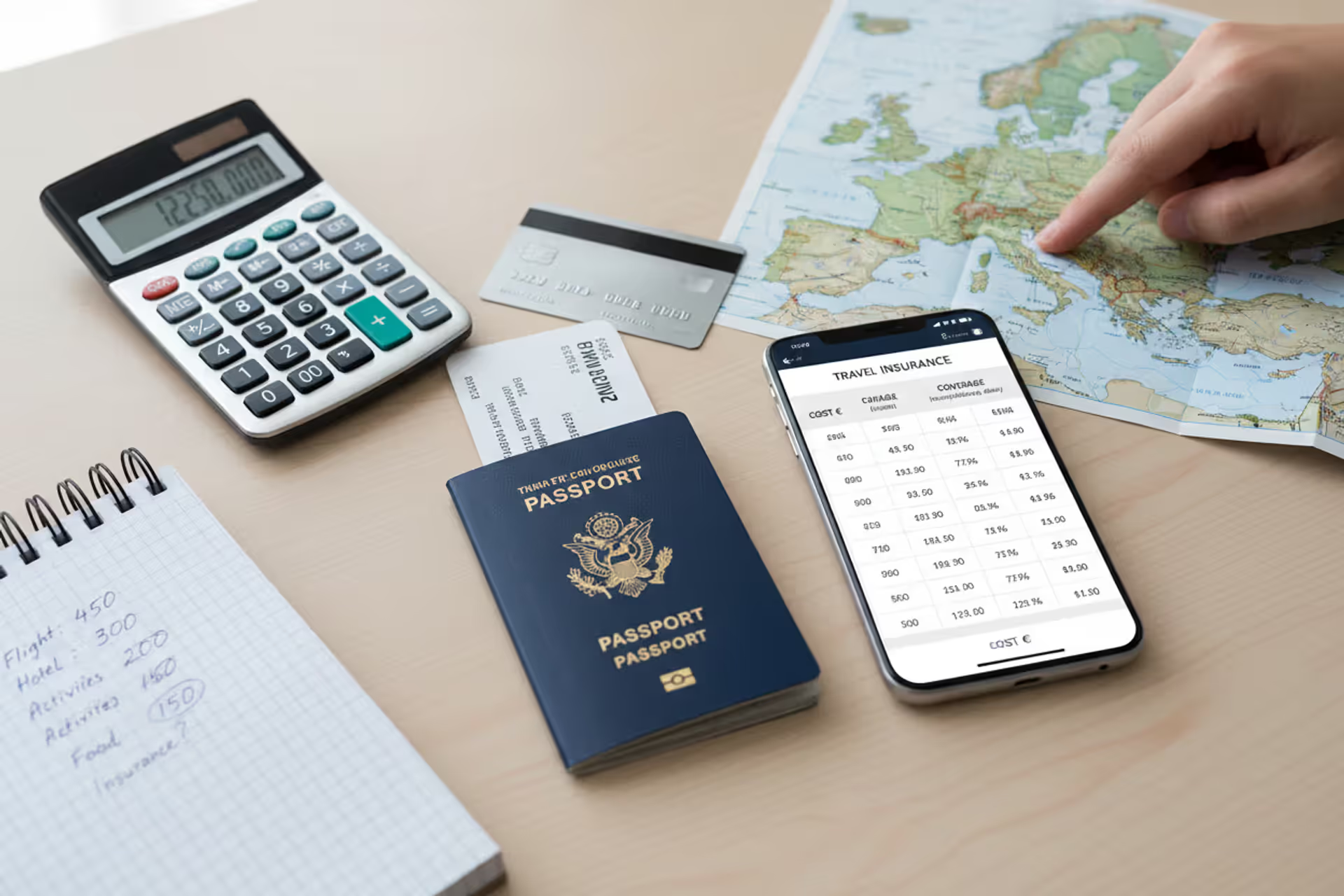
Travel planning desk with passport, tickets, calculator, and insurance comparison on smartphone
How Much Is Travel Insurance for Your Trip?

Planning a $4,000 European vacation? You'll probably spend somewhere between $160 and $400 protecting it—that's the 4-10% range most travelers pay for comprehensive insurance. But here's the thing: a 35-year-old might pay $180, while someone who's 65 could easily see $450 for the exact same trip.
The actual number on your quote depends on a bunch of stuff insurers care about: where you're going, how old you are, what you want covered. Nobody wants to think about their Barcelona trip getting derailed by a medical emergency or canceled because of a family crisis. But knowing what you'll actually pay helps you decide if protection makes sense for your situation.
Average Travel Insurance Costs in the U.S.
Here's what most people actually spend: somewhere between $150 and $500 per trip when they buy comprehensive coverage. The sweet spot? Around $250 for your typical week in Europe or the Caribbean if you're middle-aged.
Let's get specific with a $3,000 trip: - You're 25? Budget $120-$240 (roughly 4-8%) - Pushing 40? More like $150-$270 (5-9%) - In your 50s? Expect $210-$360 (7-12%) - Over 65? Plan for $270-$480 (9-16%)
Now bump that up to a $7,500 cruise: - Twenty-somethings pay $300-$600 - Folks in their 40s see $450-$750 - Seniors? You're looking at $675-$1,200
Medical-only policies run way cheaper—maybe $30-$80 for a week abroad—but you're only covered for emergencies, not cancellations or lost bags. Want cancel-for-any-reason? Tack on another 40-60% to whatever base price you got quoted. It's expensive, but you can back out for literally any reason and still get most of your money back.
The range exists because of choices you'll make. Pick high deductibles and skip the bells and whistles? You're at the bottom. Want zero deductible and maximum flexibility? That's the top number.
What Affects Travel Insurance Prices
What you're spending on the trip matters most. Insurers need to cover what they'd reimburse if everything falls apart. Book a $15,000 African safari and your premium reflects that big potential payout. A $2,000 beach week? Much smaller risk for them, smaller bill for you.
Age cranks up the price fast. Once you hit 60, expect premiums jumping 50-100% compared to someone in their 30s. Medical stuff costs more and happens more often as we age—insurers price that in. A 70-year-old basically pays double what a 40-year-old pays. It's not fair, but it's how the math works.

Author: Olivia Prescott;
Source: visitmuseumcampussouth.com
Where you're headed changes things. Tokyo or Paris? Pretty reasonable. Remote Indonesian islands requiring helicopter evacuations? That costs more to insure. Countries with crazy-expensive healthcare (looking at you, Switzerland) or political instability push your premium higher. A Toronto trip costs way less to cover than one to rural Mongolia.
The type of coverage creates the biggest price swings. Medical-only runs 60-80% cheaper than comprehensive. Cancel-for-any-reason jacks everything up because insurers can't push back on your reasons. Adventure sports coverage? Add $50-$150 depending on whether you're zip-lining or BASE jumping.
Pre-existing conditions complicate pricing. Standard policies won't cover them unless you buy within 10-21 days of booking AND meet specific requirements. Need specialized coverage for chronic stuff? You're paying 20-40% more, minimum.
Trip length affects cost, but not linearly. Two weeks doesn't cost double one week—cancellation coverage stays the same regardless of duration. Medical coverage does scale up with more time exposed to risk, though. Anything over 30 days usually needs a different policy type priced on its own formula.
Travel Insurance Cost by Trip Type
Domestic vs. International Trips
U.S.-only travel runs 30-50% cheaper because you don't need medical evacuation back home—you're already here. Your regular health insurance probably works domestically (check first!), so you're mainly buying cancellation protection and baggage coverage.
Take that $4,000 budget. Domestic? You'll pay $120-$280. International? More like $200-$400. For travelers over 60, that gap gets even wider since international medical coverage is where costs really balloon.
Some people skip insurance altogether on cheap domestic trips under $2,000. Makes sense if you booked refundable rooms and grabbed budget flights. But non-refundable deposits change that calculation fast.
Cruise Insurance Costs
Cruises run 5-9% of your fare to insure—slightly pricier than land trips. Why? Complex cancellation penalties and weird risks like missing your ship at departure. That $5,000 cruise typically costs $250-$450 to protect.
Cruise-specific policies cover stuff like missed connections causing you to miss embarkation, itinerary changes when ports get skipped, cabin confinement if you get sick onboard. These extras add $30-80 versus comparable land coverage.

Author: Olivia Prescott;
Source: visitmuseumcampussouth.com
The cruise line will happily sell you their policy. Don't bite. Third-party coverage usually beats their offering by a mile—better benefits, fewer exclusions, often cheaper. Their $300 policy might match what you'd get from a third-party for $200.
Group and Family Travel
Families get a break: covering two adults and kids under 18 costs just 10-20% more than insuring the parents alone. A family of four on a $6,000 trip pays $400-$600, versus $350-$500 for just mom and dad.
Groups of 10+ sometimes qualify for discounts—5-15% off per person. Wedding parties and company retreats can benefit here, though everyone needs to purchase together.
Insuring kids separately? Don't. Family policies assume kids travel with parents and price accordingly. Individual child policies make zero financial sense.
How to Calculate Your Travel Insurance Cost
Quick math: take your total trip cost, multiply by 5-7%. That $5,000 vacation suggests a $250-350 premium for comprehensive stuff. Over 60 or need specialty coverage? Adjust upward.

Author: Olivia Prescott;
Source: visitmuseumcampussouth.com
Add up everything non-refundable you've prepaid: flights, hotels, tours, concert tickets, rental deposits. Don't count meals you'll buy there or souvenir money—just what you'd forfeit by canceling tomorrow.
Quote tools online give you real numbers in minutes. Hit up comparison sites showing multiple insurers at once, not single-company pages. You'll need: - Honest trip cost (lowballing voids claims later) - Travel dates - Destination - Everyone's age and home state - Coverage level you want
Pull at least three quotes. Cheapest isn't always best—that policy costing $50 less might have a $500 deductible versus $100. File one claim and you've lost your "savings."
Your state matters more than you'd think. New York and Washington residents sometimes pay 10-15% extra versus Texas or Florida folks for identical coverage. State regulations vary and insurers pass those costs along.
Request quotes 2-3 months out when possible. Last-minute shopping (under two weeks before departure) limits options and kills certain time-sensitive perks like pre-existing condition waivers.
Ways to Lower Travel Insurance Costs
Annual multi-trip plans make sense for frequent travelers. Take three trips yearly? These run $400-$800 and cover unlimited trips up to 30-45 days each. Someone taking four $3,000 trips would otherwise pay $1,200-$1,600 for individual policies. Annual coverage? Maybe $500-$700 total.
Shop around. Seriously. Four to five quotes typically show 20-40% price swings for similar protection. Different insurers weight factors differently—one hammers seniors on price, another focuses more on destination risk. Fifteen minutes of comparing saves $50-$150 on average.
Tweak your coverage limits intelligently. Does your health insurance work internationally? (Check—many don't.) If yes, maybe drop medical coverage from $100,000 to $50,000, saving 15-25%. You're still protected, just leveraging other coverage you already have.
Higher deductibles cut premiums 10-20%. Choose $250 instead of $0 and that $300 premium might drop to $240. Works great if you're comfortable covering small stuff out-of-pocket.
Early purchase sometimes scores discounts. Buy within 7-21 days of your initial trip deposit and some insurers knock off 5-10%. Not always advertised, but unlocks pre-existing condition waivers and cancel-for-any-reason eligibility windows too.
Skip stuff you don't need. Cancel-for-any-reason sounds amazing but adds 40-60% to your bill. Traveling during low-risk seasons with a flexible employer? Standard cancellation probably covers you. Similarly, adventure sports riders are useless for beach lounging.
Credit card benefits might cover you already. Premium travel cards often provide $1,500-$10,000 in trip cancellation/interruption when you book with the card. Read the fine print carefully—these typically exclude medical coverage and have strict claim filing requirements.
When Travel Insurance Is Worth the Cost
Makes sense when your non-refundable costs exceed what you'd comfortably eat as a loss. Would canceling a $6,000 vacation hurt financially? Then $300-$400 for protection is reasonable. Got an $800 weekend with refundable hotels? Maybe skip it.
Big-ticket trips basically demand coverage. Once non-refundable prepaid stuff hits $3,000-$4,000, the math favors insurance. That $10,000 anniversary trip protected by a $600 policy means you're paying 6% to protect 100% of your investment. Easy call.
Health stuff makes this essential. Chronic conditions, over 65, or any elevated medical risk? International medical evacuations run $50,000-$150,000. A single Swiss ER visit can top $5,000. That $300 policy covering $100,000 in medical expenses is cheap insurance.

Author: Olivia Prescott;
Source: visitmuseumcampussouth.com
Some destinations carry more risk. Political instability, frequent natural disasters, sketchy healthcare quality all matter. Going somewhere with active weather threats during hurricane season? Countries with travel warnings? Remote places with limited medical facilities? Prioritize coverage. Iceland in July carries different risk than Southeast Asia during monsoon season.
Your likelihood of canceling varies by circumstances. Aging parents, demanding job, school-age kids? Higher cancellation odds than retired couples with flexible schedules. Canceled 2-3 trips in the past five years? Insurance becomes more valuable for you specifically.
Booking timeline creates risk. Planning 11 months out? More opportunity for job changes, health issues, family emergencies than booking six weeks ahead. Longer planning horizons increase odds you'll need to cancel for something.
Most travelers pay between 4% and 10% of their trip cost for comprehensive coverage, but that small percentage can protect thousands of dollars in non-refundable expenses. The question isn't whether insurance costs too much—it's whether you can afford to lose your entire trip investment
— Sarah Chen
Sample Travel Insurance Costs by Trip Details
| Trip Cost | Traveler Age | Destination Type | Trip Length | Estimated Premium |
| $2,000 | 30 | Domestic | 1 week | $80-$140 |
| $2,000 | 50 | Domestic | 1 week | $100-$180 |
| $2,000 | 70 | Domestic | 1 week | $140-$260 |
| $5,000 | 30 | International | 1 week | $200-$350 |
| $5,000 | 50 | International | 1 week | $300-$450 |
| $5,000 | 70 | International | 1 week | $450-$700 |
| $5,000 | 30 | International | 2 weeks | $250-$400 |
| $5,000 | 50 | International | 2 weeks | $350-$550 |
| $10,000 | 30 | International | 2 weeks | $500-$800 |
| $10,000 | 50 | International | 2 weeks | $650-$1,000 |
| $10,000 | 70 | International | 2 weeks | $900-$1,600 |
Ranges shown reflect comprehensive coverage with standard deductibles. Your actual cost varies by specific insurer, exact destination, options selected, and state of residence.
Frequently Asked Questions About Travel Insurance Costs
What you pay for travel insurance reflects what you're actually buying, not random pricing. That $300 premium on a $5,000 trip? You're paying 6% to protect 100% of your investment while gaining medical coverage that could prevent financial catastrophe.
Calculate your actual trip cost honestly—everything you'd lose canceling tomorrow. Get quotes from multiple providers since pricing swings wildly between insurers for identical travelers. Read policy details carefully because the cheapest option often means higher deductibles, lower coverage limits, or more exclusions buried in fine print.
Think about your personal risk factors: age, health status, trip complexity, financial ability to absorb losses. Insurance makes most sense protecting significant non-refundable expenses, traveling internationally, or facing elevated cancellation risks from health or family circumstances.
Balance adequate protection with reasonable cost. You don't need every available add-on, but skimping to save $50 defeats the whole purpose. Most travelers find comprehensive policies priced at 5-7% of trip cost hit the sweet spot—solid protection without overpaying for unnecessary features you'll never use.
Related Stories

Read more

Read more



The content on this website is provided for general informational and educational purposes only. It is intended to offer guidance on travel insurance topics, including coverage options, premiums, deductibles, trip cancellation protection, travel medical insurance, baggage coverage, travel delays, emergency medical evacuation, and related travel protection matters. The information presented should not be considered legal, medical, financial, or professional insurance advice.
All articles and explanations published on this website are for informational purposes only. Travel insurance policies can vary between providers, and details such as coverage limits, exclusions, reimbursement conditions, waiting periods, eligibility requirements, and claim outcomes may differ depending on the insurer, policy type, destination, traveler age, health status, and trip details.
While we strive to keep the information accurate and up to date, this website makes no guarantees regarding the completeness or reliability of the content. Use of this website does not create a professional relationship. Visitors should review the official policy documents provided by insurance companies and consult with licensed insurance professionals or qualified advisors before making decisions about travel insurance coverage.