

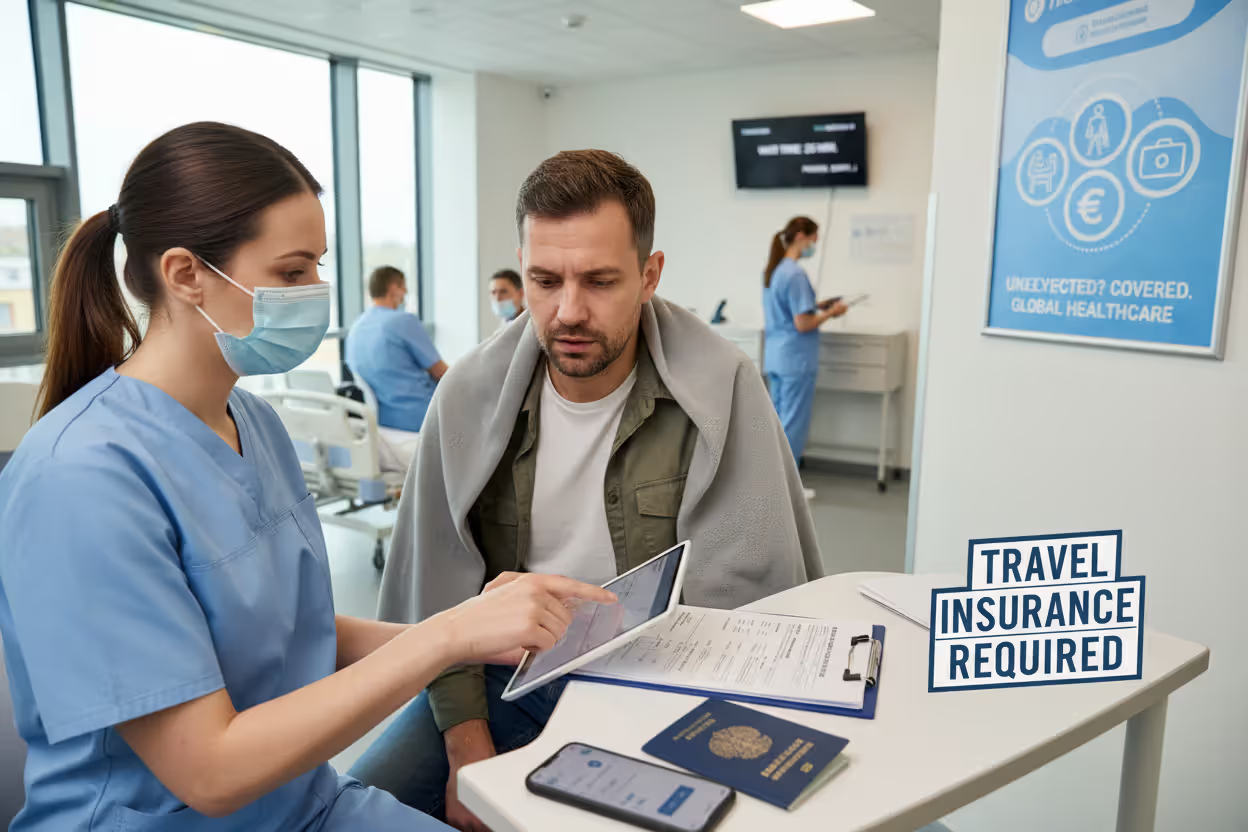
Traveler reviewing travel documents, passport, and insurance before a trip
Is Travel Insurance Mandatory for Your Trip?

You've picked your destination. Flights are booked. Hotels confirmed. Then someone mentions travel insurance, and suddenly you're wondering: Do I actually need this?
Here's the thing—there's no one-size-fits-all answer. Your friend might have flown to Mexico without insurance last month. But try entering Cuba without coverage proof, and airport staff will stop you at check-in. Some tour companies won't let you join their groups without it. Other times, nobody checks at all.
Where you're headed, who's organizing your trip, and how you're traveling all determine whether coverage is legally required, contractually mandatory, or just a smart financial move.
Let's cut through the confusion and figure out exactly when you must have coverage versus when you're simply rolling the dice by skipping it.
Understanding Travel Insurance Requirements
Think of travel insurance requirements in three buckets.
First bucket: Government-mandated coverage. Certain countries write insurance requirements directly into their immigration laws. No compliant policy? No visa. No entry. Immigration officers actually check your paperwork.
Second bucket: Contractual requirements from travel companies. Your tour operator, cruise line, or study abroad program makes insurance a condition of participation. The destination country might not care, but your trip provider does. Break the contract terms, and you're off the trip.
Third bucket: Nobody forces you, but skipping it could wreck you financially. Most US domestic travel lives here. You're legally allowed to go uninsured, but one emergency could cost you thousands.
Here's where it gets messy: these categories overlap constantly. Thailand might not require insurance for two-week tourists but mandates it for retirement visa holders. Your tour company might skip insurance requirements for California wine country tours but enforce them strictly for Patagonia treks. Requirements also shift based on global events—health crises, political changes, or natural disasters trigger sudden policy updates.
The confusion isn't your fault. Requirements genuinely change based on dozens of variables.

Author: Dylan Mercer;
Source: visitmuseumcampussouth.com
When Travel Insurance Is Mandatory by Law
Some countries don't suggest insurance. They demand it, check for it, and turn travelers away without it.
Schengen Visa Travel Insurance Requirements
The Schengen Area runs the tightest insurance enforcement affecting American travelers. Twenty-seven European nations operate under shared visa rules: France, Germany, Italy, Spain, Greece, Portugal, Austria, Netherlands, Belgium, Switzerland, Sweden, Norway, Denmark, Finland, Iceland, Poland, Czech Republic, Hungary, Slovakia, Slovenia, Estonia, Latvia, Lithuania, Luxembourg, Malta, and Liechtenstein.
Americans get 90 days of visa-free travel within any 180-day window. For these short tourist visits, you won't face mandatory insurance checks (though ETIAS registration starts in 2024). But longer stays requiring actual Schengen visas? Insurance becomes non-negotiable.
Your policy must cover €30,000 minimum—roughly $33,000—for medical expenses, emergency hospital care, and getting you home if things go really wrong. Coverage has to span your entire visit and work in every Schengen member state. That budget $10,000 policy you found online? Consulates will reject it instantly. They verify coverage before stamping visas, and border agents can demand proof when you land.
Other Countries Requiring Proof of Coverage
Cuba checks everyone. All visitors must prove they carry medical expense coverage. Airlines verify this at check-in for Havana flights. Show up without documentation, and you'll buy Cuban insurance at the airport—typically pricier than arranging it beforehand.
Ecuador enforces insurance for long-stayers. Visits exceeding 90 days and certain visa categories require coverage. Quick tourist visits usually get a pass, though immigration agents might ask about sufficient funds or return tickets.
United Arab Emirates ties requirements to specific visa types. Tourist visas through hotels or tour operators often bundle basic coverage automatically. Independent travelers should double-check their particular visa category's rules.
Turkey doesn't blanket-require insurance for tourists but mandates it for student visa applicants, work permit holders, and other long-term residents. Requirements shift based on nationality and visit purpose.
Thailand implemented mandatory health insurance for certain long-stay visas—retirement and some education visas specifically. Required minimums hit 40,000 baht for outpatient treatment and 400,000 baht for hospital stays.
| Destination | Coverage Minimum | Why It's Required | Important Details |
| Schengen Zone (27 countries) | €30,000 (about $33,000) | Visa approval for 90+ day stays | Must work across all member nations |
| Cuba | Varies by provider | Entry rule for everyone | Available at airport if you forget |
| Ecuador | $50,000 for long-stay visas | Immigration policy | Only applies beyond 90 days |
| UAE | Depends on visa category | Specific visa types only | Tourist visas often include it |
| Thailand | Approximately $11,000 | Certain long-stay visas | Retirement and education visas mainly |
Fair warning: these requirements change. Russia previously required insurance for visa holders, then shifted policies amid geopolitical tensions. Always verify current rules with the destination's consulate or embassy 60-90 days before departure, not the night before your flight.
When Travel Providers Require Travel Insurance
Governments aren't the only ones demanding coverage. The companies running your trip often require it too.
Tour operators commonly mandate insurance, particularly for international adventures, physically demanding activities, or remote destinations. Companies like Intrepid Travel, G Adventures, and REI Adventures typically won't let you join without coverage for medical emergencies, evacuation, and trip interruption. They're protecting themselves legally and ensuring participants won't get stranded broke if disaster strikes.
Cruise lines have moved aggressively toward requiring or heavily pushing insurance. Royal Caribbean, Carnival, and Norwegian don't universally mandate it yet, but they push their own policies hard during booking. Smaller expedition cruises to Antarctica, Arctic waters, or isolated islands? They almost always require proof of emergency evacuation coverage—which makes sense when helicopter rescue from these regions can hit $100,000 or more.
Study abroad programs universally require comprehensive insurance. Universities and program providers set specific minimums for medical care, emergency evacuation, bringing students home, and increasingly mental health services. Coverage must stay active for your entire program. Some schools force you onto their institutional plan. Others accept equivalent private policies if you submit proof.
Adventure travel outfitters organizing mountaineering expeditions, heli-skiing trips, or multi-day backcountry adventures nearly always require insurance covering search and rescue, helicopter evacuation, and high-risk activities. Standard travel policies often exclude exactly these activities, pushing you toward specialized adventure coverage.
Volunteer organizations sending people to developing nations usually require insurance covering medical care where healthcare infrastructure is limited, emergency evacuation, and sometimes liability protection.
These aren't suggestions buried in fine print. They're written into your booking contract. Can't prove you bought compliant coverage? The company cancels your spot and keeps cancellation penalties per their terms.

Author: Dylan Mercer;
Source: visitmuseumcampussouth.com
Do You Have to Have Travel Insurance for Domestic Travel
Nope. No law requires Americans to carry travel insurance for trips within the United States. Fly from Boston to Seattle, drive cross-country, cruise to Alaska, or vacation in Hawaii entirely uninsured—completely legal.
But here's the catch: your regular health insurance probably covers medical emergencies anywhere in the US, yet it won't touch trip cancellations, lost bags, or flight delays. Book a $5,000 family trip to Orlando, and someone gets the flu the day before departure? Your health plan covers the flu. It doesn't refund those non-refundable Disney tickets and hotel deposits.
Medicare presents special headaches. It doesn't cover healthcare outside the United States and offers limited coverage in US territories. Medicare beneficiaries heading to Puerto Rico, US Virgin Islands, Guam, or American Samoa should verify exactly what their plan covers before assuming they're protected.
Domestic travel insurance makes sense for:
- Expensive trips with non-refundable deposits where losing $3,000+ would genuinely hurt your finances
- Time-sensitive trips like destination weddings, milestone birthdays, or anniversary celebrations where rescheduling isn't really an option
- Weather-vulnerable travel during hurricane season along the Gulf Coast, winter trips to ski resorts, or wildfire-prone summer travel out West
- Travelers managing chronic conditions that could flare unexpectedly and force last-minute cancellations
- Adventure activities that might void your regular health insurance—skiing, whitewater rafting, rock climbing
Most Americans skip insurance for domestic trips and accept the risk. The math changes when trip costs climb above comfort levels or your personal circumstances make cancellation more likely.
Situations Where Travel Insurance Becomes Necessary
Author: Dylan Mercer;
Source: visitmuseumcampussouth.com
Sometimes nobody requires insurance, but traveling without it becomes financial recklessness.
Expensive international trips present the clearest case. Spending $10,000 on two weeks exploring Japan? Travel insurance costing $400-600 protects that entire investment. Medical evacuation from Tokyo back to the US can exceed $100,000. A serious accident or sudden illness abroad could literally bankrupt you without coverage.
Adventure activities frequently void standard health insurance policies. Your regular plan might cover breaking your leg slipping on ice but explicitly exclude injuries from heli-skiing, scuba diving below 60 feet, or rock climbing. Adventure travel insurance fills these exclusion gaps, though expect to pay 30-50% more than standard policies.
Pre-existing medical conditions increase risk substantially. Standard travel insurance excludes pre-existing conditions unless you buy coverage within 10-21 days of making your initial trip deposit and meet other specific requirements. This pre-existing condition waiver lets you claim coverage for complications from known conditions—absolutely critical for travelers managing diabetes, heart disease, asthma, or other chronic issues.
Traveling during uncertain periods raises cancellation likelihood significantly. Planning a Caribbean trip during August hurricane season? Booking travel to a region experiencing political instability? Traveling while a family member battles serious illness? Insurance with cancel-for-any-reason coverage (costing 40-60% more than standard plans) lets you recoup 50-75% of prepaid expenses even for reasons standard policies exclude.
Senior travelers face elevated medical risks and pay higher premiums due to age-based pricing. However, they also benefit most from coverage. Medicare doesn't cover international healthcare, and medical evacuation likelihood increases with age. The premium might sting, but the protection matters more.
Group travel and destination weddings create cascading consequences where one person's emergency affects everyone. When the bride breaks her ankle a week before her Cancun wedding, travel insurance with trip cancellation coverage protects guests' investments in non-refundable flights and hotel blocks.
The real question isn't whether travel insurance is mandatory—it's whether you can afford to travel without it. I've watched families lose $15,000 on cancelled trips and individuals face six-figure medical bills from overseas emergencies. Whether there's a legal requirement matters far less than the financial reality of traveling completely unprotected
— Sarah Chen
What Happens If You Travel Without Required Insurance
Consequences depend on who requires the coverage and when they discover you're uninsured.
Visa denial occurs when you apply for a visa requiring insurance documentation but submit applications without proper proof. Consulates reject the application outright, you forfeit application fees (often $100-200), and you cannot legally enter that country. Reapplying means purchasing compliant insurance first and paying all fees again.
Border entry refusal happens when immigration officials request insurance documentation upon arrival. Cuba does this routinely. Schengen countries do it for certain visa categories. Officials deny you entry, forcing immediate return flight bookings—usually at absurd last-minute prices. You've now lost money on flights, hotels, tours, and activities you can't use.
Denied tour or cruise boarding occurs when you arrive for departure day without mandated insurance proof. Tour companies and cruise lines refuse to let you participate, then apply cancellation penalties per contract terms. Last-minute cancellations typically forfeit 75-100% of what you paid.
Financial catastrophe from medical emergencies represents the absolute worst outcome. Without insurance, you pay full freight for foreign medical care. A week-long hospital stay in Switzerland can run $50,000-100,000. Medical evacuation from remote regions costs $50,000-200,000+. Some facilities demand cash payment or massive deposits before treating you. Without insurance, you might face treatment delays, crushing debt, or both simultaneously.
Lost money from non-refundable bookings means eating the entire cost when you must cancel. Without trip cancellation coverage, you lose money on flights, hotels, tours, and activities when illness, family emergencies, or other covered reasons force cancellation.
Out-of-pocket evacuation expenses fall entirely on you during natural disasters, political unrest, or medical crises. When hurricanes force early resort evacuations, cruise ships return to port prematurely, or political situations deteriorate rapidly, getting out costs serious money. Travel insurance covers emergency evacuations. Without it, you're paying commercial rates for last-minute flights or private charter services.

Author: Dylan Mercer;
Source: visitmuseumcampussouth.com
Risk tolerance varies by person. Some travelers stomach potential $1,000 losses on cheaper trips. Almost nobody can absorb $50,000 medical bills or $10,000 in lost vacation costs without financial pain.
Frequently Asked Questions About Travel Insurance Requirements
Travel insurance requirements exist along a continuum from legally mandated to personally prudent. Understanding where your specific trip falls on that continuum helps you make informed decisions rather than buying unnecessary coverage or skipping legally required protection.
Start by checking three sources: the destination country's consulate or embassy website for current visa and entry requirements, your travel provider's booking terms for any insurance mandates, and your existing health insurance policy for coverage gaps during travel.
When insurance is legally required, you've got no choice—buy compliant coverage or cancel the trip entirely. When third parties require it, shop for policies meeting their stated minimums or accept their offered coverage if competitively priced. When insurance is optional, evaluate your honest financial ability to absorb potential losses against the premium cost.
Most travelers genuinely benefit from at least basic coverage for international trips. Peace of mind knowing a medical emergency won't bankrupt you or a cancelled flight won't forfeit your entire vacation investment is worth the typical 4-8% of trip costs that insurance represents. Mandatory or not, protection beats regret.
Related Stories

Read more

Read more




The content on this website is provided for general informational and educational purposes only. It is intended to offer guidance on travel insurance topics, including coverage options, premiums, deductibles, trip cancellation protection, travel medical insurance, baggage coverage, travel delays, emergency medical evacuation, and related travel protection matters. The information presented should not be considered legal, medical, financial, or professional insurance advice.
All articles and explanations published on this website are for informational purposes only. Travel insurance policies can vary between providers, and details such as coverage limits, exclusions, reimbursement conditions, waiting periods, eligibility requirements, and claim outcomes may differ depending on the insurer, policy type, destination, traveler age, health status, and trip details.
While we strive to keep the information accurate and up to date, this website makes no guarantees regarding the completeness or reliability of the content. Use of this website does not create a professional relationship. Visitors should review the official policy documents provided by insurance companies and consult with licensed insurance professionals or qualified advisors before making decisions about travel insurance coverage.