
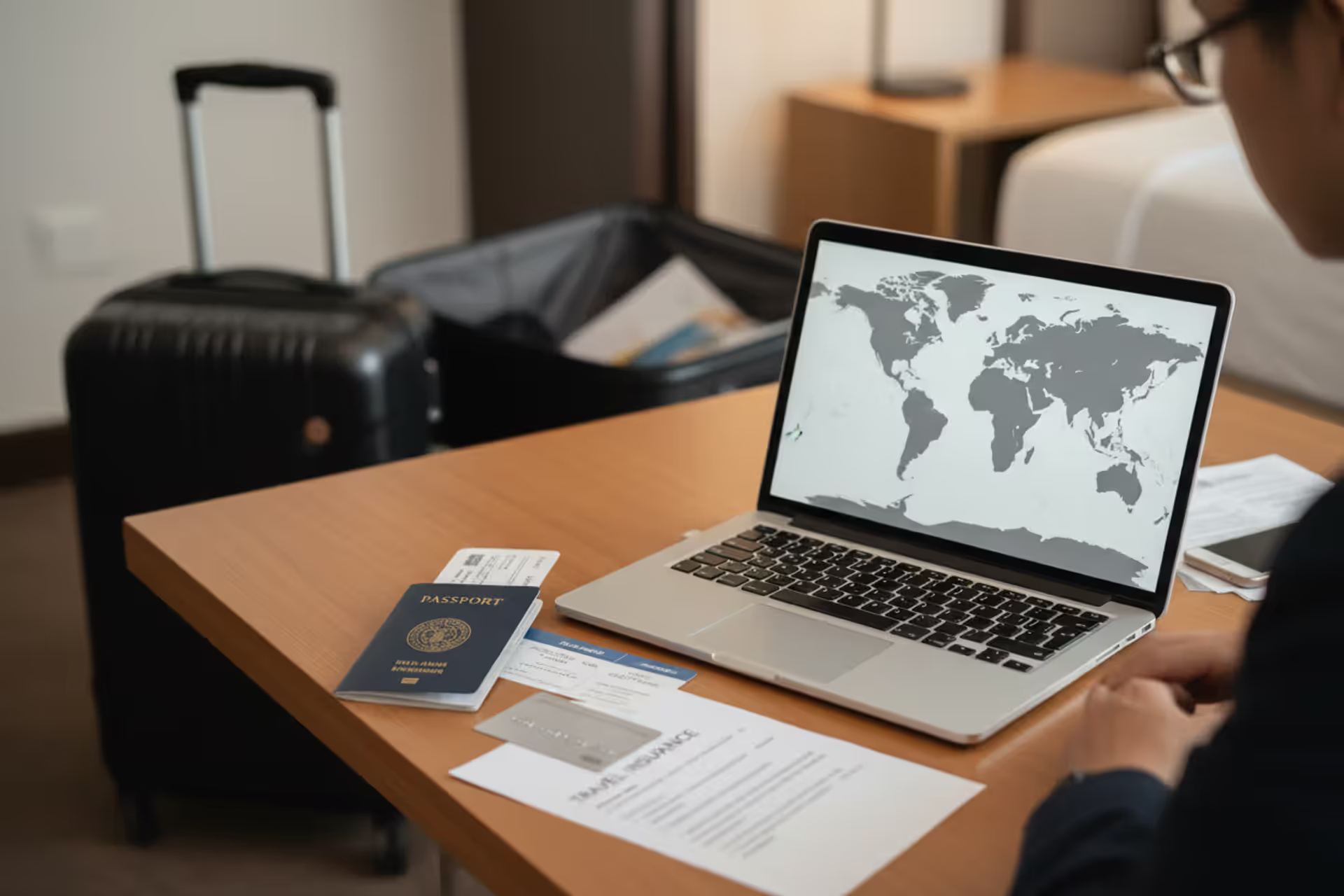
Traveler planning an international trip with passport, laptop, insurance documents, and suitcase
What Is Travel Insurance Used For?

Travel insurance serves as a financial safety net that reimburses you for unexpected costs when things go wrong before or during your trip. Whether you're dealing with a sudden illness that forces you to cancel your vacation, a medical emergency in a foreign country, or lost baggage at the airport, travel insurance steps in to cover expenses that would otherwise come out of your pocket.
Most travelers purchase coverage to protect non-refundable deposits and prepaid expenses. A typical weeklong international trip might involve $3,000 to $8,000 in flights, hotels, tours, and activities—money you'd lose if you had to cancel at the last minute. Beyond trip costs, travel insurance addresses medical emergencies abroad, where your domestic health insurance often provides limited or no coverage.
Understanding exactly what travel insurance covers helps you decide whether the premium cost justifies the protection for your specific trip circumstances.
How Travel Insurance Protects Your Trip Investment
The primary travel insurance purpose centers on protecting money you've already spent on your trip. When you book flights, hotels, and tours months in advance, you're committing thousands of dollars to plans that might change unexpectedly.
Trip cancellation coverage reimburses your prepaid, non-refundable expenses if you must cancel before departure for a covered reason. Standard policies typically cover sudden illness or injury affecting you or an immediate family member, death of a traveling companion, jury duty, home damage from fire or flood, and job loss due to company layoffs. If your father has a heart attack two days before your scheduled departure to Italy, trip cancellation coverage would reimburse your $5,000 in non-refundable expenses.
Trip interruption coverage works similarly but applies after you've already left home. If you need to cut your trip short and return early, this benefit reimburses the unused portion of your trip plus any additional transportation costs to get home. A traveler who books a 10-day cruise but must fly home on day four due to a family emergency would receive reimbursement for the six unused days plus the last-minute flight home.

Author: Samantha Lowell;
Source: visitmuseumcampussouth.com
One often-overlooked aspect: these benefits protect against supplier defaults. If your tour operator goes bankrupt before your departure, you won't lose your entire trip investment. This protection became particularly valuable during the 2025 wave of small tour operator failures following the European tourism industry restructuring.
Trip delay coverage provides reimbursement for reasonable additional expenses—meals, accommodations, toiletries—when your trip is delayed for a specified number of hours, typically six to twelve. Miss your connecting flight due to a three-hour departure delay, and you'll receive compensation for the hotel room and meals while you wait for the next available flight.
Medical Coverage While Traveling Abroad
Medical protection represents one of the most critical travel insurance benefits, particularly for international trips. Your domestic health insurance likely provides minimal coverage outside the United States, leaving you vulnerable to substantial medical bills abroad.
Emergency Medical Treatment and Hospitalization
Emergency medical coverage pays for treatment if you become ill or injured during your trip. This includes doctor visits, hospital stays, prescription medications, and emergency dental work. Coverage limits typically range from $50,000 to $500,000, depending on your plan level.
A broken leg requiring surgery in Switzerland could easily cost $30,000 without insurance. Emergency room treatment for food poisoning in Mexico might run $2,000. Travel insurance covers these expenses up to your policy limit, often with no deductible for emergency care.
Medicare does not cover medical care outside the United States except in very limited circumstances. If you're over 65 and traveling internationally, travel insurance fills this critical gap. Even travelers with comprehensive domestic health insurance face coverage limitations abroad—many U.S. insurers require you to pay upfront and submit claims for reimbursement later, creating significant cash flow challenges during emergencies.
Medical Evacuation and Repatriation
Medical evacuation coverage pays to transport you to the nearest adequate medical facility or back to the United States if local facilities cannot provide appropriate care. This benefit can be worth hundreds of thousands of dollars in remote locations.
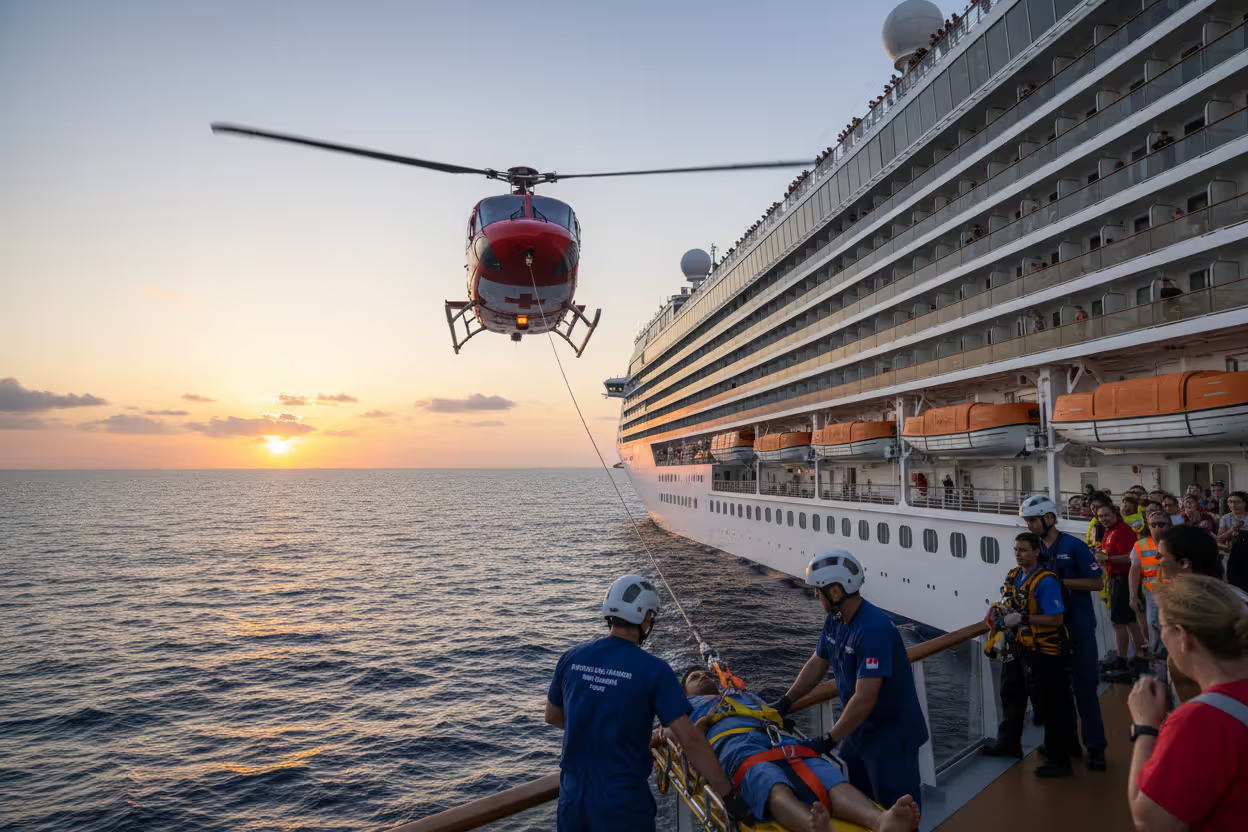
A medical evacuation from a cruise ship in the Caribbean to a Miami hospital might cost $50,000. An air ambulance from rural Thailand to Bangkok could run $25,000. Without insurance, you're responsible for these costs, which must often be paid upfront before transport begins.
Author: Samantha Lowell;
Source: visitmuseumcampussouth.com
Repatriation of remains covers the cost of returning your body to your home country in the event of death during travel. While uncomfortable to consider, this service can cost $10,000 to $20,000 depending on the location and circumstances. Travel insurance handles all logistics and expenses, sparing your family from navigating complex international processes during a difficult time.
Common Situations Where Travel Insurance Pays Out
Understanding real-world scenarios where travel insurance provides coverage helps clarify what is travel insurance used for in practical terms.
Flight cancellations and significant delays trigger several coverage types. When airlines cancel your flight and you miss the first two days of your non-refundable resort stay, trip interruption coverage reimburses those lost days. Extended delays that force you to purchase meals and a hotel room activate trip delay benefits.
Lost, stolen, or delayed baggage creates immediate expenses. Baggage delay coverage—typically activating after 12 to 24 hours—reimburses you for essential items like clothing and toiletries until your bags arrive. If your luggage never appears, baggage loss coverage reimburses you up to policy limits, usually $1,000 to $2,500 per person.

Author: Samantha Lowell;
Source: visitmuseumcampussouth.com
Illness before departure represents one of the most common claims. You wake up with pneumonia three days before your scheduled departure to Japan. Rather than losing your $4,000 in non-refundable expenses, trip cancellation coverage reimburses you in full. The key requirement: the illness must be sudden and unexpected, not a deterioration of a known condition.
Natural disasters and severe weather events qualify as covered reasons when they make your destination uninhabitable or inaccessible. Hurricane warnings that trigger mandatory evacuations of your beach resort, earthquakes that close airports, or wildfires that force hotel closures all activate trip cancellation or interruption coverage.
Terrorist incidents at your destination within 30 days of your scheduled arrival typically allow you to cancel and receive full reimbursement. Following the 2025 incidents in several European cities, thousands of travelers successfully claimed trip cancellation benefits for trips they no longer felt safe taking.
One traveler booked a $6,000 African safari eight months in advance. Six weeks before departure, she slipped on ice and tore her ACL, requiring immediate surgery and making travel impossible. Her comprehensive travel insurance policy reimbursed the entire trip cost minus the $250 deductible.
What Travel Insurance Does Not Cover
Understanding exclusions helps set realistic expectations and prevents claim denials. Travel insurance explained for beginners must include these critical limitations.
Pre-existing medical conditions represent the most common exclusion. If you have diabetes and experience a complication that forces you to cancel your trip, standard policies won't cover it. However, most insurers offer a pre-existing condition waiver if you purchase coverage within 14 to 21 days of making your initial trip deposit and insure the full trip cost. This waiver covers conditions that were stable during a specified lookback period, typically 60 to 180 days before purchase.
High-risk activities often fall outside standard coverage. Skydiving, bungee jumping, mountaineering above certain elevations, and scuba diving below specific depths typically require additional adventure sports coverage. A broken arm from recreational skiing would be covered, but an injury from heli-skiing might not be unless you purchased supplemental coverage.
Known events cannot be insured against after they become public knowledge. Once a hurricane forms and forecasters predict it will hit your destination, you cannot purchase insurance to protect against that specific storm. Similarly, if your tour operator announces financial difficulties, you cannot then buy insurance to protect against their bankruptcy.
Alcohol and drug-related incidents void coverage. If you're injured while intoxicated or under the influence of illegal substances, your claim will be denied. This extends to medical emergencies, trip interruptions, and baggage claims occurring during impairment.
"Cancel for any reason" is not included in standard policies. Basic and even most comprehensive plans only cover specific, listed reasons for cancellation. True cancel-for-any-reason coverage must be purchased as an add-on, typically costs 40-60% more than standard coverage, usually reimburses only 50-75% of trip costs, and must be bought within 14-21 days of initial trip deposit.
Government travel warnings issued before you purchased your policy don't qualify as covered cancellation reasons. If the State Department had already advised against travel to a region before you booked, you cannot later claim coverage for canceling due to safety concerns.
Who Should Buy Travel Insurance
Determining why use travel insurance depends on your specific circumstances, trip characteristics, and risk tolerance.
Trip cost represents the primary consideration. A general rule: purchase travel insurance when you've spent more than you can comfortably afford to lose. For most travelers, this threshold falls between $1,000 and $2,000 per person. A $500 weekend getaway might not warrant the $35 insurance premium, but a $5,000 international vacation almost certainly does.

Author: Samantha Lowell;
Source: visitmuseumcampussouth.com
International travelers face greater risks than domestic travelers. Medical coverage alone justifies the expense for most trips outside the United States. Language barriers, unfamiliar healthcare systems, and limited domestic insurance coverage create vulnerabilities that travel insurance addresses. Even a simple medical emergency in Canada can result in bills exceeding $10,000.
Cruise passengers should strongly consider coverage. Cruises involve substantial prepaid, non-refundable expenses, and cruise line cancellation policies are notoriously strict. Medical facilities on ships handle only basic care—serious conditions require evacuation to shore facilities at enormous cost. The average medical evacuation from a cruise ship runs $25,000 to $50,000.
Adventure travelers engaging in activities beyond standard sightseeing need specialized coverage. If your trip involves skiing, diving, or other physical activities, verify your policy covers these pursuits or purchase appropriate riders. Standard policies often exclude injuries from adventure sports.
Seniors face higher medical risks and should prioritize comprehensive medical coverage and evacuation benefits. Travelers over 65 pay higher premiums—typically 20-40% more than younger travelers—but the coverage becomes more valuable as health risks increase.
Travelers with pre-existing conditions must purchase coverage within the specified window to qualify for the pre-existing condition waiver. Miss this deadline, and any condition you've been treated for in the past several months becomes excluded from coverage.
Group travelers and families benefit from economies of scale. Many insurers offer family plans that cover two adults and dependent children for less than purchasing individual policies. Groups of ten or more often qualify for discounted rates.
How to Choose the Right Coverage Level

Author: Samantha Lowell;
Source: visitmuseumcampussouth.com
Selecting appropriate coverage involves balancing protection needs against premium costs. Travel insurance explained for beginners should clarify the distinctions between coverage tiers.
Basic plans provide essential trip cancellation and interruption coverage with minimal medical benefits. These policies typically include $50,000 in emergency medical coverage, $250,000 in medical evacuation, and trip cancellation up to the insured trip cost. Baggage coverage is limited to $500-$1,000. Basic plans cost approximately 4-6% of your total trip cost.
Standard plans increase medical coverage to $100,000-$250,000, raise evacuation limits to $500,000, and provide more generous baggage coverage of $1,000-$2,000. These mid-tier policies add benefits like rental car damage coverage and 24/7 travel assistance services. Expect to pay 6-8% of trip cost.
Comprehensive plans offer the highest limits across all categories: $500,000 in medical coverage, $1,000,000 in evacuation benefits, and $2,500-$5,000 in baggage protection. They include additional benefits like cancel for any reason options, adventure sports coverage, and identity theft assistance. Premium costs run 8-12% of total trip cost.
| Coverage Type | Basic Plan | Standard Plan | Comprehensive Plan |
| Trip Cancellation | Up to trip cost | Up to trip cost | Up to trip cost |
| Emergency Medical | $50,000 | $100,000-$250,000 | $500,000 |
| Medical Evacuation | $250,000 | $500,000 | $1,000,000 |
| Baggage Protection | $500-$1,000 | $1,000-$2,000 | $2,500-$5,000 |
| Coverage Limits | Lower limits | Moderate limits | Highest limits |
| Typical Cost | 4-6% of trip | 6-8% of trip | 8-12% of trip |
Add-on options let you customize coverage. Cancel for any reason upgrades cost an additional 40-50% but allow cancellation for reasons not otherwise covered, though reimbursement is typically limited to 75% of trip costs. Rental car damage coverage adds $20-$40 to your premium. Adventure sports riders cost $15-$50 depending on activities covered.
Cost comparison shopping matters. Identical coverage levels can vary by 30-40% between insurers. Compare at least three quotes, but focus on coverage details rather than price alone. The cheapest policy often has more restrictive terms or lower limits.
Consider annual multi-trip policies if you travel frequently. These plans cover unlimited trips up to a specified duration (typically 30 or 45 days per trip) within a year. For travelers taking three or more trips annually, annual policies often cost less than purchasing separate coverage for each trip.
The biggest mistake travelers make is assuming travel insurance is only about trip cancellation. The real value emerges during medical emergencies abroad, where a $100,000 hospital bill can become a financial catastrophe. I've seen families saved from bankruptcy because they had proper medical evacuation coverage when a parent suffered a stroke in Southeast Asia
— Sarah Martinez
Frequently Asked Questions About Travel Insurance
Travel insurance protects you against financial losses from unexpected events that disrupt your travel plans. From medical emergencies requiring $100,000 in care and evacuation to simple trip cancellations that would forfeit thousands in non-refundable deposits, coverage provides peace of mind and financial protection.
The decision to purchase travel insurance should consider your trip cost, destination, health status, and personal risk tolerance. International travelers, cruise passengers, seniors, and anyone booking expensive trips months in advance benefit most from comprehensive coverage. Domestic travelers taking shorter, less expensive trips might reasonably skip coverage or opt for basic plans.
Match your coverage level to your specific needs rather than automatically choosing the cheapest option. A comprehensive plan costs more upfront but provides substantially better protection during serious emergencies. Purchase coverage within 14-21 days of your initial trip deposit to access pre-existing condition waivers and cancel for any reason options.
Read policy documents carefully, understand what's excluded, and verify that your planned activities fall within coverage parameters. The small investment in appropriate travel insurance can prevent financial catastrophe when unexpected events disrupt your carefully planned vacation.
Related Stories

Read more

Read more



The content on this website is provided for general informational and educational purposes only. It is intended to offer guidance on travel insurance topics, including coverage options, premiums, deductibles, trip cancellation protection, travel medical insurance, baggage coverage, travel delays, emergency medical evacuation, and related travel protection matters. The information presented should not be considered legal, medical, financial, or professional insurance advice.
All articles and explanations published on this website are for informational purposes only. Travel insurance policies can vary between providers, and details such as coverage limits, exclusions, reimbursement conditions, waiting periods, eligibility requirements, and claim outcomes may differ depending on the insurer, policy type, destination, traveler age, health status, and trip details.
While we strive to keep the information accurate and up to date, this website makes no guarantees regarding the completeness or reliability of the content. Use of this website does not create a professional relationship. Visitors should review the official policy documents provided by insurance companies and consult with licensed insurance professionals or qualified advisors before making decisions about travel insurance coverage.