

Traveler planning a trip with booking documents, passport, card, and laptop at home
Vacation Cancellation Insurance Guide

Planning a vacation involves booking flights, reserving hotels, and paying deposits months in advance. When life throws a curveball—a sudden illness, family emergency, or unexpected work obligation—those non-refundable expenses can disappear along with your travel plans. Vacation cancellation insurance exists to protect your financial investment when circumstances force you to cancel a trip you've already paid for.
Understanding how this coverage works, what it protects, and when to purchase it can mean the difference between losing thousands of dollars and recovering most of your prepaid expenses. This guide breaks down everything you need to know about protecting your vacation investment.
What Is Vacation Cancellation Insurance
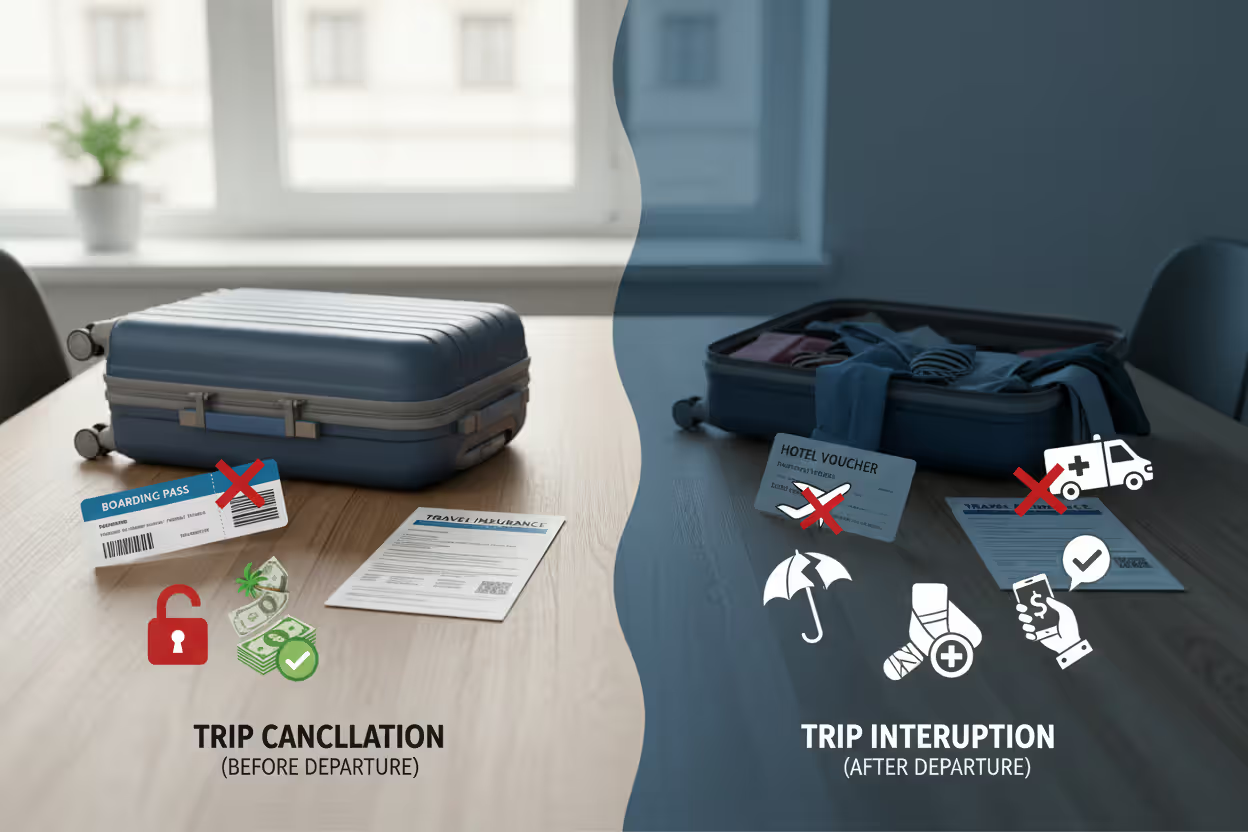
Vacation cancellation insurance is a type of travel insurance that reimburses you for prepaid, non-refundable trip expenses if you must cancel your vacation before departure for a covered reason. Unlike comprehensive travel insurance that bundles multiple protections, cancellation coverage specifically addresses the financial loss that occurs when you can't take your trip.
The mechanics are straightforward: you purchase a policy shortly after booking your vacation, paying a premium typically ranging from 4% to 10% of your total trip cost. If you need to cancel for a reason listed in your policy—such as a medical emergency, death in the family, or jury duty—you file a claim with documentation proving the covered event occurred. After approval, the insurer reimburses your prepaid, non-refundable expenses up to the policy limit.
This coverage differs from trip interruption insurance, which reimburses you if you must cut your vacation short after departure. It also differs from travel medical insurance, which covers healthcare costs while traveling. Vacation cancellation insurance specifically protects the money you've already spent before you leave home.
Author: Dylan Mercer;
Source: visitmuseumcampussouth.com
Most policies cover the primary traveler, their traveling companions, and sometimes immediate family members not traveling with them. If your spouse has a heart attack three days before your Caribbean cruise, for example, trip cancellation for vacations would typically reimburse your cruise fare, airfare, and prepaid excursions.
When Vacation Cancellation Insurance Covers Your Trip
Policies specify exactly which circumstances trigger coverage. Reading these provisions carefully before purchasing prevents unpleasant surprises when you need to file a claim.
Common Covered Reasons
Standard vacation insurance cancellation coverage typically includes these situations:
Medical emergencies represent the most common claim reason. If you, a traveling companion, or an immediate family member becomes seriously ill or injured before departure, requiring hospitalization or a doctor's written recommendation not to travel, you're generally covered. A broken leg two days before your ski trip qualifies. A mild cold typically doesn't.
Death of the insured traveler, traveling companion, or immediate family member triggers coverage. Some policies extend this to business partners or close friends, though definitions vary by insurer.
Severe weather events that make your destination uninhabitable or inaccessible count as covered reasons. If a hurricane devastates your resort before arrival, you can cancel and recover costs. Policies specify the severity threshold—usually a mandatory evacuation order or complete closure of your lodging.
Involuntary job loss qualifies when you're laid off or terminated without cause after purchasing the policy. You typically need to have been employed with the same company for at least one year. Quitting, voluntary redundancy, or termination for cause don't qualify.
Jury duty or court subpoenas that conflict with your travel dates are covered, provided you weren't aware of the obligation when booking.
Home emergencies such as your house becoming uninhabitable due to fire, flood, or natural disaster typically trigger coverage. A burst pipe that floods your basement the day before departure would qualify.
Military deployment for active-duty service members who receive orders after booking their vacation is covered by most policies.
Terrorism incidents at your destination within 30 days of your scheduled departure may qualify, depending on policy language. Insurers define terrorism specifically and often require State Department travel warnings.

Author: Dylan Mercer;
Source: visitmuseumcampussouth.com
What's Typically Not Covered
Understanding exclusions prevents disappointment when filing claims. Standard cancel vacation insurance won't reimburse you for:
Change of mind or simple preference shifts. Deciding you'd rather visit Italy than Greece doesn't qualify, even if you lose your deposits.
Pre-existing medical conditions usually aren't covered unless you purchase your policy within a specific window (typically 10-21 days) after making your initial trip deposit and meet other requirements. A condition is generally considered pre-existing if you received treatment, took medication, or experienced symptoms within 60-180 days before purchasing coverage.
Financial circumstances beyond involuntary job loss aren't covered. Losing money in the stock market, having your hours reduced, or deciding you can't afford the trip won't trigger reimbursement.
Fear of travel doesn't qualify even during epidemics or heightened security threats, unless your destination has an official travel warning or evacuation order.
Foreseeable events known when you purchased the policy are excluded. If your grandmother is in hospice when you book, her death likely won't be covered.
Pregnancy complications are covered only in specific circumstances, typically when complications arise that prevent travel. Normal pregnancy isn't a covered reason.
Supplier default when your tour operator or airline goes bankrupt requires separate coverage, often called supplier default protection.
How Much Vacation Cancellation Insurance Costs
Premium costs depend on several variables: your total trip cost, traveler ages, destination, length of trip, and coverage level selected. Insurers calculate premiums as a percentage of your insured trip cost, with rates increasing for older travelers who statistically file more medical claims.
Here's a realistic cost comparison for vacation trip cancellation insurance in 2026:
| Trip Cost | Age 30 | Age 50 | Age 70 | Average Coverage % |
| $2,000 | $90 | $120 | $180 | 4.5-9% |
| $5,000 | $200 | $300 | $500 | 4-10% |
| $10,000 | $400 | $650 | $1,100 | 4-11% |
| $15,000 | $600 | $1,000 | $1,700 | 4-11.3% |
These figures represent standard policies from mid-tier providers. Budget insurers may offer lower premiums with more exclusions, while premium providers charge more for broader coverage and better customer service.
Destination affects pricing because some regions carry higher medical costs or political instability. A European vacation typically costs less to insure than a trip to a developing nation with limited healthcare infrastructure.
Cancel-for-any-reason (CFAR) upgrades add 40-60% to your base premium but allow cancellation for reasons not listed in standard policies. These riders typically reimburse only 50-75% of your trip cost rather than the full amount, and you must purchase them within 10-21 days of your initial trip deposit.

Author: Dylan Mercer;
Source: visitmuseumcampussouth.com
How to Choose a Vacation Protection Plan
Shopping for coverage requires comparing more than just premium costs. The cheapest policy often provides the narrowest coverage or the most difficult claims process.
Coverage limits should match your total trip cost, including airfare, lodging, prepaid activities, and any other non-refundable expenses. Don't underinsure to save money on premiums—you'll only recover what you insured, even if your actual losses exceed that amount.
Covered reasons vary significantly between policies. Read the certificate of insurance (the full policy document) before purchasing, not just the marketing summary. Some policies exclude more situations than they cover. Look for clear definitions of terms like "immediate family member" and "serious illness."
Cancel-for-any-reason options provide flexibility worth considering for expensive trips or when circumstances might change. If you're booking a $12,000 anniversary trip a year in advance, paying an extra $300 for CFAR coverage provides peace of mind. Remember that CFAR typically requires canceling at least 48 hours before departure and reimburses only 50-75% of costs.
Provider reputation matters enormously when filing claims. Research customer reviews focusing on claim experiences, not just pricing. Check financial strength ratings from AM Best or Standard & Poor's—you want an insurer that will still exist when you need them. Companies rated A- or higher demonstrate financial stability.
Claims process complexity varies by provider. Some insurers handle everything online with fast approvals, while others require mailed forms and lengthy phone calls. Look for providers offering 24/7 claims support and clear documentation requirements.
Pre-existing condition waivers become crucial if you or a traveling companion has ongoing health issues. Policies offering these waivers typically require purchasing coverage within 10-21 days of your initial trip deposit and insuring the full trip cost.
The biggest mistake travelers make is assuming all cancellation policies are identical. The difference between a good policy and a poor one often appears only when you're filing a claim and discover your specific situation falls into an exclusion you didn't know existed. Read the certificate of insurance, not just the brochure
— Stan Sandberg
When to Buy Trip Cancellation Coverage
Timing your purchase significantly impacts your coverage. Most travelers should buy vacation trip cancellation insurance within 10-21 days of making their initial trip deposit. This window unlocks important benefits:
Pre-existing condition waivers become available only during this initial purchase window. If you or a family member has a health condition that could affect your travel, missing this deadline means that condition won't be covered.
Cancel-for-any-reason riders must be purchased during the same initial window. Waiting until a month before departure eliminates this option entirely.
Maximum coverage period begins when you purchase the policy. Buying early means you're protected immediately if something happens during the months between booking and traveling.
Some situations justify waiting. If you're booking a trip just two weeks before departure, you won't benefit from early purchase advantages. In this case, compare standard policies without time-sensitive features.
Last-minute coverage remains available up until the day before departure, though options narrow considerably. You won't get pre-existing condition waivers or CFAR coverage, but standard trip cancellation for vacations still protects against sudden illness, injury, or other covered events.
Never purchase coverage directly from your tour operator or cruise line. Supplier-sold insurance often provides inferior coverage and won't protect you if that supplier goes bankrupt. Buy from third-party insurers instead.
How to File a Cancellation Claim
Filing efficiently increases your chances of quick approval and full reimbursement. Follow these steps when canceling your insured vacation:
Step 1: Contact your insurer immediately. Don't wait until after your scheduled departure date. Call the claims department as soon as you know you must cancel. Some policies require notification within 72 hours of the cancellation event.
Step 2: Cancel your trip. Contact airlines, hotels, and tour operators to formally cancel. Even if they won't refund you, you need documentation showing you canceled. Get cancellation confirmation numbers and save all correspondence.
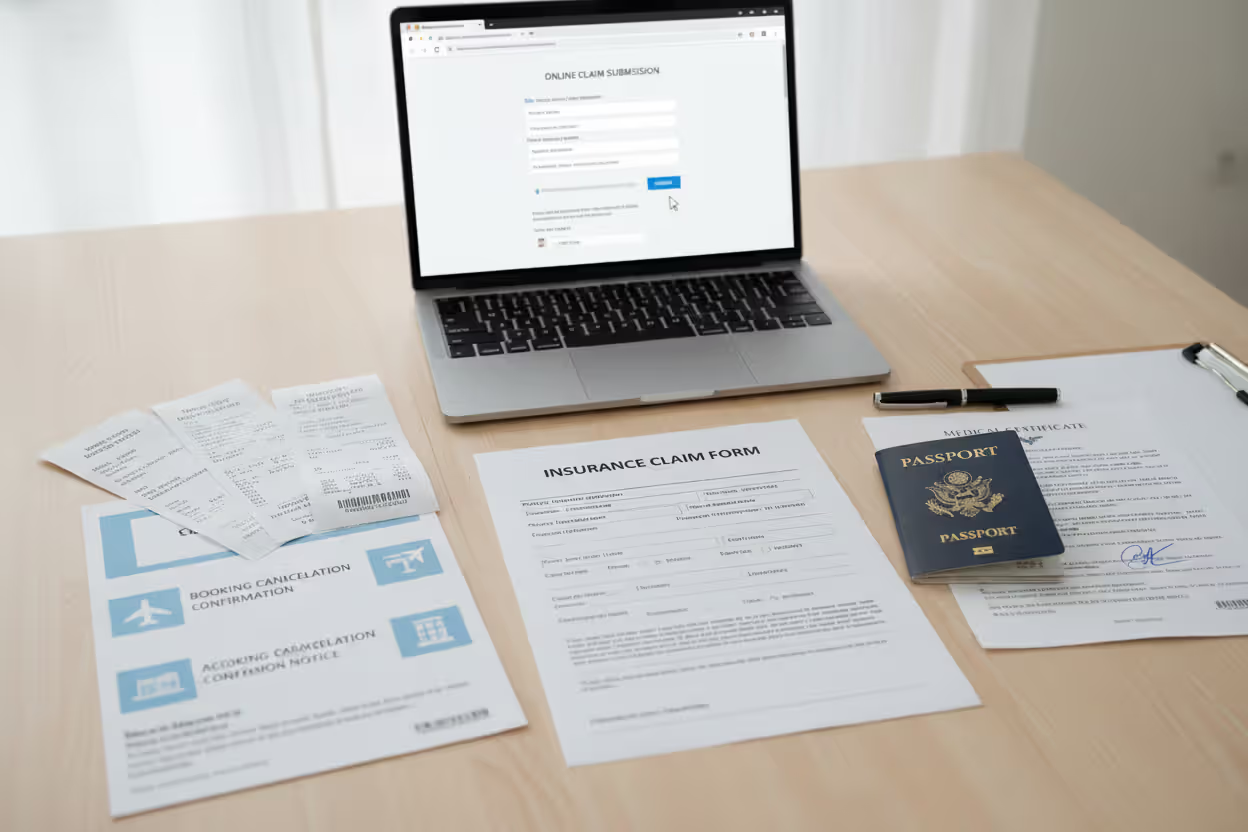
Step 3: Gather required documentation. Standard claims require: - Completed claim form from your insurer - Copy of your insurance policy - Proof of trip payment (receipts, credit card statements) - Cancellation confirmations from travel suppliers - Documentation proving the covered reason (medical records, death certificate, employer termination letter, etc.)
Author: Dylan Mercer;
Source: visitmuseumcampussouth.com
Step 4: Submit your claim package. Most insurers accept online submissions, though some require mailed documents. Keep copies of everything you submit. Send via tracked mail if mailing paper documents.
Step 5: Follow up. Claims typically process within 10-30 days, though complex cases take longer. If you haven't heard back within the timeframe specified by your insurer, call for a status update.
Common mistakes that delay or deny claims include:
Insufficient medical documentation. "My doctor said I couldn't travel" isn't enough. You need written documentation from a physician explaining the medical condition, treatment dates, and specific recommendation not to travel.
Missing cancellation deadlines. Some policies require canceling within 24-48 hours of the covered event. Waiting a week to decide whether to cancel can void your coverage.
Failing to cancel with suppliers. If you don't formally cancel your hotel reservation, the insurer may argue you could have still taken the trip.
Not purchasing enough coverage. If you insured $5,000 but your actual trip cost $7,000, you'll only receive $5,000 maximum.
Frequently Asked Questions About Vacation Insurance Cancellation Coverage
Vacation cancellation insurance transforms a potentially devastating financial loss into a manageable inconvenience. The relatively small premium—typically 4-10% of your trip cost—protects thousands of dollars in prepaid, non-refundable expenses when life prevents you from traveling as planned.
The key to maximizing value lies in purchasing the right policy at the right time. Buy within 10-21 days of your initial trip deposit to unlock pre-existing condition waivers and cancel-for-any-reason options. Read the full policy certificate to understand exactly what's covered and what's excluded. Choose reputable insurers with strong financial ratings and positive claim experiences.
Remember that the cheapest policy rarely provides the best value. A $50 premium difference means little when you're filing a $8,000 claim and discover your policy excludes the reason you're canceling. Focus on comprehensive coverage that matches your specific needs and trip circumstances.
When you must cancel, act quickly. Contact your insurer immediately, formally cancel with all travel suppliers, and gather thorough documentation supporting your covered reason. The claims process runs smoothly when you provide complete information upfront.
Whether you're planning a domestic road trip or an international adventure, vacation cancellation insurance provides peace of mind that your financial investment is protected against the unexpected. You can't predict when illness, injury, or family emergencies will strike, but you can protect yourself from the financial consequences of canceling a trip you've been anticipating for months.
Related Stories

Read more

Read more




The content on this website is provided for general informational and educational purposes only. It is intended to offer guidance on travel insurance topics, including coverage options, premiums, deductibles, trip cancellation protection, travel medical insurance, baggage coverage, travel delays, emergency medical evacuation, and related travel protection matters. The information presented should not be considered legal, medical, financial, or professional insurance advice.
All articles and explanations published on this website are for informational purposes only. Travel insurance policies can vary between providers, and details such as coverage limits, exclusions, reimbursement conditions, waiting periods, eligibility requirements, and claim outcomes may differ depending on the insurer, policy type, destination, traveler age, health status, and trip details.
While we strive to keep the information accurate and up to date, this website makes no guarantees regarding the completeness or reliability of the content. Use of this website does not create a professional relationship. Visitors should review the official policy documents provided by insurance companies and consult with licensed insurance professionals or qualified advisors before making decisions about travel insurance coverage.