
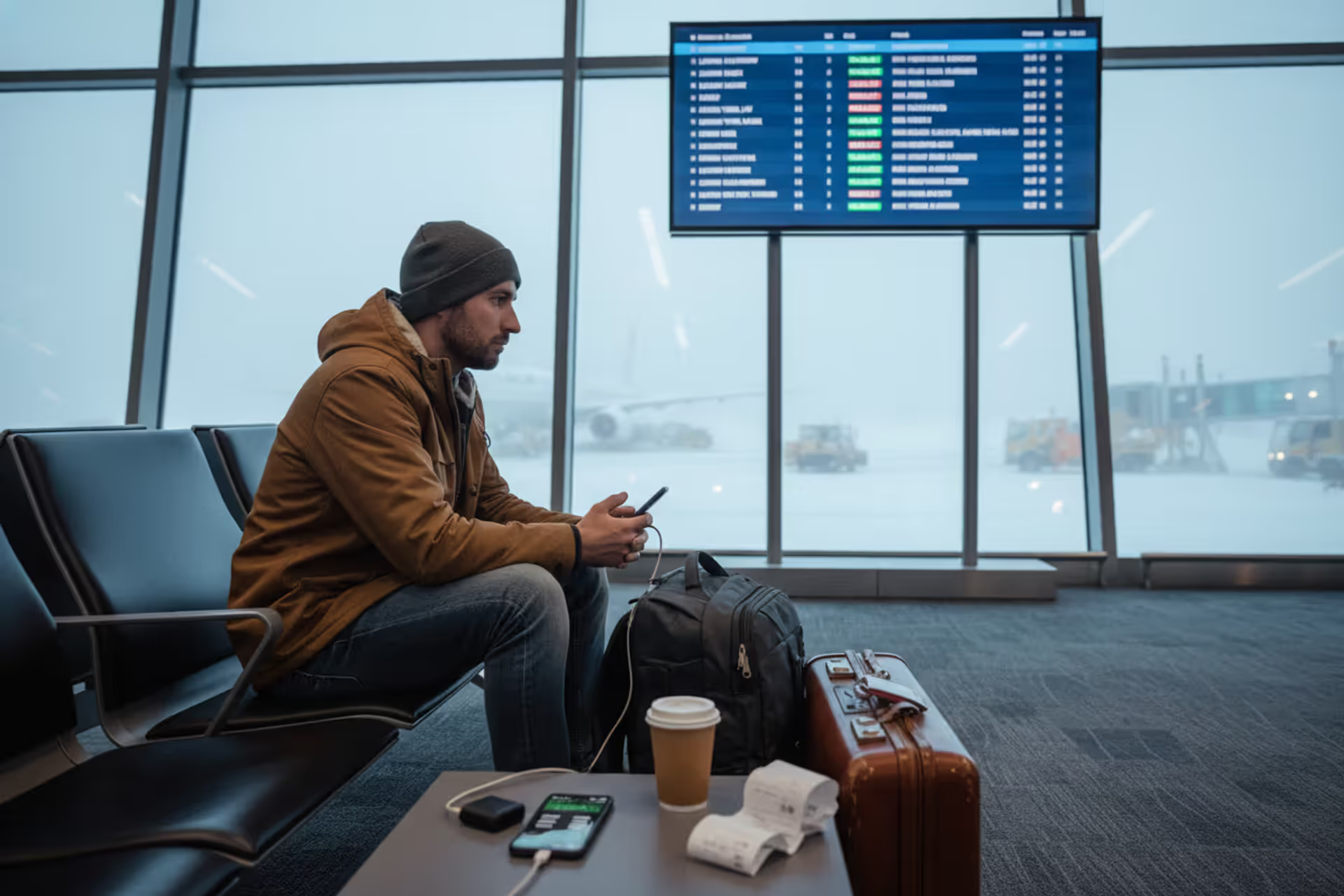
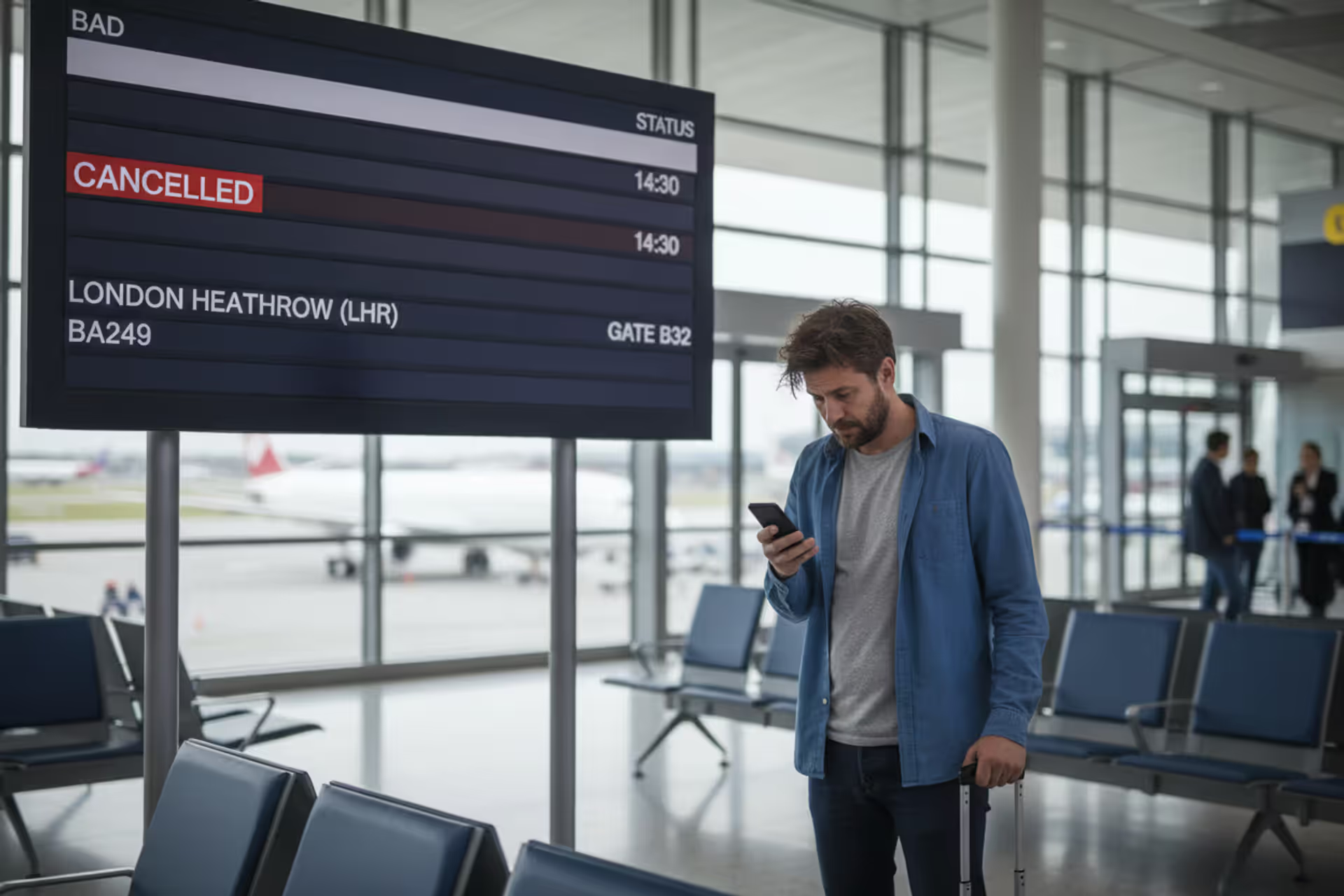
Traveler waiting at an airport during a flight delay
Travel Delay Insurance Guide

Content
Content
Last December, my colleague spent 14 hours sleeping on an airport floor in Denver after a snowstorm canceled her connecting flight. The airline offered nothing—no meal vouchers, no hotel, just a rebooking for the next afternoon. She racked up $380 in expenses: a airport hotel room (the cheapest she could find at 11 PM), three overpriced airport meals, and an Uber to a pharmacy for contact lens solution and a phone charger. Without trip delay coverage, she ate every penny of that cost.
That scenario plays out thousands of times each year. A typical flight delay creates a cascading money drain: accommodation, food, basic supplies you didn't pack because you expected to arrive on schedule. This specific type of coverage exists to reimburse those surprise costs, yet most people have no idea it's even included in their policy until they're already stranded.
What Is Travel Delay Insurance?
Trip delay insurance kicks in when your scheduled departure—flight, cruise, train, or other commercial transportation—gets pushed back beyond a minimum waiting period set by your policy. You'll typically need to wait somewhere between 6 and 12 hours past your original departure time before the coverage activates.
Here's what makes it different from trip cancellation coverage: cancellation insurance refunds your prepaid, non-refundable expenses when you can't leave home at all. You cancel before the trip starts. Delay coverage, by contrast, applies mid-journey. You've already left home, you're at the airport or port, and now you're stuck waiting.
The trigger is straightforward—your carrier officially delays your departure for reasons beyond your control. Qualifying reasons include weather emergencies, equipment malfunctions, labor strikes, or air traffic control bottlenecks. You then purchase whatever you need to survive the wait (within reason), keep your receipts, and file for reimbursement later. Your policy sets a maximum dollar amount it'll pay per delay, usually ranging from $500 to $2,000 depending on which plan tier you bought.
Here's what it won't do: get you on the next available flight, refund your ticket, or rebook your hotel. Those remain your responsibility or the airline's, depending on the delay cause. This coverage simply reimburses reasonable extra spending during the wait.
Many travelers mistakenly believe airlines will automatically provide meals and hotels whenever delays happen. Reality check: U.S. carriers must only compensate for delays they directly cause—and even then, their policies vary wildly. A mechanical problem might earn you a $12 food voucher. A blizzard? You're on your own. Delay coverage bridges that gap.

Author: Ethan Holloway;
Source: visitmuseumcampussouth.com
What Does Travel Delay Coverage Pay For?
Your policy will reimburse "necessary and reasonable" expenses you incurred specifically because of the delay. That phrase—necessary and reasonable—does a lot of work. Insurers won't reimburse a $200 steakhouse dinner when a $25 airport sandwich would've solved your hunger problem. Reimbursement caps typically range from $500 on basic policies to $2,000 on premium plans.
Expenses Typically Covered
Most policies accept claims for these categories:
Meals: Airport restaurants, fast food, coffee shops—basically anything you ate while waiting. Keep it proportional. A $30 dinner makes sense; a $90 meal for one person raises eyebrows. Alcoholic drinks usually don't qualify, but coffee, juice, and soft drinks do.
Overnight accommodation: If your delay stretches past midnight or prevents you from reaching your prepaid hotel, you can book somewhere to sleep. Many policies cap this at $150–$300 per night, so luxury properties are out. Budget chains and airport hotels are your best bet.
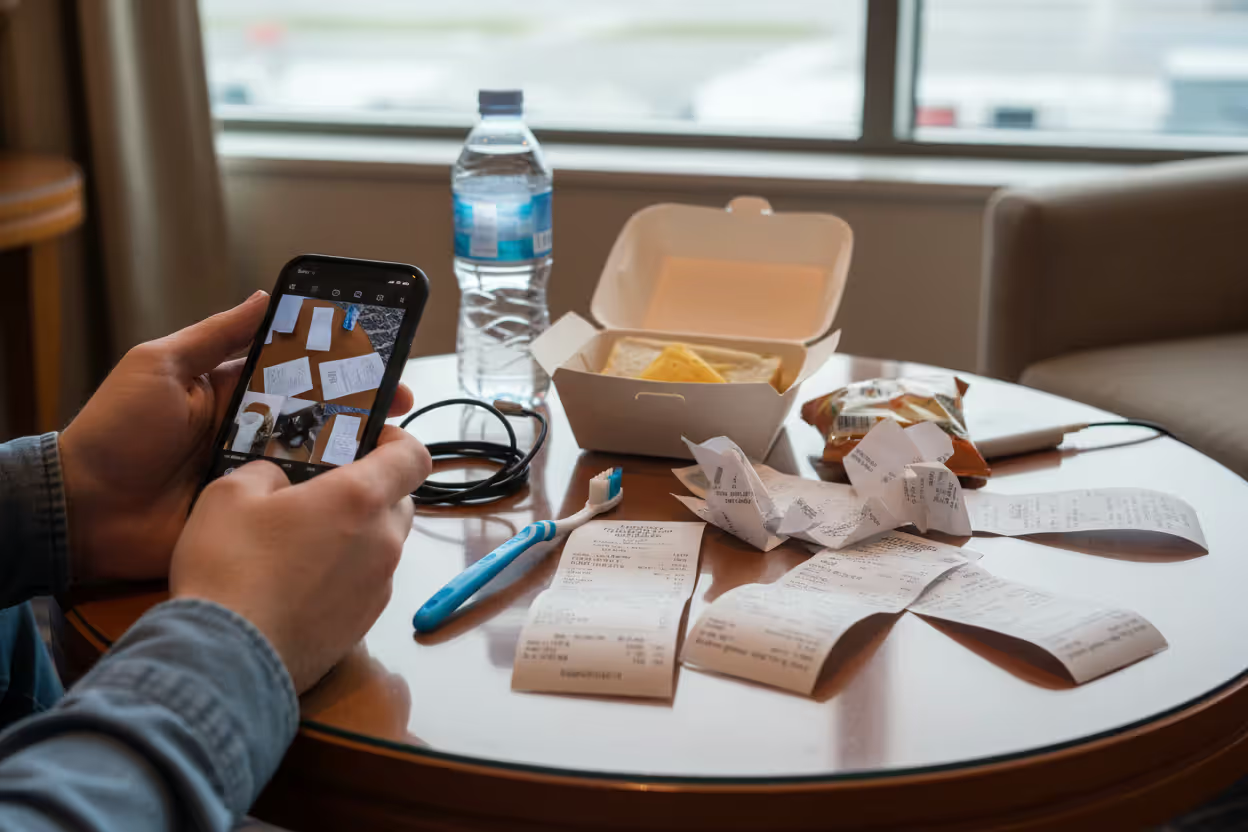
Essential toiletries and clothing: Stuck overnight without luggage? You can buy a toothbrush, deodorant, clean underwear, maybe a t-shirt. One insurance adjuster told me she regularly approves $40–$60 drugstore runs. What she denies: expensive makeup, designer shirts, or anything beyond true basics.
Local transportation: Taxis or rideshares between the airport and hotel count. So do shuttles or subway fares if you need to switch terminals or airports for a rerouted connection. Rental cars sometimes qualify, but you'll need to justify why that was your only reasonable option.
Communication expenses: Phone calls to your boss, hotel, or family explaining the delay. WiFi charges if you need internet to rebook or file a claim. These are minor line items—maybe $10–$20—but they add up on international delays.
You'll need itemized receipts for everything. Credit card statements alone won't cut it because they don't prove what you actually purchased.
Author: Ethan Holloway;
Source: visitmuseumcampussouth.com
What's Not Covered
First-time claimants often get tripped up by these exclusions:
Entertainment purchases: That $18 airport novel, the $35 massage chair session, drinks at the terminal bar beyond a basic meal—denied. Insurers cover necessities, not ways to pass the time more pleasantly.
Unnecessary upgrades: Booking a Marriott when a Holiday Inn was available. Ordering room service instead of walking to the hotel restaurant. Taking a black car instead of a standard taxi. Adjusters compare your choices against reasonable alternatives.
Expenses you'd have incurred anyway: If you were already planning to stay an extra night in that city, or if you use the delay as an excuse to explore downtown, those costs don't qualify. The expense must be unexpected and delay-specific.
Delays you caused: Show up late to the gate? Forget your passport and miss boarding? Spend too long at duty-free and miss your connection? Your fault means no coverage.
Non-scheduled transportation: Coverage applies to airlines, trains, cruises, and buses that run on published schedules. Private charters, friend's planes, or most rideshare services don't qualify.
How Long Must a Delay Be to Qualify?
The waiting period is everything. Most policies require 6 to 12 consecutive hours before you can file a claim. Budget policies lean toward 12 hours; mid-tier plans typically use 6 or 8 hours; premium options occasionally go as low as 3 hours.
Author: Ethan Holloway;
Source: visitmuseumcampussouth.com
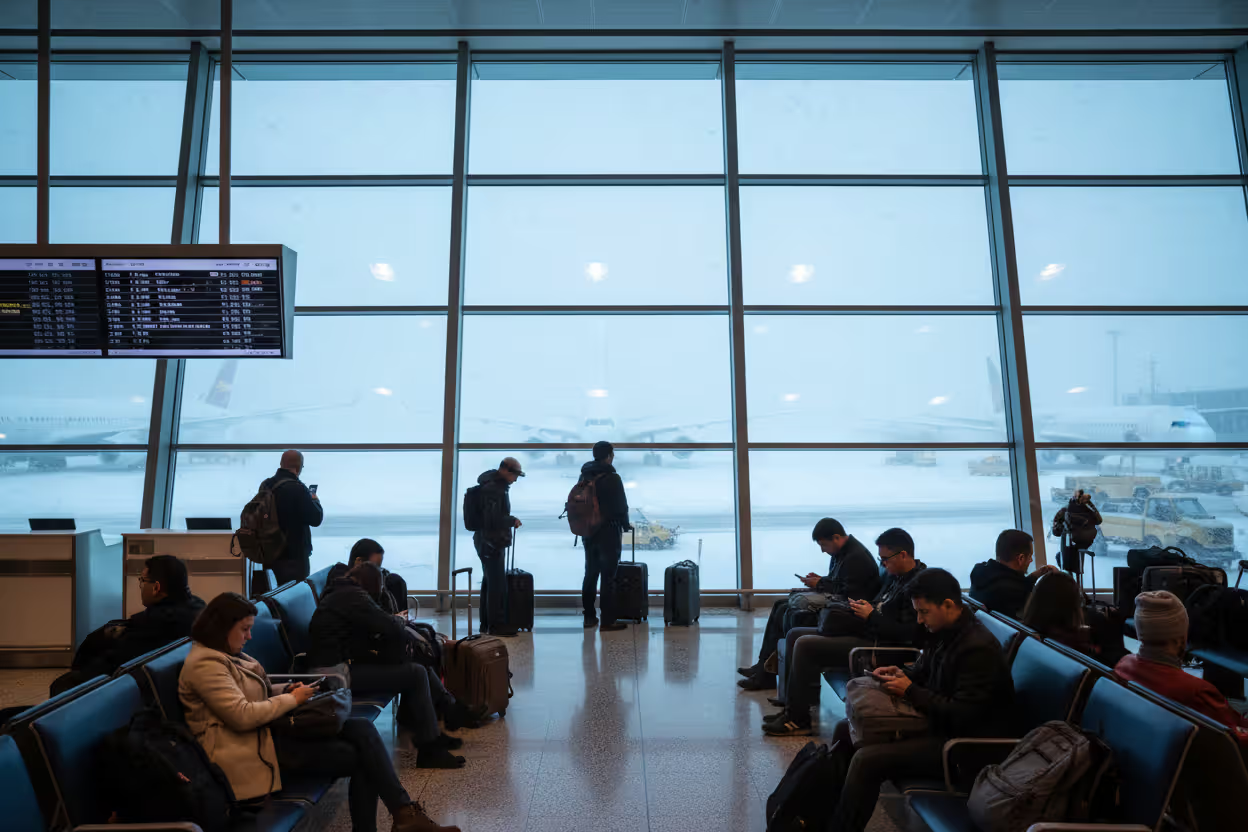
Timing starts from your originally scheduled departure, not from when the airline first announces trouble. Let's say you're booked on a 3:00 PM flight. At 2:30 PM they push it to 5:00 PM. At 4:30 PM they push it again to 8:00 PM. Then at 7:45 PM they delay it to 11:00 PM. You've now experienced an 8-hour delay measured from that original 3:00 PM departure—regardless of how many individual announcements happened.
The delay must be continuous in most policies. If your flight sits on the tarmac for 4 hours, takes off, then makes an unscheduled 3-hour maintenance stop, those periods might not combine to trigger a 7-hour threshold unless your specific policy allows cumulative delays.
Why the delay happened matters as much as how long it lasted. Covered reasons typically include mechanical breakdowns, severe weather, air traffic control problems, and crew strikes. Your own actions—oversleeping, losing your boarding pass, arriving drunk—obviously don't count. Some policies also exclude delays caused by pandemics, government shutdowns, or civil unrest unless you bought specific add-on coverage.
Check your threshold before buying. A 12-hour requirement is nearly worthless for domestic flights within the U.S., where most delays resolve within 4–6 hours. International travelers connecting through busy hubs see far more benefit from lower thresholds.
Who Needs Trip Delay Insurance?
Delay coverage isn't equally valuable for everyone. These traveler types benefit most:
Anyone flying internationally: Overseas delays often mean overnight waits in foreign cities where hotels cost $200+ and airline assistance is minimal or nonexistent. Miss a connection in Paris or Singapore and you're looking at $500–$800 in expenses before you board another plane.
Travelers booking tight connections: Separate tickets with 90-minute connections, or routing through airports notorious for delays (I'm looking at you, O'Hare and LaGuardia). When the first flight runs late and you miss your connection, rebooking costs become your problem.
Winter travelers in the northern U.S.: Fly anywhere near the Great Lakes or Northeast between November and March and weather delays become likely, not just possible. One polar vortex can shut down entire hub cities for 24+ hours.
Hurricane season travelers to coastal destinations: June through November in Florida, the Gulf Coast, or Caribbean means elevated storm risk. Even if the hurricane misses your city, airlines preemptively cancel flights 24–48 hours in advance.
Routes with limited frequency: Flying to small regional airports that only see one flight daily? A cancellation or long delay means waiting until tomorrow. Major hubs offer multiple rebooking options; small cities don't.
Business travelers with time-sensitive obligations: Missing a client presentation or conference keynote due to a delay won't be covered, but at least delay insurance removes the added insult of paying $400 out-of-pocket for the hotel where you spent the night fuming.
On the flip side, skip delay coverage if you're driving, taking a short-haul domestic flight with hourly frequencies, or traveling with completely flexible plans and a tight budget that makes the $30–$60 premium feel wasteful.
How to File a Travel Delay Claim
Author: Ethan Holloway;
Source: visitmuseumcampussouth.com
Documentation makes or breaks your claim. Here's the process most insurers follow:
Step 1—Get official delay confirmation immediately: Ask the gate agent for a printed delay notification showing your original departure time, new departure time, and reason for delay. Most airlines can print this on request. Also screenshot any delay alerts from the airline's app or email. This documentation proves the delay happened and why.
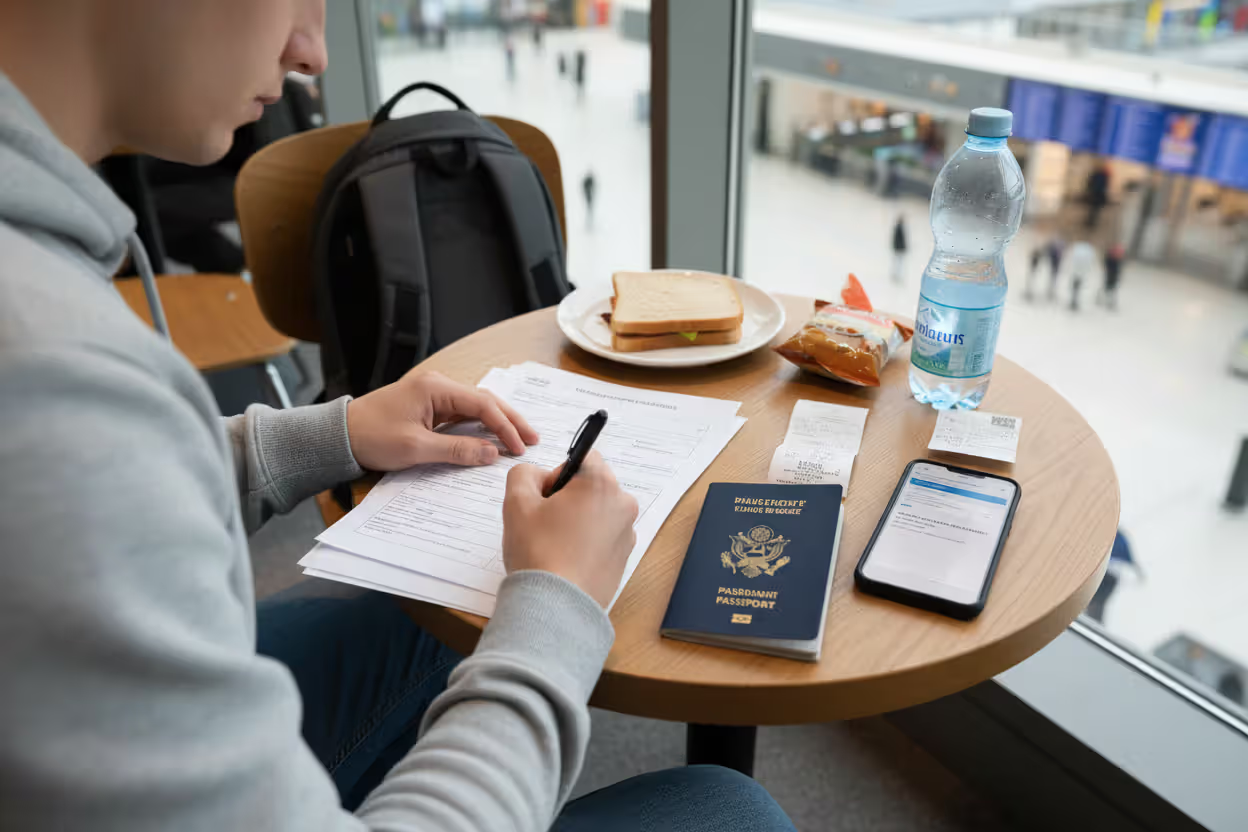
Step 2—Keep every single receipt: Itemized receipts, not just credit card statements. Snap a phone photo immediately after each purchase because thermal paper receipts fade within days. Store the photos in a dedicated album or email them to yourself. Missing receipts are the #1 reason claims get denied or reduced.
Step 3—Notify your insurer quickly: Most policies require you to report the delay within 24 to 72 hours, though grace periods vary. Don't wait until you get home three weeks later. Call the claims hotline or log into your online account to start the claim while details are fresh.
Step 4—Fill out claim forms completely: Insurers want your policy number, trip itinerary, exact delay times, the reason for delay, and an itemized expense list. Incomplete forms sit in limbo. Answer every question, even if it seems redundant.
Step 5—Attach all supporting documents: Your delay confirmation letter, every receipt, your original itinerary, and any emails or texts from the airline. Organize everything by category—meals together, hotel separate, transportation separate. Adjusters process organized claims faster.
Step 6—Wait for processing: Straightforward claims typically close within 15–20 business days. Complicated situations—like disputed expense amounts or unclear delay reasons—can stretch to 6 weeks. Insurers may email asking for additional proof or explanation.
Step 7—Appeal denials if justified: Claims get rejected for specific reasons: missing documentation, expenses deemed excessive, or delays that didn't meet the hour threshold. Read the denial letter carefully. You can usually submit an appeal with extra evidence or better explanations. I know someone who got a denied meal claim approved after explaining that the $45 dinner was the only restaurant open at midnight in a small airport.
One mistake I see constantly: buying items without considering the "reasonable" test. That $8 airport pizza slice? Absolutely fine. The $55 sushi platter when cheaper options were available? Expect questions. When uncertain, choose the modest option and write a note on the receipt explaining why you needed it.
How to Choose the Right Delayed Trip Insurance Policy
Travelers obsess over trip cancellation coverage and completely overlook delay benefits until they're sleeping on airport benches in Chicago. Whether your policy requires a 6-hour wait versus a 12-hour wait can mean the difference between getting reimbursed and paying hundreds out-of-pocket. We tell consumers to review delay terms as carefully as you'd review baggage weight limits—it matters that much when things go wrong
— Laura Mendez
Picking the right coverage means matching policy details to your specific trip risks.
Prioritize the hour threshold first: International travelers and anyone connecting through weather-prone hubs should insist on 6-hour thresholds, not 12. Domestic travelers on direct flights can tolerate higher thresholds in exchange for paying lower premiums.
Match coverage limits to destination costs: A $500 limit works fine for domestic delays where hotel rooms run $100–$150. International delays, especially in expensive cities like London or Tokyo, easily generate $1,200 in expenses during a 24-hour disruption. Size your limit accordingly.
Scrutinize the exclusions list: Some policies exclude budget carriers, charter operations, or specific delay causes like pandemics or labor disputes. Reading this section takes five minutes and prevents ugly surprises when filing claims.
Investigate your credit card benefits first: Premium travel cards (annual fees of $95+) frequently include automatic trip delay coverage when you book transportation with that card. Chase Sapphire Reserve, for example, offers $500 per ticket with a 6-hour threshold. This can eliminate the need to buy standalone coverage, though card benefits usually demand stricter documentation and cover fewer delay reasons.
Decide between bundled packages and standalone: You almost never buy delay coverage by itself. It comes bundled into comprehensive travel insurance alongside cancellation coverage, emergency medical, and baggage protection. Trying to purchase only delay protection is rarely possible and never cost-effective. If you need any travel insurance, the comprehensive package delivers better value.
Calculate cost against trip value: Adding delay coverage to a comprehensive policy typically costs $25–$60. On a $600 weekend trip, that's 4–10% of your total spending. On a $5,000 international vacation, it's 0.5–1.2%. Higher-value trips justify the expense more easily, though cheaper trips might need the protection more if your budget can't absorb a $400 surprise expense.
Research insurer track records: Check complaint ratios through your state insurance department website. A policy that costs $30 less but comes from an insurer notorious for denying legitimate claims is a false economy. Pay attention to online reviews, but weight them appropriately—unhappy customers post more than satisfied ones.
Travel Delay Insurance Policy Comparison
| Insurer or Card | Required Wait Time | Maximum Payout | Approximate Cost | Key Restrictions |
| Allianz OneTrip Prime | 6 hours | $1,000 | $45–$85 | Pre-existing condition exclusions unless waiver purchased |
| Travel Guard Preferred | 12 hours | $500 | $30–$60 | Charter operations and select budget airlines excluded |
| Travelex Travel Select | 6 hours | $1,500 | $50–$95 | Delays under 3 hours don't accumulate toward threshold |
| World Nomads Standard | 12 hours | $750 | $40–$70 | Adventure sports and certain high-risk countries excluded |
| Chase Sapphire Reserve Card | 6 hours | $500 per ticket | Card benefit (no extra charge) | Must pay for booking with this card; documentation requirements stricter |
| Nationwide Luxury Cruise Plan | 3 hours | $2,000 | $75–$120 | Cruise-specific; air-only delays excluded from this plan |
These figures reflect typical premiums quoted for one adult taking a $3,000 one-week international trip in 2026. Your actual rates will vary based on age, destination, and total trip cost.
Frequently Asked Questions About Travel Delay Compensation Insurance
Trip delay insurance converts an expensive nightmare into a manageable inconvenience. When mechanical trouble or a winter storm strands you overnight in an unfamiliar city, having this coverage means you can book a hotel room and grab dinner without mentally calculating the financial damage. The trick is understanding your policy's wait time requirement, covered expense categories, and exclusions before you're actually stuck at a gate.
Match your coverage to your travel style: international flyers and travelers routing through congested hubs benefit most from shorter wait time requirements and higher reimbursement limits, while domestic travelers on flexible schedules might find their credit card benefits already provide enough protection. Document delays the moment they happen, save receipts for every single purchase, and submit claims promptly.
The $35–$75 you spend adding delay coverage to your travel insurance won't prevent delays from happening. But it ensures that when your 5-hour connection turns into an 18-hour ordeal, you'll get reimbursed for the hotel, meals, and emergency toothbrush that made the situation bearable. For travelers who value financial predictability—and who doesn't want to avoid surprise $500 expenses—that's a reasonable trade.
Related Stories

Read more
Read more


The content on this website is provided for general informational and educational purposes only. It is intended to offer guidance on travel insurance topics, including coverage options, premiums, deductibles, trip cancellation protection, travel medical insurance, baggage coverage, travel delays, emergency medical evacuation, and related travel protection matters. The information presented should not be considered legal, medical, financial, or professional insurance advice.
All articles and explanations published on this website are for informational purposes only. Travel insurance policies can vary between providers, and details such as coverage limits, exclusions, reimbursement conditions, waiting periods, eligibility requirements, and claim outcomes may differ depending on the insurer, policy type, destination, traveler age, health status, and trip details.
While we strive to keep the information accurate and up to date, this website makes no guarantees regarding the completeness or reliability of the content. Use of this website does not create a professional relationship. Visitors should review the official policy documents provided by insurance companies and consult with licensed insurance professionals or qualified advisors before making decisions about travel insurance coverage.