
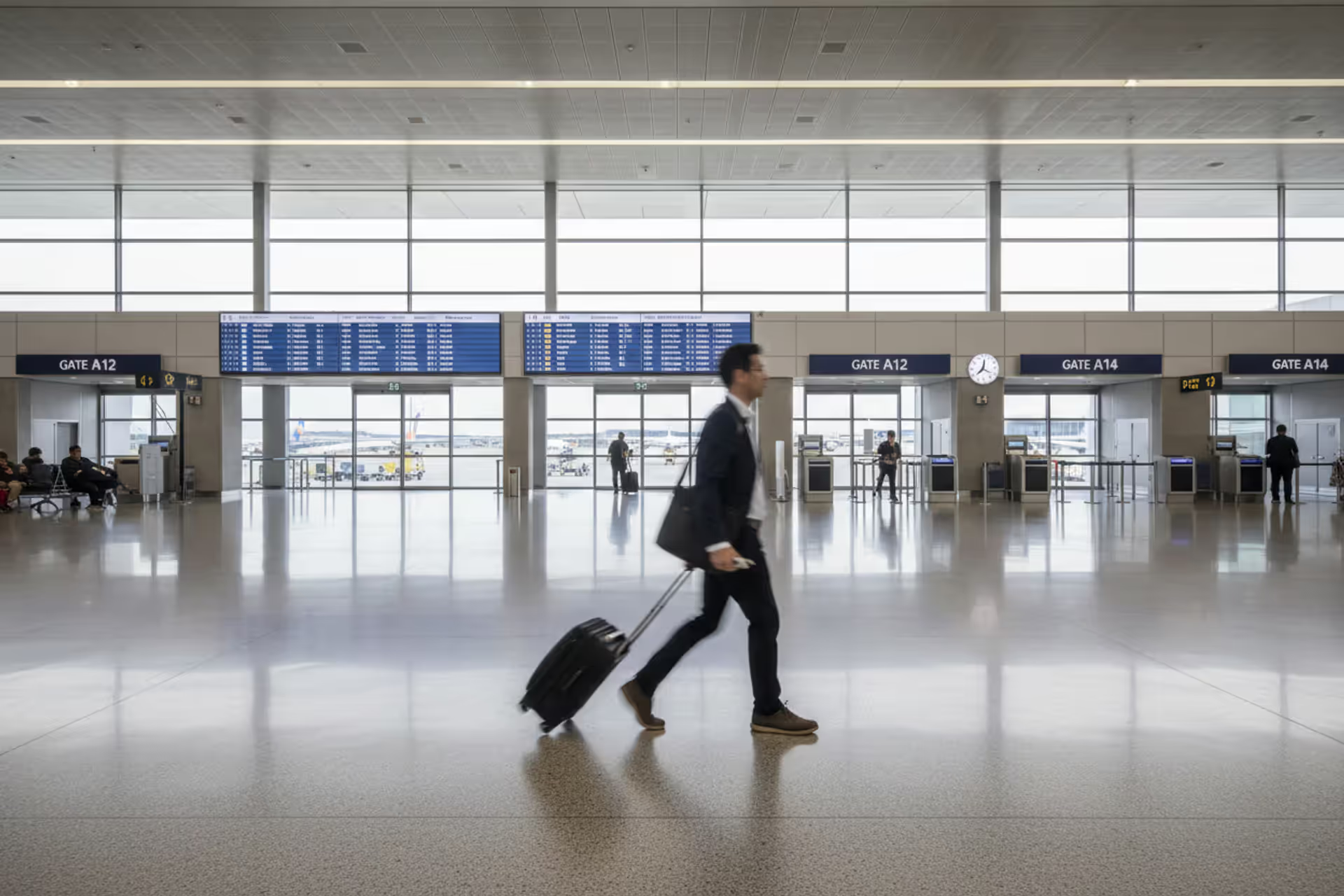
Traveler rushing through an airport terminal toward a departure gate
Does Travel Insurance Cover Missed Connections?

Content
Content
You're sprinting through O'Hare's Terminal 3, dodging luggage carts and slow-walking tourists, desperately trying to reach Gate K9 before they close the boarding door. Your Phoenix flight landed 45 minutes behind schedule—weather delays over Denver—and now your connection to London is leaving in eight minutes. You round the corner, chest heaving, just in time to see the gate agent pull up the jet bridge.
Your carefully planned two-week European vacation starts tomorrow morning in London. Or it was supposed to.
Now what? Will your travel insurance bail you out of this mess?
That depends on several factors: why your first flight ran late, how you booked your tickets, what your policy actually says, and whether you can prove everything with documentation. Let's break down exactly when insurers will help and when they'll leave you holding an expensive rebooking bill.
What Counts as a Missed Connection in Travel Insurance
Insurance companies get specific about what qualifies as a "missed connection." They define it as missing a scheduled connecting flight because your previous flight got delayed. Simple enough, right?
Not quite. The devil lives in the details.
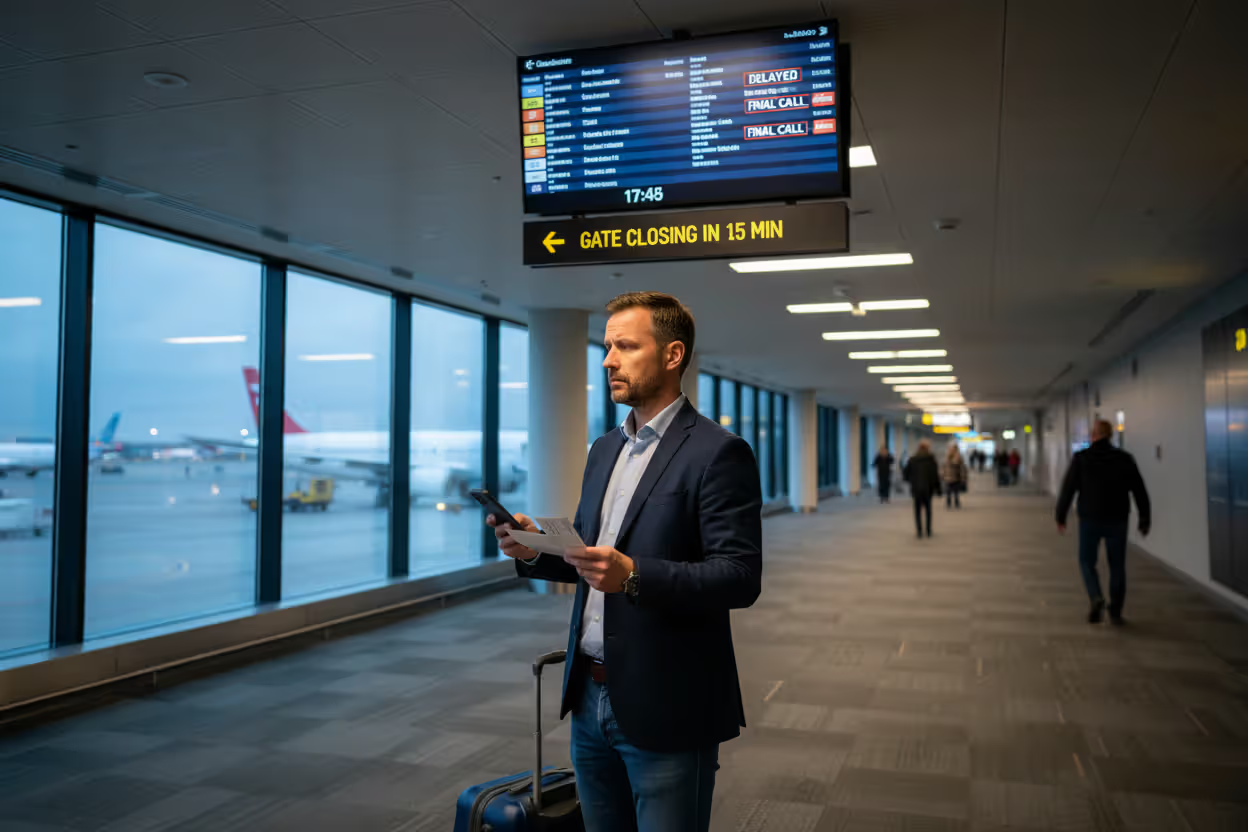
Situations insurers typically cover: Your carrier causes the delay. Think mechanical breakdowns, crew scheduling nightmares, air traffic control holding patterns, or weather grounding flights. If United's maintenance crew discovers a hydraulic leak in Seattle and you miss your Los Angeles connection, that's covered. If thunderstorms shut down Atlanta for three hours and you miss your Miami flight, insurers will help.
Critical detail: every segment must appear on one reservation. When Delta books you SEA-ATL-MIA on confirmation code ABC123, that's a single itinerary. Miss the Miami leg because of Atlanta delays, and you're protected.
Author: Dylan Mercer;
Source: visitmuseumcampussouth.com
Situations insurers won't touch: You built an itinerary using separate bookings. Maybe you snagged a Southwest deal to Chicago, then separately bought a Spirit ticket to Orlando. These aren't connected in the airline's computer system—or your insurer's eyes. Southwest runs two hours late? You'll buy a new Spirit ticket out of pocket.
Carrier-caused versus passenger-caused delays determine everything. Carriers control aircraft maintenance, crew scheduling, and operational decisions. You control when you arrive at the airport, how long you linger at the food court during layovers, and whether you pack prohibited items that trigger secondary screening.
Here's where it gets technical: delay thresholds. Most policies won't activate unless your incoming flight runs at least three to six hours late. A 90-minute delay might make you sprint between gates, but it won't trigger insurance benefits. A five-hour delay that causes you to miss your connection? Now we're talking reimbursement territory.
Every airport has published minimum connection times—the shortest legal window airlines can sell on a single ticket. Thirty minutes at tiny Boise, 90 minutes for international connections at massive JFK. Book a connection meeting these minimums and you're protected if delays cause problems. Create your own tight connection using separate tickets? You've essentially canceled your coverage before packing your suitcase.
Common Reasons Travel Insurance Covers Missed Connections
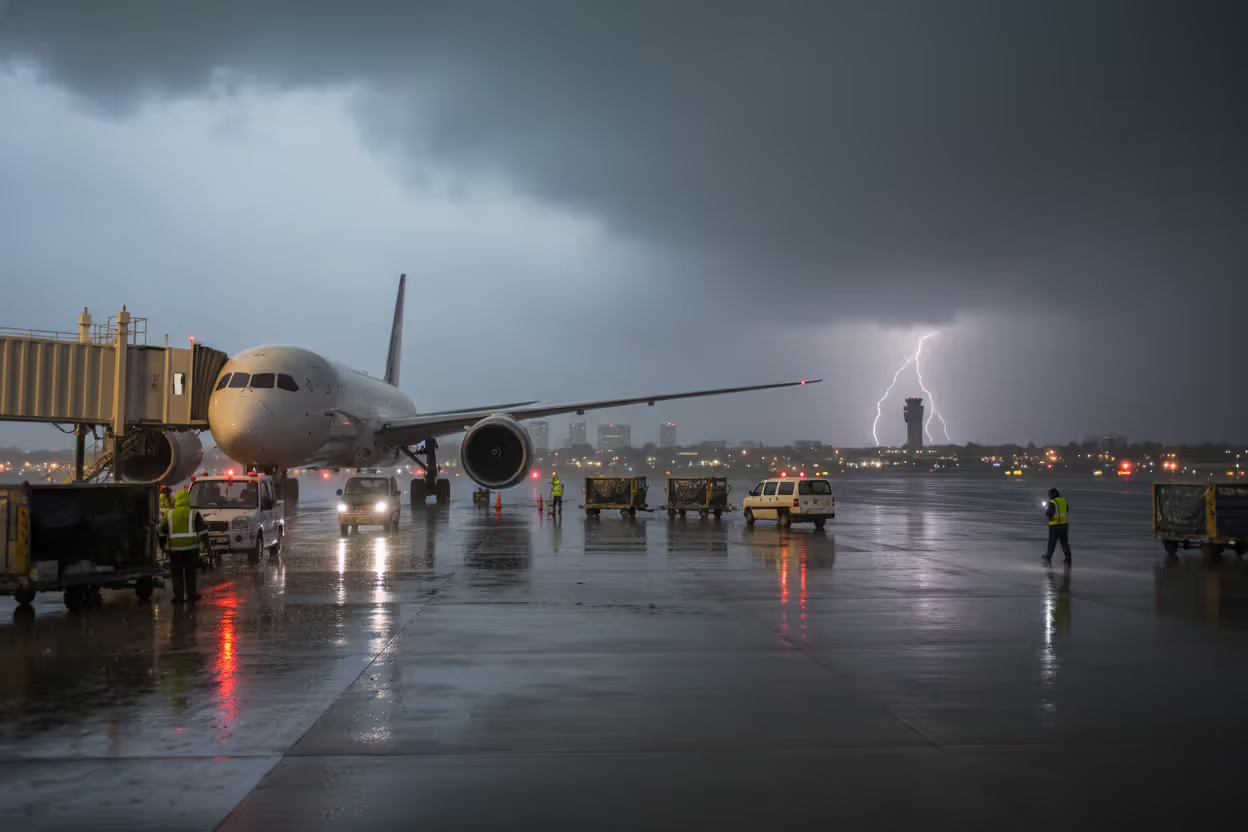
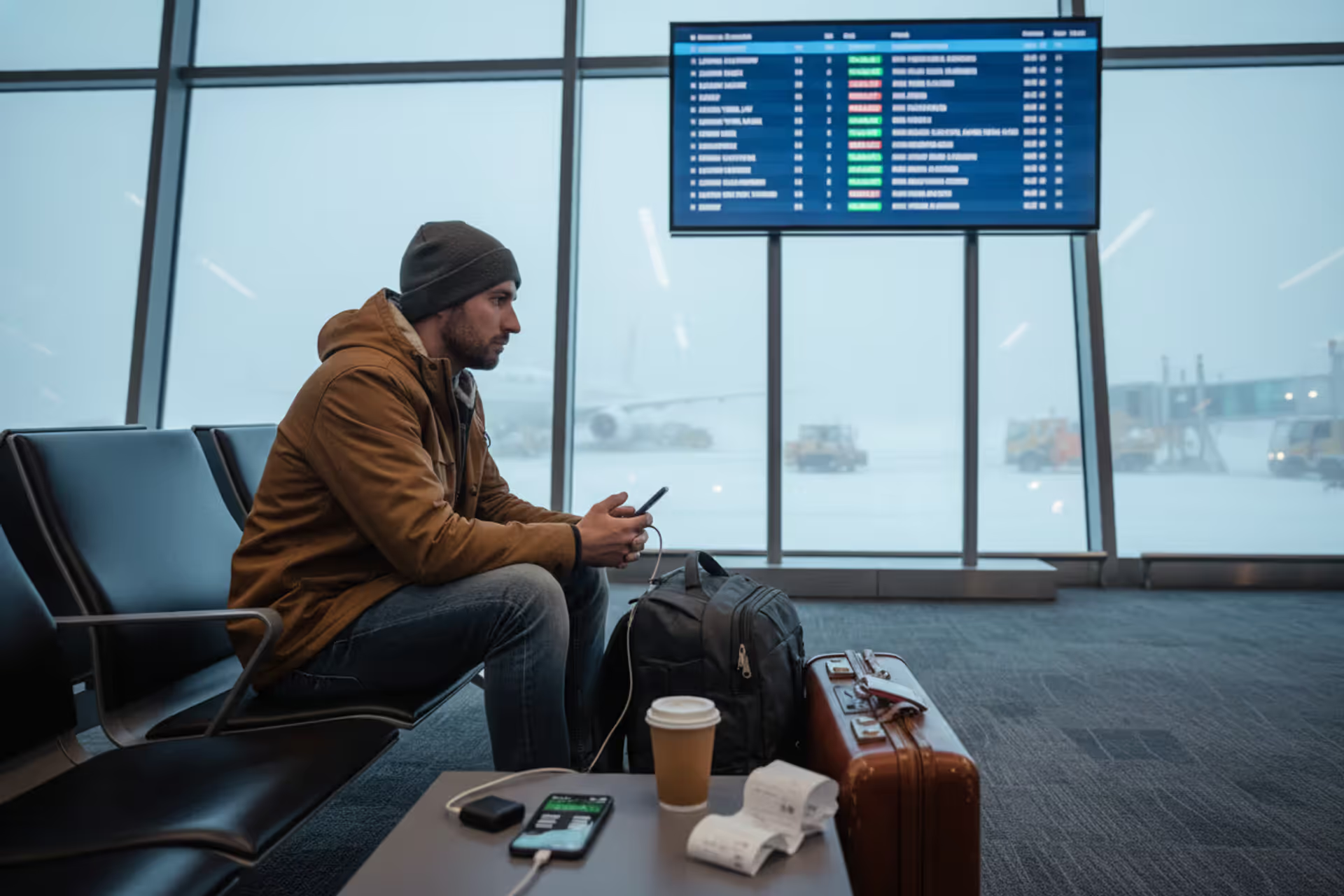
Weather creates the most frequent legitimate claims. January blizzards paralyze Northeast hubs. Summer thunderstorm complexes ripple through the system for hours, creating cascading delays from Dallas to Detroit. Your Minneapolis connection sits on the tarmac for four hours while they de-ice the wings, and suddenly your Seattle flight leaves without you. Does travel insurance cover missed connections caused by weather? Absolutely—assuming you meet all other policy requirements.
Mechanical problems ground aircraft without warning. A cracked windshield, faulty landing gear sensor, or engine warning light can keep a plane parked at the gate for three, six, or ten hours while mechanics diagnose and repair. When your Houston flight can't leave Phoenix because they're replacing a hydraulic pump, and you consequently miss your London connection, insurers recognize this as a legitimate covered event.
Airline labor issues—strikes, work slowdowns, mass sick-outs—create systemwide chaos. Remember the Southwest Airlines operational meltdown over Christmas 2022? Thousands of missed connections resulted from crew scheduling failures. Recent years have brought pilot shortages affecting regional carriers, flight attendant labor disputes, and air traffic controller staffing problems. These situations clearly exceed passenger control and trigger standard coverage provisions.
Airport shutdowns happen more often than you'd think. Security incidents force terminal evacuations. Severe storms close runways. Infrastructure failures knock out radar systems or ground power. A suspicious package closes three gates at Concourse C for two hours, and suddenly you're watching your connection push back from Concourse B while security sorts out the situation. These qualify as covered events under virtually every policy.
Author: Dylan Mercer;
Source: visitmuseumcampussouth.com
What Missed Connection Coverage Actually Pays For
Missed connection benefits reimburse specific out-of-pocket expenses resulting from covered delays. Understanding these covered costs helps you make informed decisions while stuck in an airport at midnight.
New tickets and change fees form the core benefit. The airline refuses to rebook you without charging $450 for a new economy ticket? Your policy covers that cost, up to your coverage maximum. Sometimes the only available seat costs $300 more than your original ticket. That fare difference? Also covered. Some policies even reimburse change fees when you must modify your return flight to accommodate the delay.
Hotels and food during unexpected layovers keep you fed and rested. You miss the last flight out and must wait until 6 AM for the next departure. Insurers reimburse reasonable hotel costs—think Hampton Inn, not Four Seasons—and meal expenses during the wait. They typically cap daily reimbursements rather than writing blank checks. Maybe $150 for lodging, $50 for meals.
Transportation to rejoin your trip covers creative solutions. You've booked a Mediterranean cruise leaving Barcelona tomorrow, but flight delays mean you'll miss embarkation. Some policies pay for a flight to the ship's first port call in Marseille, or even ground transportation to meet it in Monaco two days later. This benefit carries strict limitations and usually requires calling your insurer for approval before booking anything.
Coverage caps vary dramatically between carriers. Here's what five major providers offer on typical mid-level plans:
| Provider | Maximum Reimbursement | Minimum Delay Required | Accommodation Coverage | Meal Allowance Per Day |
| Allianz Travel | $500 per person | 3 hours | Up to $200/night | $75 |
| Travel Guard | $750 per person | 6 hours | Up to $150/night | $50 |
| Travelex Insurance | $500 per person | 3 hours | Up to $175/night | $60 |
| AXA Assistance USA | $1,000 per person | 3 hours | Up to $250/night | $100 |
| Nationwide Travel | $600 per person | 5 hours | Up to $200/night | $65 |
These numbers come from standard comprehensive plans. Budget options offer less, sometimes excluding missed connection benefits entirely. Premium plans often double these limits.
Per-person maximums matter enormously for families. You're traveling with three kids. Each person needs a $375 replacement ticket after a missed connection. That's $1,500 total. A policy offering $500 per person covers you completely. A policy with a $500 total limit leaves you $1,000 short.

Author: Dylan Mercer;
Source: visitmuseumcampussouth.com
When Travel Insurance Won't Cover Your Missed Connection
Booking connections that don't meet published minimums kills more claims than any other factor. Each airport publishes minimum connection times based on terminal layout, security checkpoint locations, and typical passenger walking speeds. Denver requires 45 minutes for most domestic connections. Atlanta demands 60 minutes between concourses. International arrivals at LAX need two full hours to clear customs and make another flight.
Book a 35-minute Atlanta connection to save money, and you've violated your policy before even reaching the airport. Your incoming flight could run late because of hurricane-force winds, but insurers will deny your claim because you started with an impossible timeline.
Creating itineraries with unconnected tickets produces a coverage vacuum. Budget travelers do this constantly: find a $79 Frontier flight to Las Vegas, then separately book a $49 Spirit hop to San Diego. These appear as completely separate trips to insurance companies. Frontier lands 90 minutes late, you miss Spirit, and connecting flight insurance won't reimburse your $189 walk-up Spirit ticket. The policy only recognizes connections when all flights live on one reservation in the airline's system.
Your own delays void everything instantly. Traffic makes you late to the airport, you miss your first flight, and your connection plans collapse? Denied. You spend 45 minutes browsing bookstores during a Denver layover and miss boarding for your Phoenix flight? Denied. TSA pulls you for additional screening because you forgot about that water bottle in your backpack? Also denied. Insurers expect reasonable traveler behavior.
Buying coverage after problems become foreseeable creates another denial path. Hurricane Idalia is forecast to hit Tampa Bay on Tuesday. You purchase travel insurance Monday night for a Wednesday flight connecting through Tampa. Idalia delays your connection exactly as predicted. Insurers will likely deny your claim under their "known events" exclusion. This provision prevents people from buying coverage after problems materialize but before they actually impact travel. Solution: buy your policy when you book your trip, not days before departure when forecasts become specific.
Certain airlines, aircraft types, and routes fall outside some policy coverage. Chartered flights sometimes aren't covered. Budget carriers occasionally get excluded. Regional puddle-jumpers operating under codeshare agreements can create coverage confusion. The exclusions section of your policy spells this out—actually read it before assuming your unusual routing qualifies.
How to Choose a Policy With Strong Missed Connection Protection
Shopping for travel insurance means comparing specific features that separate adequate protection from excellent coverage. Start with delay thresholds. A three-hour threshold triggers benefits faster than a six-hour requirement. If you're stuck in Dallas watching your Seattle connection taxi away, you'd rather wait three hours for coverage activation than six.
Higher per-person limits beat higher total policy limits for solo travelers and couples. A $1,000 per-person maximum protects you better than a $1,500 total cap when two of you need $800 replacement tickets each.
Ask these questions before buying:
How do you define minimum connection times? Some insurers simply accept whatever the airline sells. Others require the airline minimum plus a 30-minute buffer. That extra cushion offers better protection.
Will you cover partner airline connections? You're flying American to Dallas, connecting to British Airways (both Oneworld partners) to London on a single ticket. Confirm your policy treats this as one itinerary, not two separate bookings on different carriers.
What documentation triggers claims processing? Learning requirements before your trip prevents panicked document gathering from airport service desks at 11 PM.
How do you handle connections between different terminals or airports? New York has three major airports. London has six. Some itineraries require ground transportation between airports. Does your policy cover these connections, or only gates within a single airport?
Can I add "cancel for any reason" coverage? This expensive upgrade—typically adding 40-50% to your premium—provides escape hatches beyond standard benefits. It might make sense for complex multi-connection itineraries.
Basic versus comprehensive plans determine whether you get any missed connection coverage at all. Basic plans typically cover trip cancellation for specific reasons and emergency medical situations. That's it. No travel delays, no missed connections, no baggage benefits.
Comprehensive plans add these travel interruption protections along with baggage coverage and other benefits.
Travelers frequently assume any travel insurance covers missed connections. They choose the cheapest available option, then discover it only addresses medical emergencies abroad. Always confirm that 'travel delay' or 'missed connection' appears explicitly as a named benefit in your policy declarations page. If it's not specifically listed there, you don't have it
— Sarah Chen
Comprehensive coverage runs 5-7% of total trip cost. Basic plans cost 3-4%. For a $4,000 vacation, you're comparing $120 versus $240. That extra $120 buys substantial protection if your itinerary involves tight connections or travel during winter storm season.
Filing a Missed Connection Claim With Your Travel Insurer
Successful claims require more documentation than most travelers anticipate. Start collecting evidence immediately when delays begin.
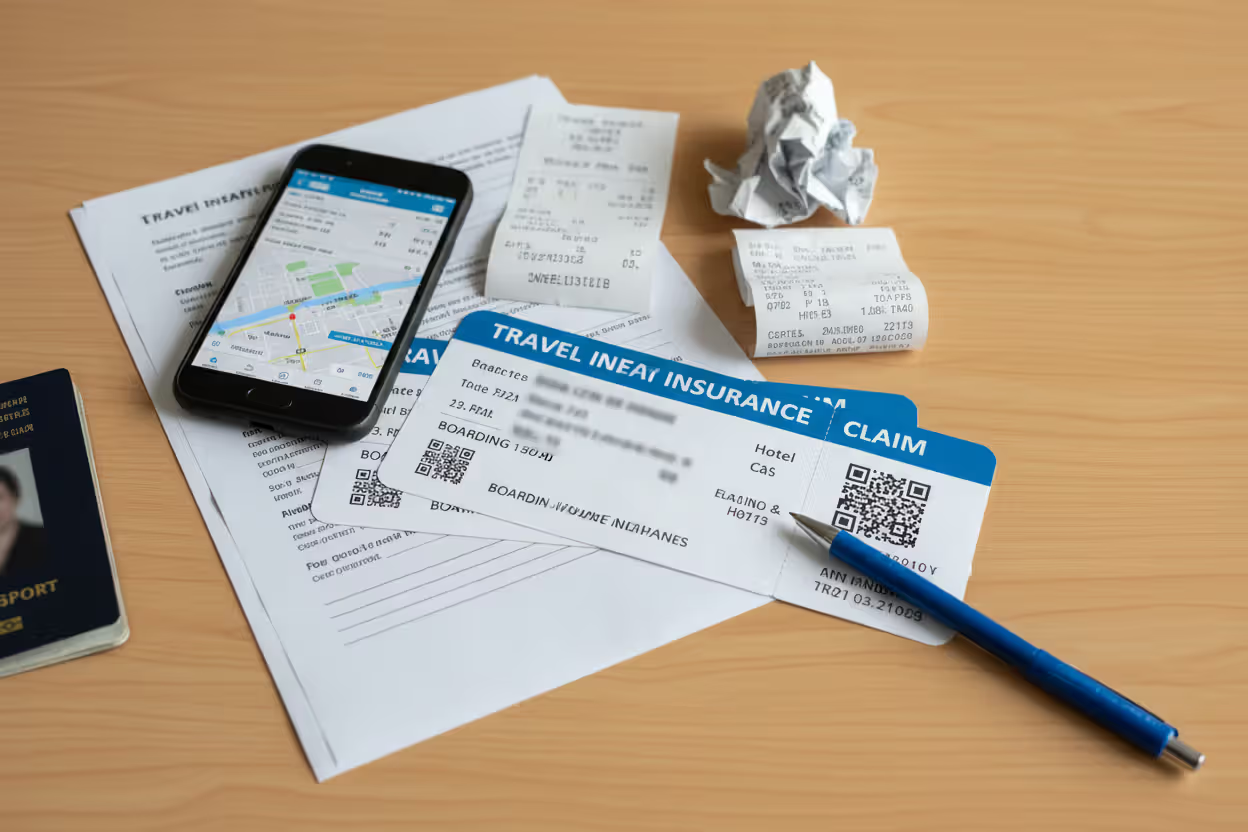
Keep every boarding pass—both the delayed flight and the missed connection. Airlines increasingly use phone-based digital passes, so screenshot everything and email copies to yourself as backup. A lost phone shouldn't torpedo your claim.
Request written delay documentation from the airline explaining what went wrong and how long it lasted. Gate agents can provide these, though you'll often get better results at the airline's customer service desk. The certificate should state the delay duration and specific reason. "Mechanical failure—hydraulic system" or "Weather delay—thunderstorms" work perfectly. Vague statements like "operational issues" trigger follow-up questions from claims adjusters that slow processing.
Save every receipt related to your missed connection. Hotel invoices, restaurant bills, taxi fares, replacement ticket purchases—everything. Insurers want itemized receipts showing exactly what you bought, not just credit card statements. A $67 charge from "Hilton Garden" tells the adjuster nothing. An itemized hotel receipt showing one night at $139 plus $11.99 parking and $16.80 in taxes proves your expense and shows it was reasonable.
Filing deadlines vary by insurer but typically range from 20 to 90 days after your trip ends. Some companies require notification within 24 hours when the missed connection occurs, even though formal claim submission happens later. Check your policy's notification provisions and follow them precisely. A quick email sent from the airport at 11:47 PM satisfies most notification requirements.
Claims get denied for predictable reasons:
Incomplete paperwork: Submit half the required documents and insurers will request more or simply deny the claim. Provide everything upfront.
Missing deadlines: File 91 days after your trip when your policy requires 90-day submission, and you've voided your claim over a single day. Set calendar reminders.
Claiming ineligible expenses: Requesting reimbursement for cocktails, in-room movies, or business class upgrades triggers automatic denials. Stick to reasonable, necessary expenses directly related to the delay.
Inadequate delay proof: Without airline documentation showing delay length and cause, insurers may dispute whether a covered event occurred. Verbal explanations from gate agents don't count—get signed, written statements.
Ignoring reasonable alternatives: The airline offers a free hotel voucher but you book a $400/night resort instead. Insurers will only reimburse what the free hotel would have cost—zero dollars. Accept reasonable alternatives when offered.
Standard claims process for straightforward situations: 2-4 weeks. Complex cases requiring additional documentation: 6-8 weeks. Submit complete, organized claims promptly to avoid processing delays.
Author: Dylan Mercer;
Source: visitmuseumcampussouth.com
FAQ About Missed Flight Connection Insurance
Even meticulous planners miss connections. Jet stream winds blow stronger than forecast, creating arrival delays. Mechanical issues arise during routine preflight checks. Airlines occasionally make operational decisions that cascade into systemwide problems. The difference between a covered missed connection costing you nothing and a $2,000 disaster comes down to decisions you make before reaching the airport.
Choose connection times exceeding airline minimums—by a lot. Ninety-minute domestic connections give you breathing room when forty-five-minute minimums create stress. International connections benefit from three-hour windows instead of the bare minimum two hours.
Book all flights on single reservations whenever possible. Yes, you might find a cheaper total price building your own connections with separate tickets, but you're gambling that every flight runs perfectly on schedule. Save $75 on tickets, risk $800 in replacement ticket costs.
Purchase comprehensive travel insurance specifically listing missed connection coverage as an included benefit. Don't assume—verify. Premium costs typically run 5-7% of trip costs. For a $3,500 vacation, spending $225 on quality insurance makes financial sense, particularly for itineraries involving multiple connections or winter weather travel.
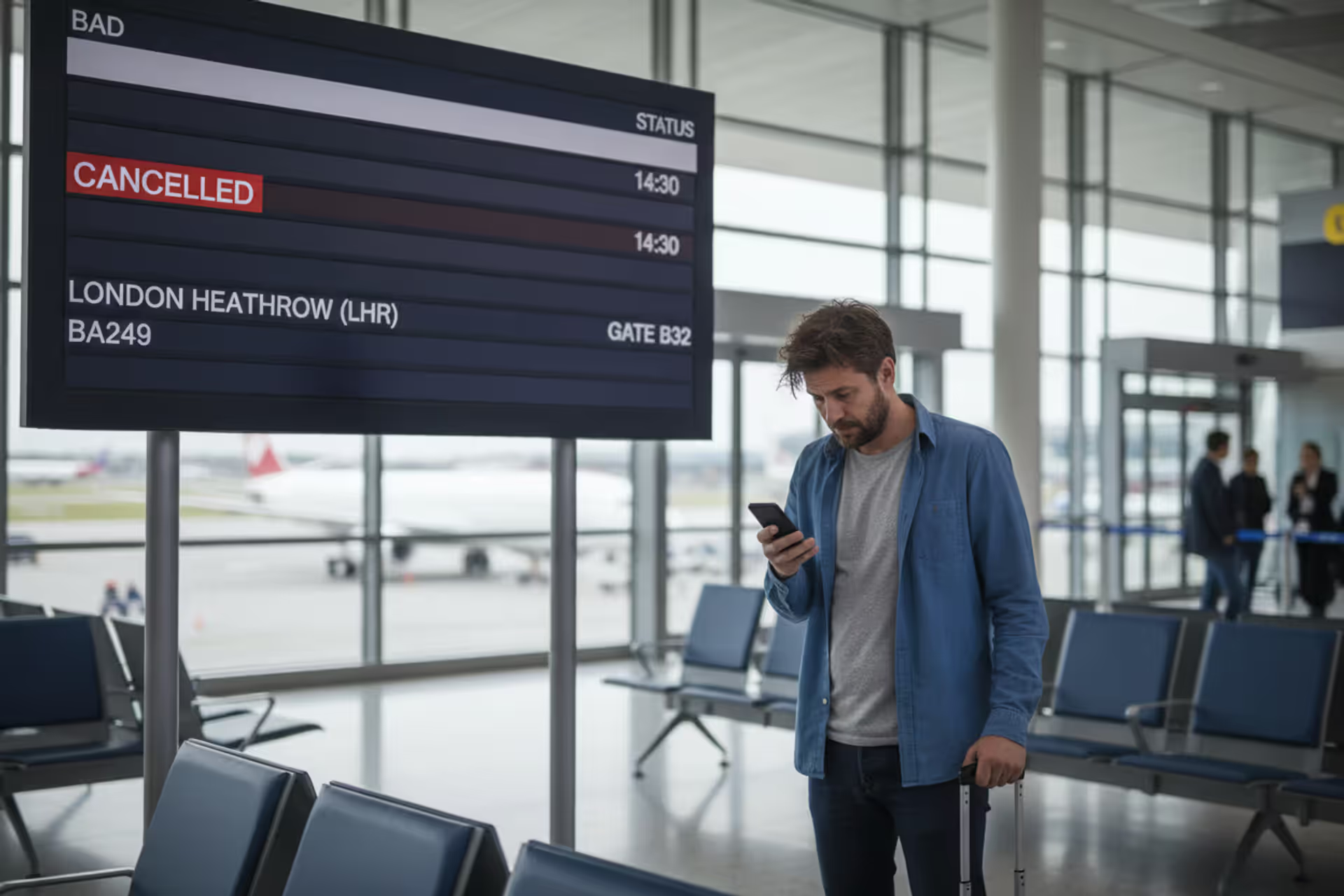
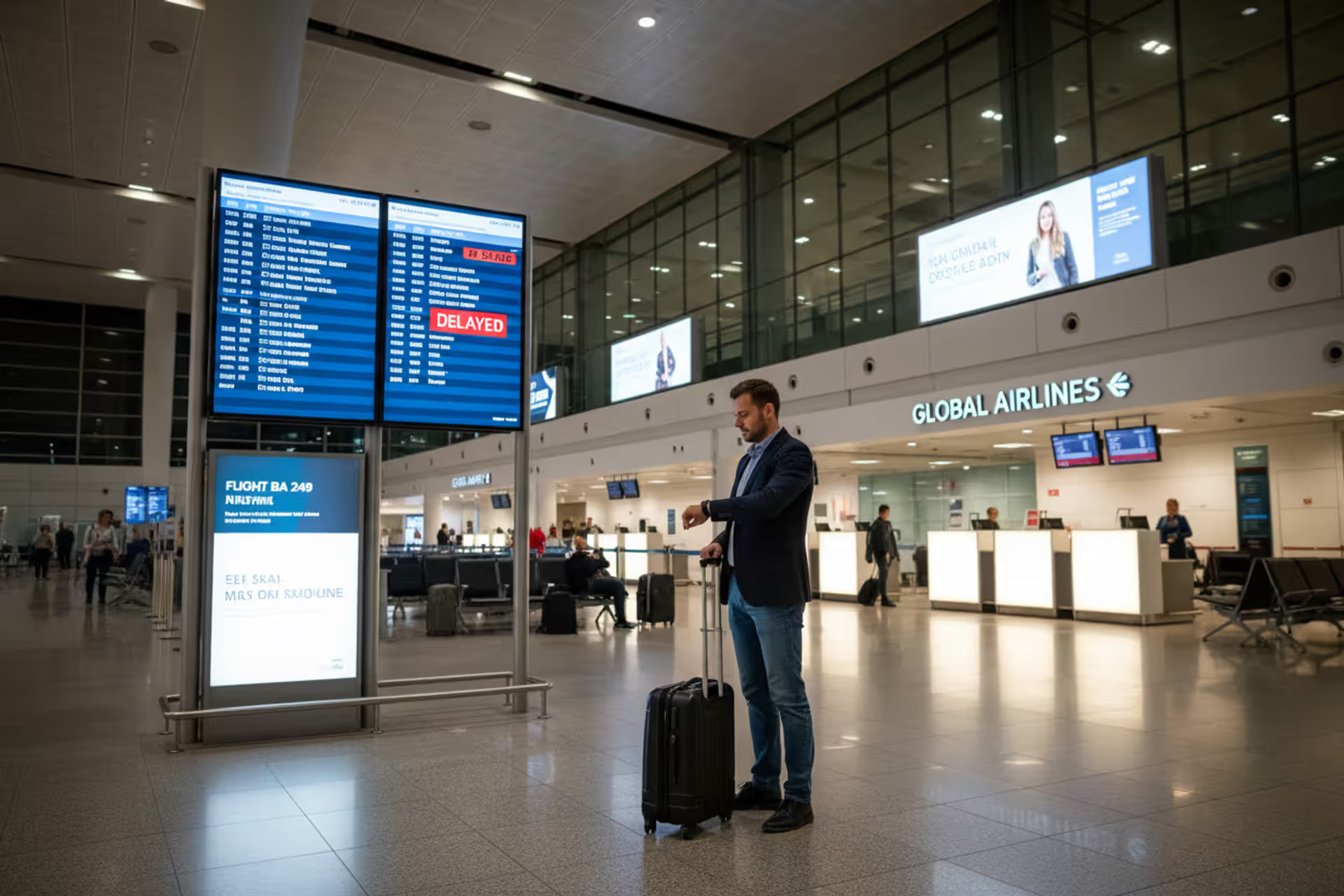
When delays strike, document everything immediately. Request written delay confirmations from airline staff. Photograph departure boards showing your delayed flight status. Save every single receipt. These steps during a stressful situation can save hundreds or thousands of dollars during claims processing.
The modest expense of comprehensive travel insurance—for that $3,500 trip, you're spending $225 to protect a much larger investment—guards against significantly larger costs of last-minute rebooking, unexpected hotel nights, and missed non-refundable reservations at your destination.
Read your policy before leaving home, not while standing at a gate watching your connection depart. Understanding your coverage, policy exclusions, and claim procedures ahead of time means you'll know exactly what to do when delays occur. That knowledge converts a potential financial crisis into a manageable inconvenience where insurance handles the costs while you focus on reaching your destination.
Related Stories

Read more
Read more


The content on this website is provided for general informational and educational purposes only. It is intended to offer guidance on travel insurance topics, including coverage options, premiums, deductibles, trip cancellation protection, travel medical insurance, baggage coverage, travel delays, emergency medical evacuation, and related travel protection matters. The information presented should not be considered legal, medical, financial, or professional insurance advice.
All articles and explanations published on this website are for informational purposes only. Travel insurance policies can vary between providers, and details such as coverage limits, exclusions, reimbursement conditions, waiting periods, eligibility requirements, and claim outcomes may differ depending on the insurer, policy type, destination, traveler age, health status, and trip details.
While we strive to keep the information accurate and up to date, this website makes no guarantees regarding the completeness or reliability of the content. Use of this website does not create a professional relationship. Visitors should review the official policy documents provided by insurance companies and consult with licensed insurance professionals or qualified advisors before making decisions about travel insurance coverage.