
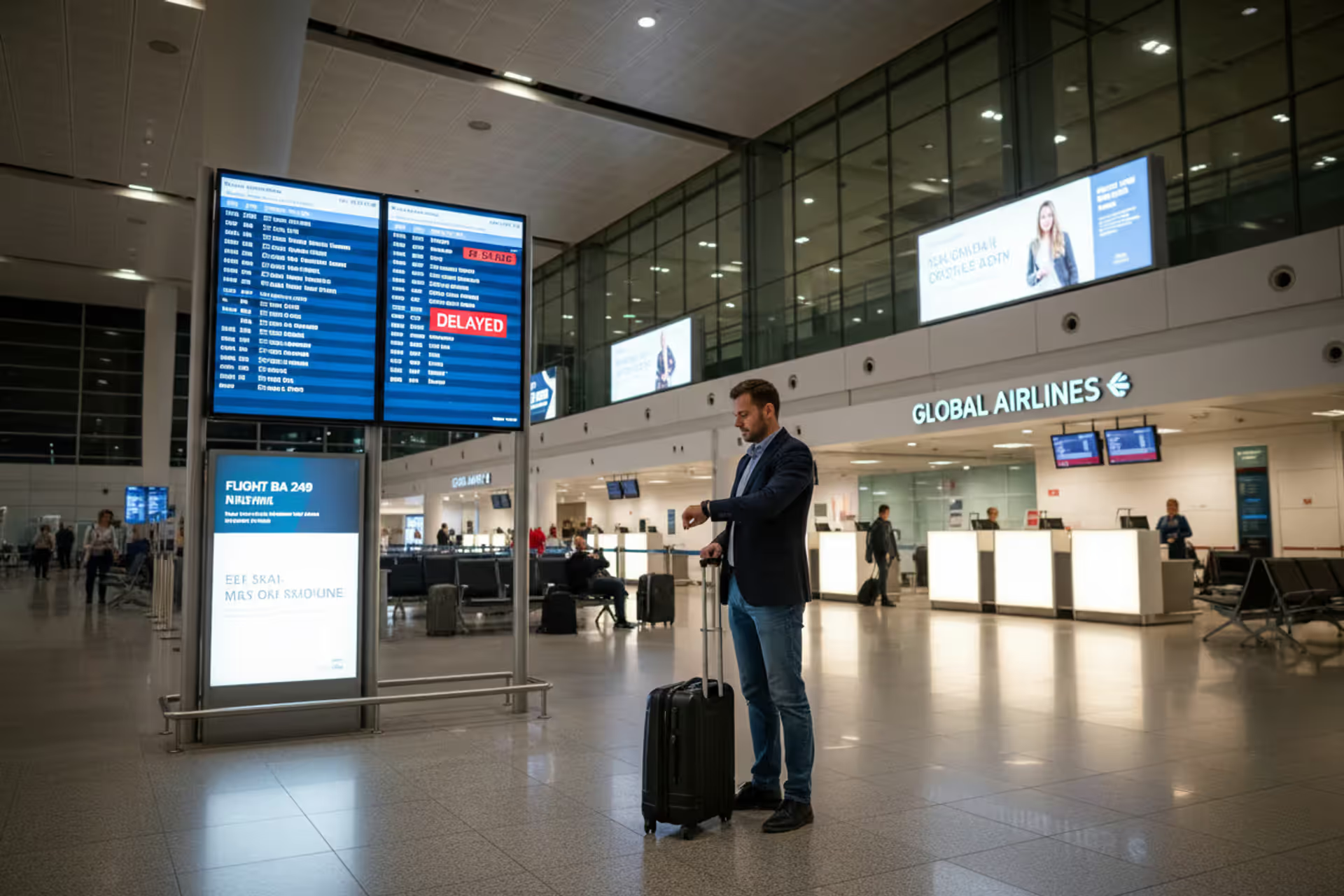
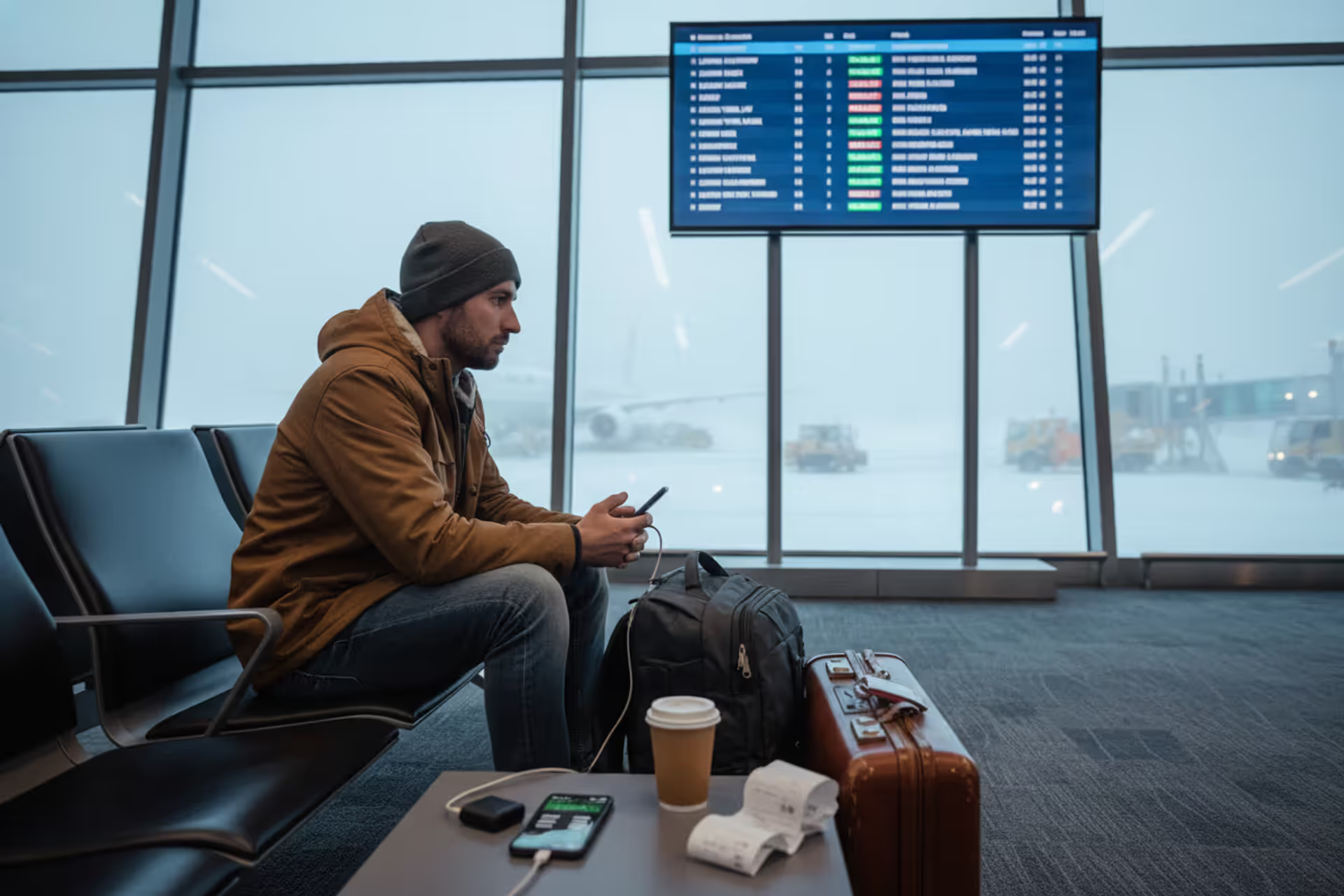
Traveler waiting in an airport after a flight delay
Travel Insurance Flight Delay Coverage Guide

Your connection leaves in forty minutes. The inbound plane just touched down, and you're breathing easier—until the pilot announces a mechanical issue needs fixing. Two hours later, you've missed your connection. Now you're hunting for a hotel room at 11 PM in a city you never planned to visit, watching your credit card balance climb with each swipe.
Flight delay coverage in travel insurance pays you back for these surprise expenses. But here's the catch: policies vary wildly in what counts as a "delay," which costs they'll cover, and how much paperwork you'll need. Let's break down exactly how this coverage works and whether you actually need it.
What Does Travel Insurance Cover for Flight Delays?
When your departure gets pushed back past a certain time limit, travel insurance for flight delays kicks in to reimburse specific out-of-pocket costs. You'll typically get money back for restaurant meals, hotel stays, and taxis or rideshares while you're stuck waiting. Can't get to your checked luggage? Many policies also cover a toothbrush, basic clothes, or other essentials you need to buy.
The usual culprits that trigger coverage include busted aircraft parts, dangerous weather, air traffic control holds, and strikes by airline workers. Picture this: your plane's engine fails a pre-flight check, stranding you for eight hours. That mechanical breakdown qualifies. Or maybe a snowstorm shuts down the airport entirely, forcing you to grab a hotel for the night. Weather delays like that are covered too.
Here's where it gets tricky—your delay needs to hit a minimum length before the insurance pays out anything. Three to twelve hours is the standard range. With a three-hour minimum, you can file once your flight leaves at least three hours behind schedule. Set that threshold at twelve hours instead, and you'll wait significantly longer before seeing any reimbursement.
Author: Olivia Prescott;
Source: visitmuseumcampussouth.com
Dollar limits matter just as much as time requirements. Budget-friendly policies might cap you at $200 total per person. Premium plans can go up to $1,500 or beyond. These caps apply to each delay incident as a whole, not to individual expense types. Say you've got $500 in coverage and you spend $150 eating, $300 sleeping, and $75 on transportation—you're at $525 total, but you'll only get $500 back.
When the wheels actually leave the ground matters more than anything the gate agent tells you. Airlines constantly update delay estimates, sometimes announcing the same flight is delayed multiple times. Your claim gets calculated using the gap between your original scheduled departure and the actual moment that aircraft finally takes off.
The delay clock starts from the scheduled departure time, not when the airline first announces the delay. If your 2 PM flight doesn't leave until 8 PM, that's a six-hour delay—even if the airline only informed you of the problem at 1:30 PM. Keep your boarding pass and any airline notifications as proof of both the scheduled and actual departure times
— Jennifer Fitzgerald
How Flight Delay Insurance Works
Your insurance only pays out once your postponed departure crosses the policy's time requirement. Six-hour minimum and your flight leaves five hours fifty minutes late? You get zero. That ten-minute gap disqualifies everything.
But there's more to eligibility than just waiting long enough. You need to have bought coverage before anyone knew the delay would happen. Purchase insurance after meteorologists forecast a hurricane closing airports? That storm's delays won't be covered. Insurers label this the "known event" rule, and it eliminates coverage for predictable problems.
Documentation starts the moment you realize you're stuck. You'll need evidence of three things: when you were supposed to leave, when you actually left, and why the delay occurred. Airlines give out delay verification letters if you ask—hit up their customer service desk at the airport or send a request through their website in the days after your messed-up travel.
Every single receipt counts. That wrinkled paper from the airport restaurant with barely readable ink? Still valid documentation as long as the date, time, and dollar amount show up. Your credit card statement by itself usually doesn't cut it—insurers want itemized proof showing what you actually bought.
Author: Olivia Prescott;
Source: visitmuseumcampussouth.com
Claims come with deadlines, typically between 20 and 90 days after your trip ends. Miss that window and your reimbursement disappears, no matter how legitimate your expenses were. Put a reminder in your phone for two weeks post-trip to pull everything together and submit.
Standard claims get processed in two to eight weeks. Complicated scenarios—multiple missed connections, international routing changes, or unusual circumstances—drag out longer. A few insurers will rush your claim for an extra fee, though that rarely makes financial sense unless you're claiming a substantial amount.
Types of Travel Insurance That Include Flight Delay Protection
Delay coverage comes packaged different ways, each with its own pros and cons. Knowing these options helps you avoid doubling up on coverage you don't need or missing protection you actually want.
Comprehensive Travel Insurance Plans
Comprehensive policies bundle delay coverage with trip cancellation, medical protection, lost baggage insurance, and more. These typically provide the beefiest reimbursement for delays—think $500 to $1,500 per person—plus more lenient terms overall.
You'll pay more, though. Comprehensive coverage usually runs 4% to 10% of what you're spending on the entire trip. Drop $5,000 on a vacation and expect a $200 to $500 insurance bill. That math works for international adventures, cruises, or trips loaded with nonrefundable deposits. For a quick domestic weekend? Probably overkill.
Many comprehensive plans let you add "cancel for any reason" upgrades, giving you flexibility beyond standard cancellation rules. That same flexibility often extends to delays—some cover delays as short as three hours instead of the six or twelve hours you'll find in basic policies.
Author: Olivia Prescott;
Source: visitmuseumcampussouth.com
Credit Card Flight Delay Benefits
Premium credit cards often include automatic delay coverage when you buy tickets with the card. Chase Sapphire Reserve, American Express Platinum, and similar cards generally cover delays hitting six hours or more, reimbursing up to $500 per ticket for food and lodging.
The best part? Zero additional cost since it's baked into your card membership. The downside? Coverage gaps everywhere. Card benefits typically exclude strikes, won't cover companion tickets bought with points or miles, and require you to charge the full airfare to that specific card.
Card coverage also usually acts as secondary insurance, meaning you file with other applicable policies first. Got both comprehensive travel insurance and card coverage? You'd claim against your travel policy, then submit leftover expenses to your card company.
Standalone Flight Delay Policies
Standalone options focus exclusively on delays and cancellations. Companies like Allianz and Travel Guard sell these for $15 to $50 per trip, with pricing based on coverage limits and how long the delay needs to be.
These make sense for travelers who already have international medical coverage and don't want comprehensive protection, but do want a financial safety net for unreliable routes or tight connections. A standalone policy might give you $300 in delay coverage with a three-hour minimum for $25—solid protection without paying for extras you won't use.
The limitation is right in the name: these policies only cover delays. Need emergency medical evacuation or lost luggage coverage? You're out of luck.
| Policy Type | Typical Delay Threshold | Coverage Limit | Cost Range | Best For |
| Comprehensive Travel Insurance | 3-6 hours | $500-$1,500 | $150-$500+ | Overseas journeys, expensive trips, multiple risk factors |
| Credit Card Benefits | 6-12 hours | $500 per ticket | $0 (part of card perks) | Domestic routes, straightforward itineraries, current premium cardholders |
| Standalone Flight Delay Policy | 3-6 hours | $200-$500 | $15-$50 | Budget-conscious travelers, worrisome specific routes, supplemental protection |
When You Need Travel Insurance for Flight Delays
Some trips barely need delay coverage. A nonstop flight on a reliable airline during clear weather? Low risk. A multi-connection international journey during winter? Much higher chance something goes wrong.
International routes face more delay potential than domestic ones. Customs, longer flight distances, and coordination between different countries' air traffic systems create more failure points. A delayed flight from New York to Paris could leave you stranded overnight in an expensive European city where hotels run $200-plus per night.
Connections multiply your vulnerability exponentially. Every connection adds another potential breakdown. Two connections to reach your final destination? A delay on leg one can domino through everything. Airlines aren't obligated to pay for hotels or meals when weather or mechanical problems cause delays—only for issues they directly control, and even those policies vary.

Author: Olivia Prescott;
Source: visitmuseumcampussouth.com
High-traffic travel periods—Thanksgiving week, Christmas through New Year's, spring break, summer vacation months—see more delays from congestion and weather. Airports run near full capacity, so one delayed plane can create a chain reaction hitting dozens of flights.
Check your airline's punctuality history. The Department of Transportation publishes monthly performance data. Your carrier consistently ranks near the bottom for on-time arrivals? Insurance becomes more worthwhile. Some regional airlines and budget carriers see delay rates above 30%, meaning nearly one in three flights runs late.
Trip cost factors in too. Spending $10,000 on a dream vacation? Paying $400 for comprehensive insurance including delay coverage makes perfect sense. Got a $400 weekend trip? A $50 standalone delay policy or just relying on credit card coverage might be smarter.
How to File a Flight Delay Travel Insurance Claim
Successful claims require careful documentation starting the second you learn about your delay. Waiting until you're home to gather proof often means losing critical evidence.
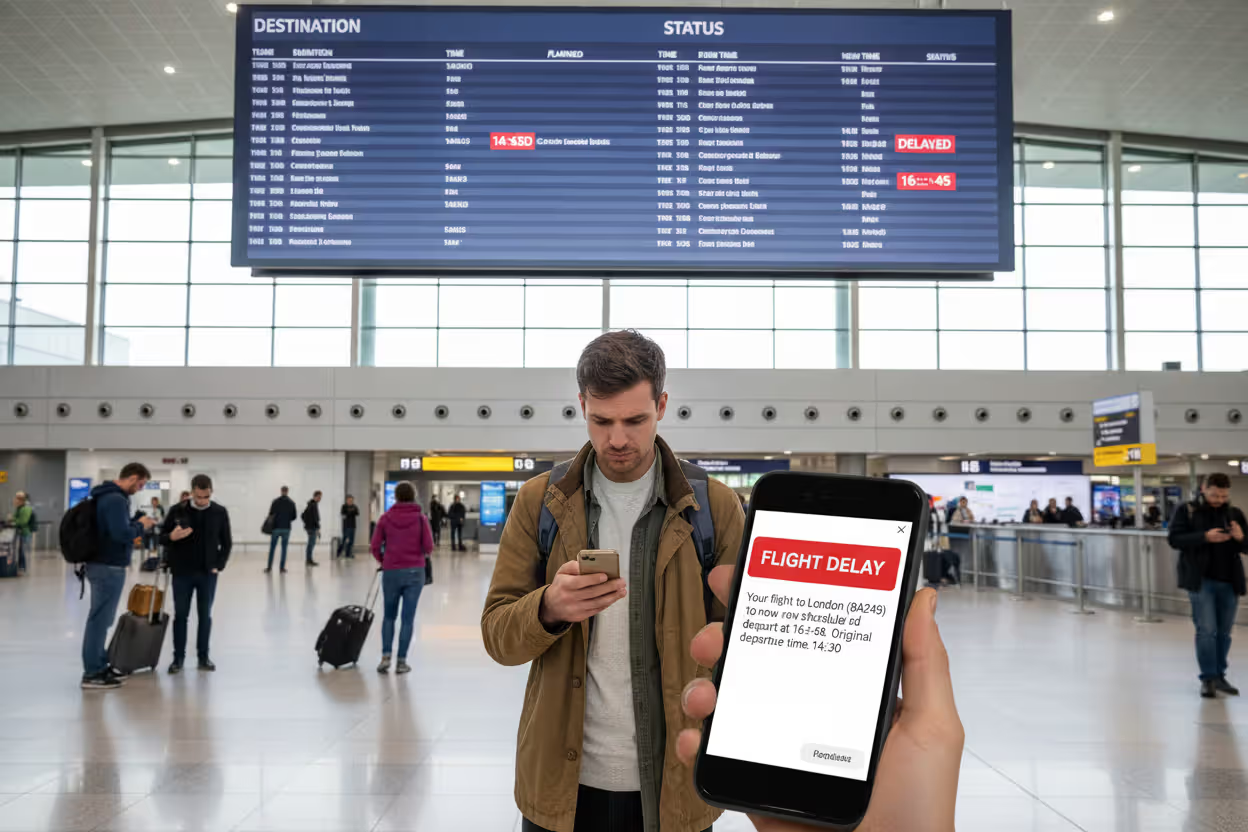
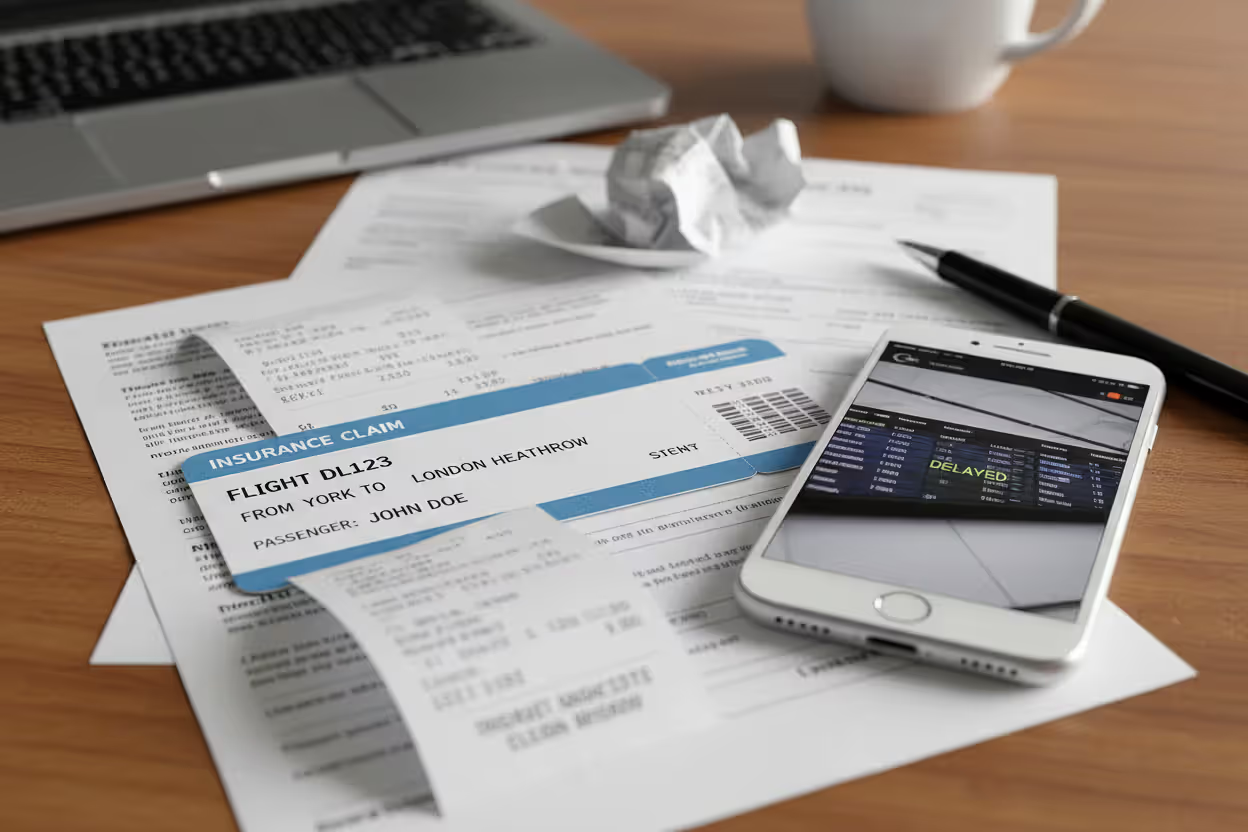
Start by getting written confirmation from your airline. Visit customer service and request a delay verification letter stating your scheduled departure, actual departure, and the delay reason. Airport too chaotic with endless lines? Snap photos of departure boards showing your flight number, original time, and current status. These photos work as backup evidence.
Hold onto your boarding pass—both the original showing your scheduled flight and any replacement passes for rebooked flights. These prove you were actually on the delayed flight and establish your timeline.
Hang onto every receipt for delay-related expenses:
- Food and restaurant purchases
- Hotel rooms if you're stuck overnight
- Ground transportation between airport and hotel
- Essential toiletries or clothing when you can't reach checked bags
- Phone calls to rearrange plans or notify people you'll be late
Receipts don't need to be perfect, but they must be readable with visible date, vendor, and amount. Lost a receipt? Some insurers accept credit card statements plus a written explanation, though this slows everything down.
Watch out for common mistakes like claiming expenses from before your delay officially qualified. Flight delayed six hours but you bought dinner during hour five? That meal might not count since the delay hadn't crossed the threshold yet when you purchased it. Wait until your delay officially exceeds the minimum before spending money you plan to claim.
Another frequent error: claiming expenses the airline already covered. Carrier gave you meal vouchers or hotel accommodation? You can't claim those same costs through insurance. Only money from your own pocket qualifies.
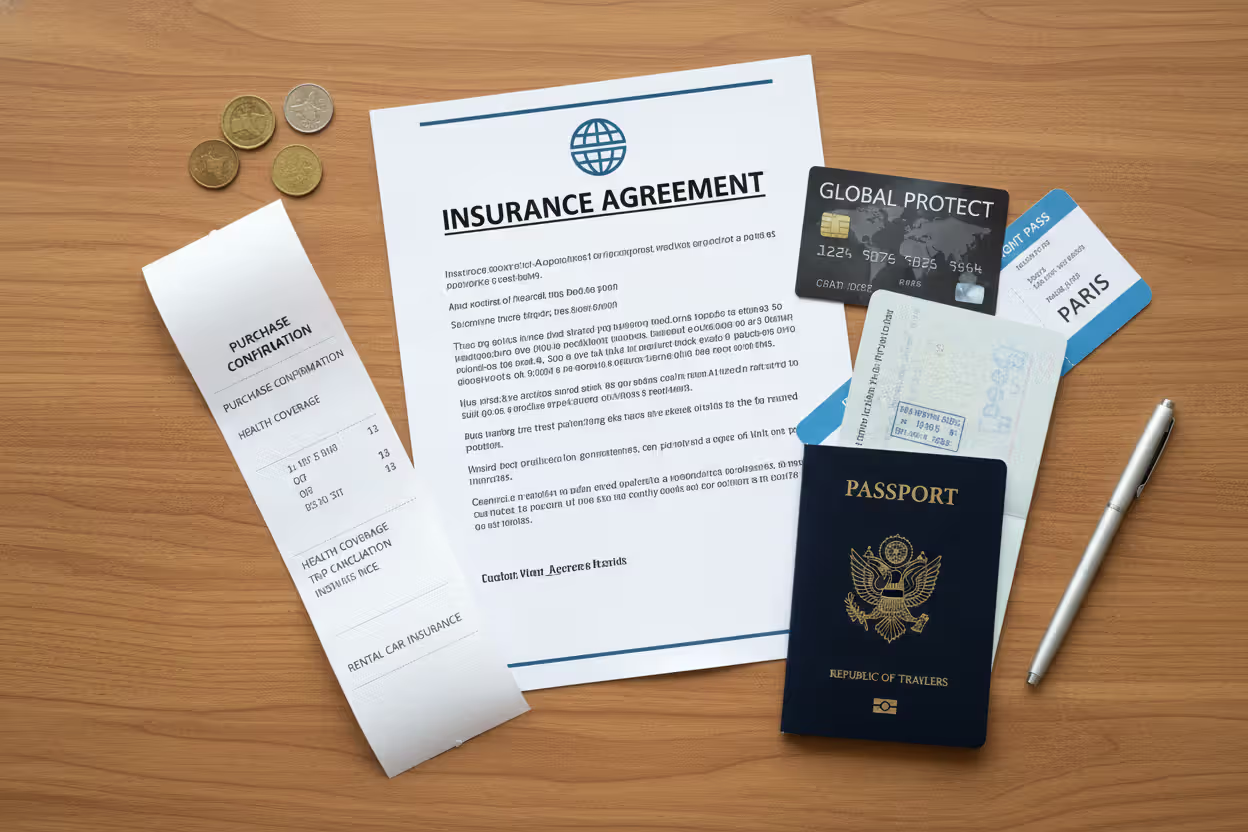
File your claim quickly after getting home. Round up boarding passes, receipts, delay verification letter, and policy documents. Most insurers let you file online by uploading photos or scans.
Write a short explanation: "Flight 1234 from Chicago to Denver scheduled for 2:00 PM departure on March 15, 2026, didn't leave until 9:30 PM because of mechanical issues. I spent money on meals and transportation during the seven-and-a-half-hour delay."
Claims generally process in four to six weeks. Insurers verify documentation, confirm the delay with the airline, and check that your expenses match policy rules. Need more information? They'll reach out—respond fast to avoid more delays.
Author: Olivia Prescott;
Source: visitmuseumcampussouth.com
Common Exclusions in Delayed Flight Travel Insurance
Knowing what policies won't cover prevents nasty surprises during claims. Exclusions vary between insurers, but several show up in nearly every policy.
Known events before purchase top the exclusion list. A hurricane's forecast to slam your destination and you buy insurance after that forecast goes public? Delays from that hurricane won't be covered. Insurers define "known" as when a reasonable person would've heard about the potential problem—usually when major news reports the event or officials issue warnings.
Certain policies exclude delays from carriers' financial troubles. An airline declares bankruptcy and cancels flights? Your delay coverage might not apply. This exclusion prevents people from buying insurance after discovering their carrier faces money problems.
Insufficient connection time can kill your coverage. Book a 45-minute connection when the airline recommends at least 90 minutes, then miss your connection from a minor delay on the first flight? Insurers may reject your claim, arguing you knowingly took unreasonable risk with an inadequate connection.
Non-covered expenses include alcohol, entertainment, and luxury splurges. Stuck overnight and buy a $200 steak with premium wine? Your insurer will likely reimburse only reasonable meal costs—maybe $30 to $50. They won't fund upgrading your delay experience beyond basic necessities.
Nearly all policies exclude delays you caused yourself. Show up late to the airport and miss your flight? Not covered. Get denied boarding for improper documentation or bad behavior? Insurance won't help.
Government actions like travel bans or airspace shutdowns often fall outside standard coverage. COVID-19 taught many travelers their policies excluded delays from government-imposed restrictions. Some insurers now sell pandemic or government action add-ons, but these cost extra and have their own limitations.
Frequently Asked Questions About Flight Delay Travel Insurance
Delay coverage protects you financially against travel's most frequent headache. The right policy depends on your specific route, how much risk you'll tolerate, and what coverage you already have through credit cards or other sources. International trips with multiple connections during busy seasons benefit most from comprehensive policies with short delay thresholds and high reimbursement caps. Straightforward domestic flights might only need the backup your credit card provides.
Making delay insurance work requires understanding your specific policy's terms before problems hit. Know your delay threshold, coverage caps, required documentation, and claim deadlines. Keep detailed records the moment a delay starts—boarding passes, receipts, and airline verification letters build the foundation of successful claims. That $200 you drop on an unexpected hotel room becomes a minor annoyance instead of a budget disaster when your travel insurance flight delay coverage handles the bill.
Related Stories

Read more
Read more


The content on this website is provided for general informational and educational purposes only. It is intended to offer guidance on travel insurance topics, including coverage options, premiums, deductibles, trip cancellation protection, travel medical insurance, baggage coverage, travel delays, emergency medical evacuation, and related travel protection matters. The information presented should not be considered legal, medical, financial, or professional insurance advice.
All articles and explanations published on this website are for informational purposes only. Travel insurance policies can vary between providers, and details such as coverage limits, exclusions, reimbursement conditions, waiting periods, eligibility requirements, and claim outcomes may differ depending on the insurer, policy type, destination, traveler age, health status, and trip details.
While we strive to keep the information accurate and up to date, this website makes no guarantees regarding the completeness or reliability of the content. Use of this website does not create a professional relationship. Visitors should review the official policy documents provided by insurance companies and consult with licensed insurance professionals or qualified advisors before making decisions about travel insurance coverage.