

Pregnant traveler at an airport holding travel documents
Travel Insurance Pregnancy Coverage Guide

Planning a trip while expecting? You'll need more than just comfortable shoes and extra bathroom breaks. Insurance coverage gets complicated fast when you're pregnant—and most travelers don't realize it until they're comparing policies or, worse, filing a claim.
Standard travel policies handle pregnancy in surprisingly inconsistent ways. One insurer might cover complications through week 32. Another cuts off everything at 24 weeks. A third might cover emergencies but require a doctor's note after your first trimester.
Getting the right protection means knowing which situations actually trigger coverage, when to buy your policy, and which exclusions could leave you paying $50,000+ for an unexpected delivery in a foreign hospital.
Does Travel Insurance Cover Pregnancy?
Short answer: sometimes, partially, and with a lot of fine print.
Here's what actually happens with most policies: They'll cover you if something goes seriously wrong, but they won't pay for normal pregnancy stuff. That distinction matters more than you'd think.
Say you're 26 weeks along and develop severe preeclampsia while vacationing in Italy. You need immediate hospitalization, medications, and monitoring. Most decent policies cover this—it's an unpredictable medical emergency that required intervention you couldn't have planned for.
Now imagine you're 38 weeks pregnant, traveling against your doctor's advice, and you go into labor naturally. You deliver a healthy baby at a hospital in your destination city. Guess what? You're paying that entire bill yourself. Normal labor at term isn't an emergency—it's exactly what's supposed to happen around 40 weeks.
Insurance companies draw a hard line between medical crises and expected pregnancy events. Complications qualify for coverage. Routine prenatal care and normal deliveries don't.

Author: Olivia Prescott;
Source: visitmuseumcampussouth.com
How insurers treat pregnancy as a pre-existing condition: This gets tricky. If you buy coverage before getting pregnant or during your first few weeks, most companies won't flag pregnancy itself as pre-existing. But if you purchase a policy after developing gestational diabetes or placenta previa, those complications definitely count as pre-existing conditions—and you'll need a waiver to get coverage for related claims.
Gestational age cutoffs change everything. One company stops all pregnancy coverage at 24 weeks. Another extends to 28 weeks. A few specialist insurers go to 32 or even 36 weeks, but good luck finding affordable options that late. After their cutoff date, you might as well not be insured for anything pregnancy-related.
What Pregnancy Situations Are Covered by Travel Insurance
Policies that include pregnancy coverage focus exclusively on things that shouldn't happen—medical emergencies that require urgent treatment.
You'll typically get coverage for:
Serious complications that need immediate medical care—think hospitalization for hyperemesis gravidarum (severe vomiting causing dangerous dehydration), sudden onset of severe preeclampsia or eclampsia, HELLP syndrome, placental problems causing bleeding, placental abruption, or other conditions threatening your life or the pregnancy.
Premature labor before your policy's week limit usually qualifies as an emergency. Going into labor at 29 weeks while traveling would likely trigger coverage because it's happening before the expected time and requires emergency intervention.
Miscarriage and necessary follow-up treatment generally receive coverage. This includes procedures like dilation and curettage (D&C) and any complications requiring hospitalization.
Ectopic pregnancy discovered and treated during your trip counts as a legitimate medical emergency since it's life-threatening and unrelated to normal pregnancy progression.
Canceling your trip because pregnancy complications make travel impossible might be covered—but only if the complications develop after you buy the policy and your doctor provides documentation that you cannot safely travel. A placenta previa diagnosis at 27 weeks could qualify. Morning sickness and fatigue won't.
What definitely doesn't qualify:
Regular prenatal appointments, scheduled ultrasounds, routine bloodwork, and standard OB visits aren't covered anywhere in any policy. These are predictable, scheduled care—not emergencies.
Delivering at term costs you full price. Travel at 37 weeks and go into natural labor? That's normal pregnancy progression. You'll receive a hospital bill for delivery, your stay, physician fees, and all related charges—potentially $15,000 to $75,000 depending on location and whether complications arise during delivery itself.
Planned procedures like elective cesarean sections, scheduled amniocentesis, or other non-emergency interventions won't trigger any benefits.
Managing a high-risk pregnancy when the high-risk factors existed before you purchased coverage usually falls under pre-existing condition exclusions. Pre-pregnancy diabetes or chronic hypertension often disqualify you from pregnancy coverage entirely.
Your newborn's care isn't covered at all. The baby is a completely separate person who wasn't insured under your policy. NICU stays, pediatric care, newborn screening—all out of pocket.
Even healthy pregnancies can develop life-threatening complications with zero warning signs.But travelers need to understand that 'we cover complications' is completely different from 'we cover your pregnancy'—and that gap creates massive confusion when people file claims
— Dr. Jennifer Ashton
When to Buy Travel Insurance During Pregnancy
Purchase timing determines which policies you can buy and what they'll actually cover.
Before conception or in your first 12 weeks gives you maximum options. Buy coverage before getting pregnant or immediately after a positive test, and you'll have the widest selection of insurers, the most comprehensive coverage options, and the lowest premiums. Pre-existing condition concerns essentially disappear.
Weeks 13 through 24 still offer reasonable choices, though you'll notice differences. Insurers ask more detailed questions about your pregnancy, medical history, and any complications. Some companies charge slightly higher premiums. Others apply stricter terms. But you can still find quality coverage if you're healthy and your pregnancy is progressing normally.
After week 28, good luck finding anything comprehensive. The majority of insurers either refuse to issue new policies to travelers this far along or exclude all pregnancy coverage from policies they do sell. A handful of specialized companies might offer limited coverage through week 32, but expect to pay premium prices for bare-bones protection.

Author: Olivia Prescott;
Source: visitmuseumcampussouth.com
Trimester cutoffs aren't standardized across the industry:
You'll find dramatic variation between companies. One might maintain full complication coverage through 36 weeks. Another draws the line at 24 weeks for any pregnancy-related claim whatsoever. A third offers a middle ground with emergency-only coverage through 28 weeks. This inconsistency makes comparison shopping essential rather than optional.
You must disclose your pregnancy—no exceptions. Trying to hide your pregnancy status, lying about your due date, or failing to mention existing complications will void your policy completely. Not just pregnancy claims—every claim. Insurers verify information, and misrepresentation gives them legal grounds to deny coverage and cancel your policy entirely, potentially leaving you without any protection abroad.
Medical clearance letters become standard after 28 weeks. Many insurers require documentation from your obstetrician confirming you're medically cleared for travel, experiencing no complications, and providing your accurate due date. Some companies request this earlier—around 24 weeks. The letter protects both you and the insurer by establishing medical fitness to travel.
Timing also affects trip cancellation protection. Discover you have placenta previa, then buy insurance? That complication is now pre-existing. If it prevents you from traveling, you won't get reimbursement for cancelled flights and hotels.
Types of Travel Insurance That Cover Pregnancy
Different policy structures approach pregnancy coverage in distinct ways. Choosing the right type depends on your specific needs and concerns.
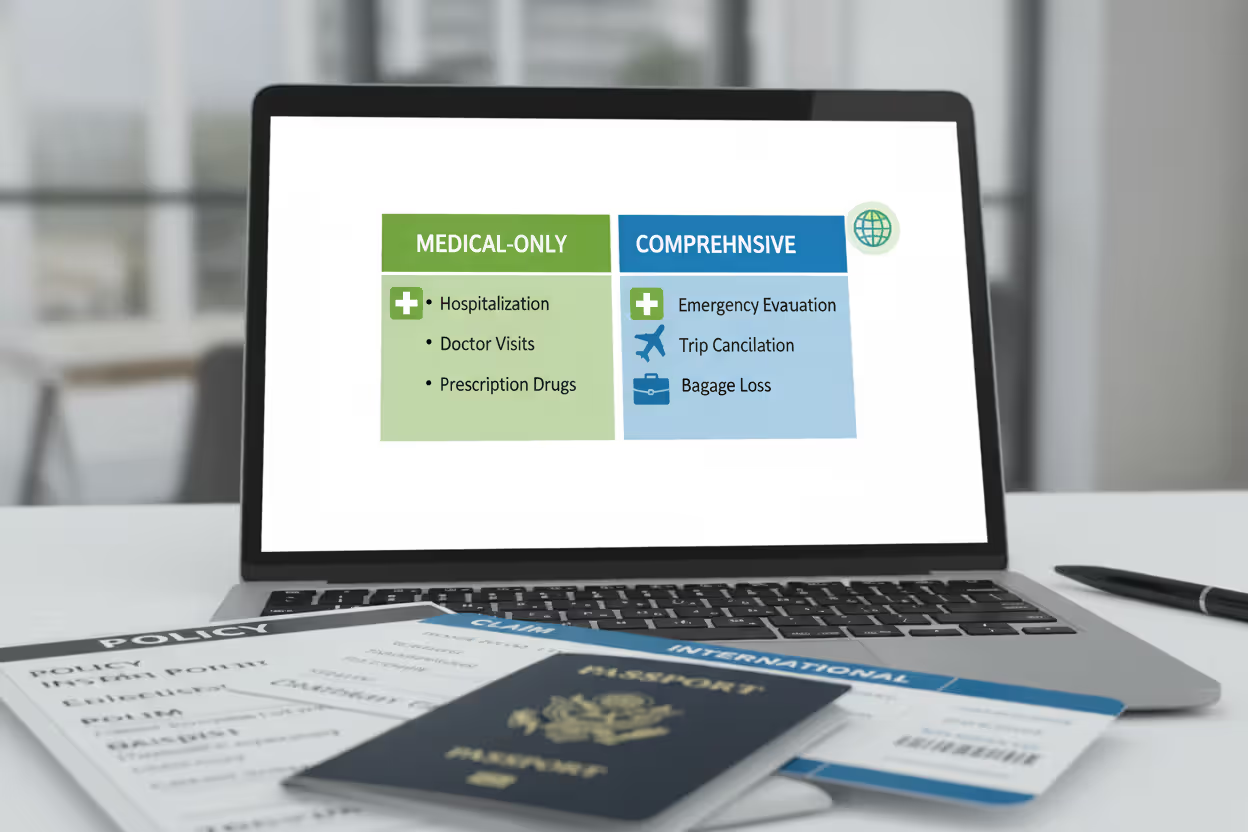
Comprehensive Travel Insurance Plans
These all-in-one packages bundle medical emergencies, trip cancellation and interruption, baggage problems, and travel delays into one policy. For pregnant travelers, comprehensive plans deliver the most complete protection.
Typical comprehensive coverage for pregnancy includes emergency medical treatment for complications, emergency medical evacuation if your destination can't provide necessary care, trip cancellation reimbursement if complications prevent departure, and trip interruption coverage if you need to return home early for pregnancy emergencies.
The real value comes from integrated coverage. One policy handles medical emergencies abroad AND reimburses your non-refundable deposits if complications force you to cancel. You're not juggling multiple policies from different companies with conflicting terms.
Expect comprehensive plans to cost anywhere from 4% to 10% of your total trip cost. Being pregnant in your first or early second trimester barely affects pricing. Third trimester coverage (when available) can double or triple base rates.
Medical-Only Coverage Options
These stripped-down policies focus solely on emergency medical expenses and evacuation while ignoring trip cancellation, baggage issues, and other non-medical problems.
Medical-only makes sense when you've booked refundable travel or you're primarily worried about healthcare costs in expensive countries. These policies often cost 40% to 60% less than comprehensive plans—substantial savings if you don't need the extra coverage.
Pregnancy complication coverage works identically to comprehensive plans: unexpected emergencies get covered, routine care doesn't. The same gestational cutoffs apply.
One significant advantage: medical-only policies frequently offer higher coverage limits ($500,000 or even $1 million) at lower overall premiums than comprehensive options. This matters enormously if you're traveling to the United States, Switzerland, or other countries where emergency medical care can easily exceed $100,000.
Author: Olivia Prescott;
Source: visitmuseumcampussouth.com
Cancel for Any Reason (CFAR) Riders
CFAR represents maximum flexibility—and maximum cost—for pregnant travelers worried about changing circumstances.
Regular trip cancellation requires a covered reason from the policy's approved list (serious illness, family death, jury duty, etc.). CFAR lets you cancel for literally anything and still receive partial reimbursement—usually 50% to 75% of your non-refundable trip costs.
For pregnancy, CFAR provides invaluable peace of mind. Feeling anxious about traveling at 31 weeks even though you're medically fine? CFAR lets you cancel and recover most of your money. Doctor suggests avoiding travel but doesn't explicitly forbid it? CFAR covers you where standard policies would deny your claim.
The catch: CFAR costs 40% to 60% more than equivalent comprehensive coverage without it. You must purchase CFAR within 10 to 21 days of making your initial trip deposit (policies vary). And you typically need to cancel at least two full days before departure—last-minute cancellations don't qualify.
Important limitation: CFAR only affects cancellation benefits. It doesn't enhance your medical coverage during the trip. You still need solid underlying coverage for complications that arise while traveling.
How Much Does Travel Insurance for Pregnancy Cost
Pricing depends on multiple variables, making one-size-fits-all estimates impossible. But understanding the key factors helps you budget appropriately.
Your gestational age dramatically impacts premiums. First trimester? You'll pay essentially standard rates with minimal to no pregnancy surcharge. Second trimester? Expect 10% to 25% higher premiums than non-pregnant travelers. Third trimester when available? Costs can jump 50% to 100% above standard pricing.
Where you're traveling matters enormously. Destinations with astronomical healthcare costs (United States, Switzerland, Japan) drive premiums significantly higher than trips to countries with affordable medical systems. You might need $50,000 coverage for Costa Rica but $500,000 for the same trip length in America.
Trip duration directly correlates with cost. A weeklong vacation might run $80 to $175 for comprehensive first-trimester coverage. A month-long journey could cost $350 to $650 for comparable protection.
Your age affects pricing regardless of pregnancy. Travelers over 40 pay higher premiums automatically. Combine advanced maternal age with pregnancy, and you might pay double what a 28-year-old pays for identical coverage.
Coverage limits you select make huge differences. Choosing $50,000 in medical coverage costs far less than $500,000. But that cheaper option might prove catastrophically inadequate if you develop HELLP syndrome requiring ICU care, emergency delivery, and extended hospitalization abroad.
Realistic price ranges for a $5,000 trip:
- First trimester, one week, $100,000 medical coverage: $225-$375 for comprehensive plans
- Second trimester, one week, $250,000 medical coverage: $325-$525 for comprehensive plans
- Third trimester, one week, $500,000 medical coverage: $550-$850 or more (extremely limited availability)
- Adding CFAR: Increases your base comprehensive premium by 40% to 60%
Medical-only plans typically cost 40% to 50% of what you'd pay for comprehensive coverage with similar parameters.
Some insurers use flat-rate pricing that doesn't change based on pregnancy status—but they compensate with extremely strict gestational cutoffs and extensive exclusions. Others charge variable rates that increase with gestational age but potentially offer coverage further into pregnancy.

Author: Olivia Prescott;
Source: visitmuseumcampussouth.com
Common Exclusions and Limitations for Pregnant Travelers
Even policies advertising pregnancy coverage include restrictions that surprise unprepared travelers.
Gestational week cutoffs represent the most common limitation. Policies terminate all pregnancy-related coverage somewhere between weeks 24 and 36, depending on the insurer. Some maintain emergency complication coverage through week 36 while excluding everything else after week 24.
Read the exact policy language carefully. "Coverage through week 32" might mean coverage stops at 31 weeks and 6 days. Or it could extend through the completion of 32 full weeks. Calling the insurer to clarify prevents nasty surprises during claims.
High-risk pregnancy exclusions apply almost universally. If your pregnancy is classified high-risk because you're carrying multiples, you have advanced maternal age, chronic medical conditions, or history of previous complications, many insurers will exclude all pregnancy-related coverage—sometimes regardless of how early you are.
Twins, triplets, or higher-order multiples face near-total exclusions. Carrying more than one baby typically disqualifies you from pregnancy coverage entirely, even at 12 weeks, because of dramatically elevated complication risks. Finding coverage for multiple pregnancies requires specialized insurers—and substantial premiums.
Certain activities void pregnancy coverage even when the activities themselves are covered. Scuba diving, downhill skiing, horseback riding, or trekking above 10,000 feet often eliminate pregnancy coverage while remaining covered for non-pregnant travelers. The combination creates exclusions neither factor alone would trigger.
Some destinations become off-limits. Insurers may exclude coverage for travel to countries with inadequate medical infrastructure or those under travel warnings, reasoning that pregnancy complications in these locations create unacceptable risk levels.
Routine care remains universally excluded. Need a regular prenatal checkup while traveling? Paying out of pocket regardless of your coverage. This includes regular ultrasounds, standard lab work, and non-urgent consultations.
Pre-existing complications prevent coverage for related issues. Developed placenta previa before purchasing your policy? Subsequent complications from that condition won't receive benefits unless you've purchased a pre-existing condition waiver—and even waivers often exclude pregnancy-related pre-existing conditions.
Waiting periods occasionally apply. Some policies impose 10 to 30-day waiting periods before pregnancy coverage activates, preventing travelers from buying coverage immediately before departure when they're already experiencing complications they haven't disclosed.
Frequently Asked Questions About Pregnancy and Travel Insurance
Travel insurance during pregnancy demands more careful evaluation than standard coverage. The distinction between covered emergencies and excluded normal pregnancy events creates confusion that leaves many travelers financially exposed.
Buy coverage as early as possible—before conceiving or during your first trimester—to access the most options with the fewest restrictions. Understand precisely which gestational week your policy stops covering pregnancy, which specific complications qualify for benefits, and what documentation you'll need when filing claims.
Remember that comprehensive pregnancy coverage still won't pay for normal delivery, routine prenatal appointments, or your newborn if birth occurs during your trip. These universal limitations mean third-trimester travel carries substantial financial risk no matter which policy you buy.
Read your complete policy documents, verify coverage details directly with your insurer's underwriting department, and get explicit medical clearance from your obstetrician before booking any travel. Quality coverage protects you against unpredictable medical emergencies—but it can't replace sound medical judgment about safe travel timing during pregnancy.
Related Stories

Read more

Read more




The content on this website is provided for general informational and educational purposes only. It is intended to offer guidance on travel insurance topics, including coverage options, premiums, deductibles, trip cancellation protection, travel medical insurance, baggage coverage, travel delays, emergency medical evacuation, and related travel protection matters. The information presented should not be considered legal, medical, financial, or professional insurance advice.
All articles and explanations published on this website are for informational purposes only. Travel insurance policies can vary between providers, and details such as coverage limits, exclusions, reimbursement conditions, waiting periods, eligibility requirements, and claim outcomes may differ depending on the insurer, policy type, destination, traveler age, health status, and trip details.
While we strive to keep the information accurate and up to date, this website makes no guarantees regarding the completeness or reliability of the content. Use of this website does not create a professional relationship. Visitors should review the official policy documents provided by insurance companies and consult with licensed insurance professionals or qualified advisors before making decisions about travel insurance coverage.