

Traveler and medical evacuation aircraft at an international airport
Medical Evacuation and Repatriation Insurance Guide

Content
Content
When a hiker in Patagonia breaks a femur 40 miles from the nearest hospital, or a retiree suffers a stroke while wintering in Thailand, standard health insurance rarely covers the $50,000–$150,000 bill for emergency transport home. Medical evacuation and repatriation insurance fills that gap, covering costs most travelers never anticipate until they face a crisis far from adequate medical facilities.
What Is Medical Evacuation and Repatriation Insurance?
Medical evacuation and repatriation insurance covers two distinct but related emergencies that standard health plans and typical travel insurance policies often exclude or severely limit.
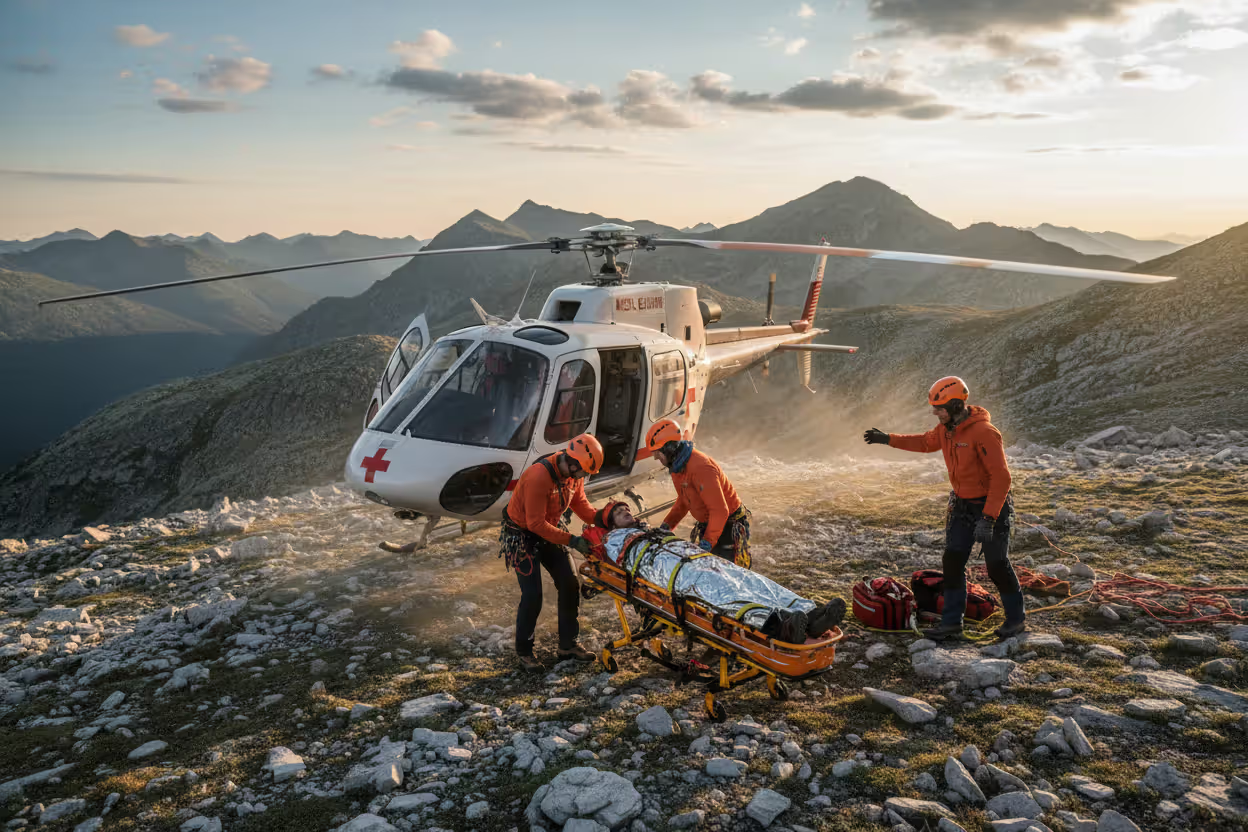
Medical evacuation coverage pays for emergency transportation to the nearest appropriate medical facility when local care is inadequate for your condition. This might mean a helicopter airlift from a mountain trail to a regional hospital, or a medically-equipped jet from a Caribbean island to a trauma center in Miami. The key qualifier is "medically necessary"—a physician must determine that your condition requires treatment unavailable locally.
Repatriation coverage addresses two scenarios: returning you home once stabilized for continued treatment, or returning your remains to your home country if you die abroad. The first involves medical transport with necessary equipment and staff; the second covers preparation of remains, required documentation, and transport costs.
Standard travel insurance policies typically include token amounts—$25,000 or $50,000—for emergency evacuation. That sounds substantial until you learn that a medical jet from Southeast Asia to the US can exceed $100,000, and a helicopter rescue in the Swiss Alps might cost $30,000 before you even reach a hospital. These policies also rarely coordinate the logistics; they simply reimburse approved expenses after the fact.
Dedicated medical evacuation insurance, by contrast, usually provides higher limits ($250,000–$1,000,000), handles all coordination through 24/7 operations centers, and deploys resources immediately rather than requiring upfront payment. The insurer manages everything: locating appropriate aircraft, arranging medical staff, securing landing permissions, and coordinating with treating physicians.
Author: Dylan Mercer;
Source: visitmuseumcampussouth.com
Repatriation differs fundamentally from evacuation. If you suffer a heart attack in Portugal, evacuation might transport you to a Lisbon cardiac center for immediate surgery. Repatriation would cover flying you back to Boston two weeks later for follow-up care with your cardiologist, or—in the worst outcome—returning your body to your family.
When You Need Emergency Medical Evacuation Coverage
Most Americans assume their health insurance travels with them. It doesn't. Medicare stops at the border, with extremely limited exceptions. Private insurance may cover emergency care abroad but almost never covers transport costs. A $200,000 air ambulance bill becomes your personal debt.
Remote or developing destinations present the clearest need. Medical facilities in rural Peru, sub-Saharan Africa, or Pacific islands often lack equipment and specialists for serious conditions. A treatable appendicitis in Chicago becomes life-threatening when the nearest surgeon is 300 miles away. Emergency medical evacuation travel insurance ensures you reach proper care before complications set in.
Adventure activities exponentially increase risk. Skiing in the Rockies, diving in Indonesia, or trekking in Nepal places you in environments where accidents happen far from hospitals. Mountain rescues alone—before any air transport—can cost $10,000–$20,000. One broken leg while backcountry skiing can generate bills exceeding $75,000 when helicopter rescue, emergency care, and medical flight home combine.
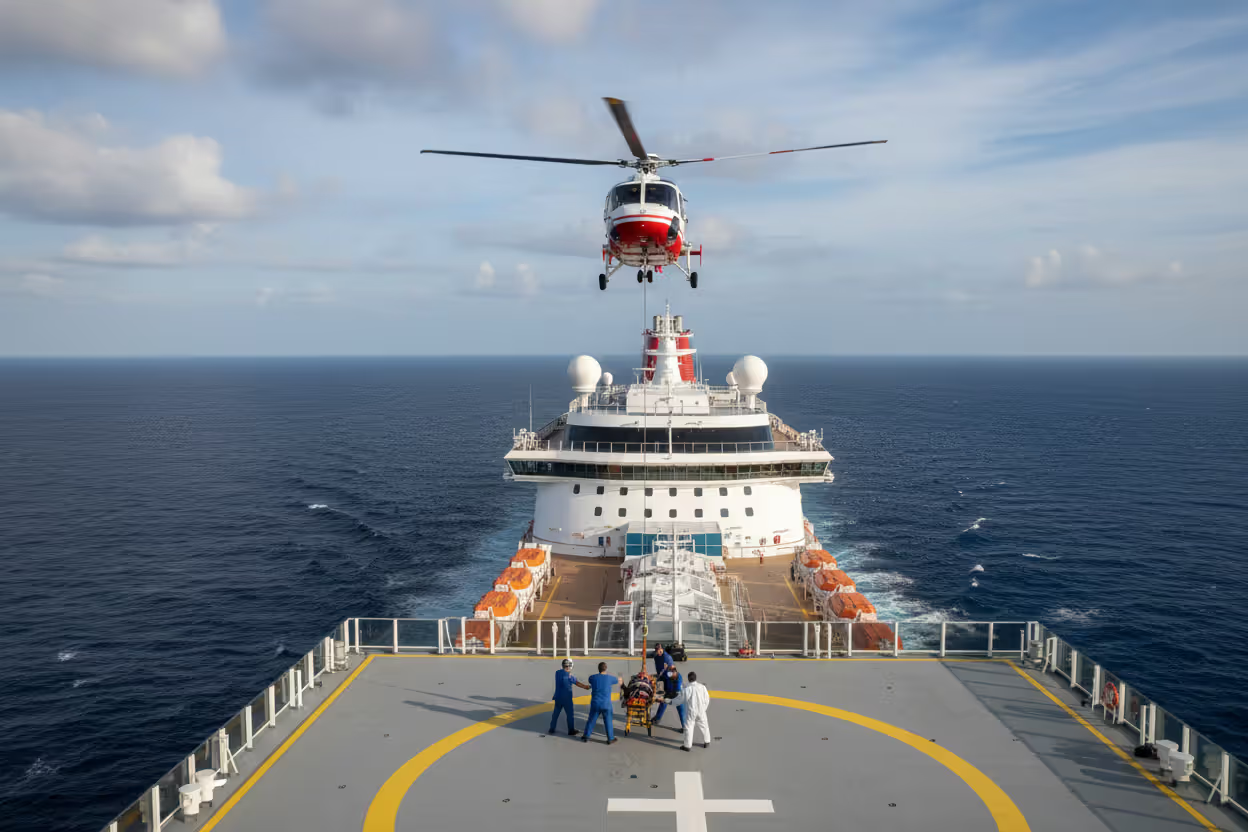
Cruise passengers face unique vulnerabilities. Ships carry basic medical facilities, but serious conditions require evacuation to shore. Helicopter transport from a ship 200 miles offshore to the nearest capable hospital routinely costs $30,000–$50,000. Cruise lines don't cover these expenses; they bill passengers directly.
Author: Dylan Mercer;
Source: visitmuseumcampussouth.com
Extended stays abroad—whether for remote work, seasonal residence, or caring for family—create prolonged exposure. A three-month stay in Mexico or a year teaching in Vietnam means months when a medical emergency could strike. Annual medical evacuation coverage costs less than multiple single-trip policies and eliminates gaps between trips.
Pre-existing conditions complicate everything. A diabetic who develops complications abroad, or a cardiac patient who suffers a second event, needs evacuation but may find standard policies exclude coverage. Specialized policies with pre-existing condition waivers exist but require purchasing within strict timeframes (usually 10–21 days of initial trip deposit).
Medicare gaps trap many retirees. Americans retiring abroad or spending winters in warmer climates lose Medicare coverage outside the US (except limited scenarios in Canada and Mexico). A stroke in Costa Rica or accident in Spain means paying all costs out-of-pocket unless you carry supplemental coverage.
What Medical Evacuation Insurance Covers
Medical evacuation coverage pays for emergency transport when local facilities cannot adequately treat your condition. The insurer's medical team reviews your case, consults with treating physicians, and determines whether evacuation is medically necessary.
Air ambulance services represent the largest expense. Dedicated medical jets equipped with ICU-level equipment, staffed by flight nurses or physicians, cost $15,000–$25,000 per flight hour. A transport from Thailand to California takes roughly 20 hours including refueling stops—potentially $400,000. Quality policies cover these costs without the sub-limits that plague cheaper plans.
Ground ambulance coordination matters more than most realize. Getting from a remote accident site to an airport capable of handling medical jets involves ground transport, sometimes across difficult terrain. Policies should cover these "first mile" costs without separate limits.

Author: Dylan Mercer;
Source: visitmuseumcampussouth.com
Hospital-to-hospital transfers occur when initial emergency treatment at a local facility stabilizes you enough for transport to a more capable center. You might go from a rural clinic to a regional hospital, then to a major medical center in a capital city, then home. Each leg generates costs; comprehensive coverage addresses all medically necessary transfers.
Medical escorts accompany patients who need supervision but not intensive care during commercial flights. A physician or nurse travels with you, monitors your condition, manages medications, and handles any complications. This costs far less than an air ambulance—$5,000–$15,000 versus six figures—but requires medical clearance that you're stable enough for commercial travel.
Coverage limits vary dramatically. Budget plans cap benefits at $50,000–$100,000, which sounds adequate until you need a long-distance medical flight. Mid-tier plans offer $250,000–$500,000, covering most realistic scenarios. Premium plans provide $1,000,000 or "unlimited" coverage (subject to reasonability requirements). The difference in premium between a $100,000 and $500,000 limit often amounts to $20–$40 for a two-week trip—minimal compared to potential exposure.
What Repatriation Coverage Includes
Repatriation of remains covers costs when a traveler dies abroad. Families facing grief shouldn't also face $10,000–$30,000 in unexpected expenses to bring their loved one home.
Return of remains involves multiple costs: embalming or cremation to meet international transport regulations, a suitable container (often a specialized casket or urn), documentation and permits from both countries, and air freight charges. Total costs typically run $5,000–$15,000 depending on distance and local requirements. Some countries mandate specific procedures that increase expenses.
Funeral costs abroad versus home creates a choice for families. Some policies cover a funeral in the country where death occurred up to a specified amount (typically $3,000–$5,000) as an alternative to repatriation. This option makes sense when family members are present or when repatriation costs would be extreme.
Family travel expenses help immediate family members reach you in a medical emergency or return home with you. Policies typically cover one or two round-trip economy tickets for a spouse, parent, or adult child. This benefit proves invaluable when a family member lies in a foreign ICU and relatives need to make urgent decisions about care or evacuation.
How Much Medical Evacuation Insurance Costs
Pricing depends on five primary factors: your age, destination, trip duration, coverage limits, and whether you want standalone evacuation coverage or a comprehensive travel insurance package.
Age drives pricing more than any other factor. A 30-year-old might pay $40–$60 for standalone evacuation coverage on a two-week international trip, while a 70-year-old pays $120–$180 for identical coverage. Insurers price according to risk, and medical emergencies increase dramatically with age.
Destination matters because evacuation costs vary. A trip to Canada costs less to insure than one to Mongolia; if evacuation becomes necessary, the transport distance and complexity differ enormously. High-risk destinations—those with limited medical infrastructure, political instability, or difficult terrain—command higher premiums.
Trip length scales pricing, but not linearly. A one-week trip might cost $35 to insure, while two weeks costs $50 and a month costs $85. The per-day rate decreases for longer trips because fixed underwriting costs spread across more days.
Coverage limits significantly impact cost. A policy with $50,000 evacuation coverage might cost $45, while one with $500,000 costs $65. The incremental cost for substantially higher limits often proves minimal—a strong argument for buying more coverage than you think necessary.

Author: Dylan Mercer;
Source: visitmuseumcampussouth.com
Standalone versus comprehensive plans present a trade-off. Standalone medical evacuation insurance costs $40–$150 for a typical trip and covers only evacuation and repatriation. Comprehensive travel insurance costs $100–$400 but includes trip cancellation, medical expenses, baggage loss, and evacuation. If you need any of those additional coverages, comprehensive plans deliver better value. If you only want evacuation protection—perhaps because you have excellent health insurance that covers care abroad but not transport—standalone policies make sense.
Annual versus single-trip options benefit frequent travelers. An annual policy covering unlimited trips up to 30–60 days each typically costs $250–$600 depending on age and coverage. If you take three or more international trips yearly, annual coverage costs less than buying separate policies for each trip. Annual memberships with organizations like Medjet (around $350–$400 annually) provide evacuation to your home-country hospital of choice regardless of medical necessity—a broader benefit than insurance, which requires medical justification.
How to Choose the Right Emergency Evacuation Travel Insurance
Coverage amount should be your first consideration. Policies offering less than $250,000 create real risk for long-distance evacuations. A $500,000 or higher limit costs marginally more but eliminates worry about hitting caps during a complex evacuation involving multiple transport modes or extended medical support.
Provider reputation matters intensely in emergencies. The insurer's operations center coordinates your evacuation, locates appropriate aircraft, secures permissions, and manages medical staff. Companies with decades of experience and global networks—Allianz, IMG, GeoBlue, Travel Guard—execute evacuations smoothly. Budget providers may lack 24/7 multilingual support or relationships with air ambulance operators, creating delays when minutes count.
Exclusions require careful review before purchasing. Standard exclusions include:
- Non-emergency transport (flying home because you're homesick or want your own doctor)
- Injuries from excluded activities unless you purchase riders
- Pre-existing conditions unless waived through early purchase
- Travel against government warnings
- Intentional self-injury or illegal activities
Reading the policy's fine print—specifically the "General Exclusions" and "Limitations" sections—reveals what isn't covered. If you plan activities like scuba diving, skiing, or motorcycle riding, verify whether the policy covers them or requires additional riders.
Coordination services distinguish superior policies. The best providers offer 24/7 multilingual emergency hotlines, maintain relationships with air ambulance operators worldwide, and employ medical professionals who review cases and authorize evacuations immediately. Some providers require you to pay upfront and seek reimbursement—a significant burden when air ambulances demand $100,000 before takeoff. Top-tier policies direct-bill providers, eliminating out-of-pocket expenses.
Claim process complexity varies. Some insurers require extensive documentation, physician statements, and itemized bills before paying claims—a process taking months. Others streamline claims through online portals with status tracking and faster payment. Reading reviews from customers who've filed claims reveals which companies make the process reasonable versus those that delay and dispute.
Comparing quotes from multiple providers takes 30 minutes and often reveals $50–$150 price differences for similar coverage. Use comparison sites but also check directly with major insurers, as they sometimes offer discounts not available through aggregators. Don't choose solely on price; a $30 savings means nothing if the insurer lacks the infrastructure to execute a complex evacuation.
| Coverage Type | Standalone Evacuation Plan | Comprehensive Travel Insurance | Annual Membership Program |
| Typical Cost | $40–$150 per trip | $100–$400 per trip | $250–$600 annually |
| Evacuation Limit | $100,000–$1,000,000 | $50,000–$500,000 | Unlimited (to home country) |
| Repatriation Included | Yes ($25,000–$50,000) | Yes ($25,000–$50,000) | Yes (typically unlimited) |
| Geographic Coverage | Worldwide | Worldwide | Worldwide |
| Additional Benefits | None | Trip cancellation, medical expenses, baggage | May include family benefits, no medical necessity requirement |
| Best For | Travelers with good health insurance needing only evacuation | Travelers wanting comprehensive protection | Frequent travelers or expatriates |
Common Exclusions and Limitations
Understanding what medical evacuation coverage doesn't include prevents ugly surprises during emergencies.
Pre-existing conditions represent the most common exclusion. If you have diabetes, heart disease, or any ongoing medical condition, insurers typically exclude coverage for complications unless you purchase a waiver. These waivers require buying insurance within 10–21 days of your initial trip deposit and meeting other conditions (trip must be less than a certain duration, you must insure full trip cost). Even with waivers, some conditions remain excluded—terminal illnesses, conditions requiring ongoing dialysis, or those under active treatment changes.
High-risk activities need explicit coverage. Standard policies exclude injuries from mountaineering, skydiving, hang gliding, and similar activities. Scuba diving deeper than 30 meters, skiing off-piste, or motorcycle riding often require additional riders costing $20–$50. Always disclose planned activities when purchasing; failing to buy the appropriate rider gives insurers grounds to deny claims.
War and civil unrest exclusions apply when you travel to areas under government warnings. If the State Department issues a Level 3 (Reconsider Travel) or Level 4 (Do Not Travel) advisory, most policies exclude coverage. Some specialty insurers offer war-risk coverage for journalists, aid workers, or others with legitimate reasons for traveling to dangerous areas, but it costs significantly more.
Non-emergency transport isn't covered. If you're hospitalized abroad, recover, and simply want to fly home in business class rather than economy because you're more comfortable, that's not covered. Evacuation requires medical necessity—a physician must certify that your condition requires transport for appropriate treatment.
Policy waiting periods occasionally apply. Some annual policies impose 48–72 hour waiting periods before coverage begins, preventing people from buying insurance after an emergency occurs. Single-trip policies typically take effect when you leave home or at the policy effective date, whichever comes later.
Destination-specific limitations affect coverage. Some insurers exclude certain countries entirely—North Korea, Syria, or other high-risk locations. Others cover them but with reduced benefits or higher premiums. Always verify your destination is covered before purchasing.
We evacuate roughly 200 travelers annually, and the average cost runs $65,000—well beyond what most people imagine. I've seen cases exceed $300,000 when multiple transport modes and extended medical support were required. The travelers with proper coverage focus on recovery; those without face financial devastation on top of medical trauma
— Dr. William Gray
Frequently Asked Questions About Medical Evacuation Coverage
Medical evacuation and repatriation insurance protects against low-probability, high-impact events. Most travelers never need it, but those who do face catastrophic costs without coverage. A $75 policy premium seems expensive until compared against a $150,000 bill for emergency transport home.
The decision framework is straightforward: assess your destination's medical infrastructure, your planned activities, your health status, and your existing insurance coverage. Traveling to Western Europe for city tourism with excellent health insurance requires less coverage than trekking in Nepal or cruising remote Pacific islands. Match coverage to risk.
Don't assume you're covered. Medicare stops at the border. Employer health plans rarely cover evacuation. Credit card travel benefits provide minimal evacuation coverage if any. Read your existing policies, identify gaps, and fill them with appropriate coverage.
Choose reputable providers with proven track records in emergency coordination. The cheapest policy often becomes the most expensive when an insurer lacks the infrastructure to execute a complex evacuation. Spending an extra $30 for a policy from an established provider with 24/7 operations centers and global networks proves worthwhile when your life depends on their response.
Finally, buy coverage before you need it. Once you're injured or ill, it's too late. Insurance purchased after departure often includes waiting periods or heightened scrutiny. The best time to buy medical evacuation and repatriation insurance is when planning your trip, not when facing an emergency thousands of miles from home.
Related Stories

Read more

Read more




The content on this website is provided for general informational and educational purposes only. It is intended to offer guidance on travel insurance topics, including coverage options, premiums, deductibles, trip cancellation protection, travel medical insurance, baggage coverage, travel delays, emergency medical evacuation, and related travel protection matters. The information presented should not be considered legal, medical, financial, or professional insurance advice.
All articles and explanations published on this website are for informational purposes only. Travel insurance policies can vary between providers, and details such as coverage limits, exclusions, reimbursement conditions, waiting periods, eligibility requirements, and claim outcomes may differ depending on the insurer, policy type, destination, traveler age, health status, and trip details.
While we strive to keep the information accurate and up to date, this website makes no guarantees regarding the completeness or reliability of the content. Use of this website does not create a professional relationship. Visitors should review the official policy documents provided by insurance companies and consult with licensed insurance professionals or qualified advisors before making decisions about travel insurance coverage.