

Medical helicopter evacuating an injured hiker in a remote mountain area
Emergency Medical Evacuation Insurance Guide

When a 52-year-old hiker collapsed from altitude sickness in Nepal's Annapurna region in 2025, his family faced a choice: wait days for ground transport to Kathmandu or arrange an immediate helicopter evacuation. The helicopter cost $38,000. Without emergency medical evacuation insurance, they would have paid out of pocket before the flight even took off.
Medical emergencies abroad rarely announce themselves. A motorcycle accident in Thailand, a stroke on an Alaskan cruise, or severe food poisoning in rural Peru can all require urgent transport to facilities equipped to handle complex cases. Standard health insurance policies typically exclude international medical transport, leaving travelers exposed to five- and six-figure bills.
This guide explains how emergency medical evacuation insurance works, who needs it, and how to select coverage that matches your travel patterns and risk tolerance.
What Is Emergency Medical Evacuation Insurance
Emergency medical evacuation insurance pays for medically necessary transport from the location of an injury or illness to the nearest adequate medical facility or back to your home country. "Medically necessary" means a qualified physician determines that local facilities cannot provide appropriate treatment and that the patient is stable enough for transport.
Standard travel medical insurance covers treatment costs at local hospitals and clinics. Evacuation coverage handles the logistics and expense of moving you to better care when local options fall short. The two types of insurance serve different functions, though many comprehensive travel policies bundle both.
A medical evacuation activates when: - Local hospitals lack specialized equipment or expertise for your condition - You suffer a serious injury in a remote area hours from any medical facility - Political unrest or natural disaster makes staying in your current location unsafe for continued treatment - A physician recommends transfer to a facility better equipped for your specific needs
Real scenarios include a tourist in Belize who needed burn treatment beyond what local clinics could provide, requiring air transport to Miami. Or a cruise passenger who suffered a heart attack mid-voyage and needed helicopter evacuation to a cardiac center in Florida. In both cases, emergency evacuation insurance covered transport costs that would have exceeded $50,000.
The insurance does not cover routine transfers between hospitals for convenience, medical tourism procedures, or transport requested without physician approval.
How Emergency Evacuation Coverage Works
When a medical emergency occurs, you or someone traveling with you contacts the insurance company's 24/7 assistance line. The insurer's medical team reviews the situation with local physicians to determine whether evacuation is medically necessary.
If approved, the insurance company arranges all logistics: securing air ambulances, coordinating with medical facilities, obtaining necessary clearances, and dispatching medical personnel to accompany the patient. You typically pay nothing upfront for covered evacuations—the insurer handles direct payment to transport providers.
Author: Samantha Lowell;
Source: visitmuseumcampussouth.com
The assistance coordinator serves as your advocate, navigating language barriers and local healthcare systems. They identify the nearest appropriate facility, which may be in a neighboring country rather than your home country if that provides faster access to necessary care.
Your existing health insurance may cover some medical treatment costs abroad, but rarely covers evacuation transport. Medicare provides no coverage outside the United States except in limited circumstances near the Canadian or Mexican borders. Private insurance plans vary—some offer minimal international coverage, but evacuation benefits are almost never included.
Geographic limitations matter. Most policies cover evacuations from anywhere in the world, but some exclude countries under U.S. travel advisories or regions experiencing active conflict. Read the policy's territorial limits carefully. Some budget policies exclude coverage in your home country, while others provide worldwide coverage including domestic travel.
Common exclusions include evacuations resulting from: - Injuries during professional sports or high-risk activities not covered by your policy - Conditions related to pregnancy after a specified week (often 26-28 weeks) - Situations where you traveled against medical advice - Pre-existing conditions not properly disclosed or waived
The claim process requires documentation: physician statements explaining why evacuation was necessary, transport receipts, and medical records showing the severity of your condition. Keep copies of everything.
When You Need Medical Evacuation Travel Insurance
Not every trip requires evacuation coverage. A weekend in Toronto for a U.S. traveler presents minimal risk—excellent hospitals exist throughout the city, and ground transport to the U.S. border takes hours, not days. But certain travel patterns dramatically increase the value of medical evacuation travel insurance.
International travel to countries with limited healthcare infrastructure tops the list. Much of Africa, Central Asia, and rural areas of Southeast Asia lack trauma centers, cardiac care units, or facilities equipped for complex surgeries. A serious medical event in rural Cambodia or Bolivia likely requires evacuation to Bangkok or Miami.
Adventure travel multiplies evacuation risk. Trekking in Patagonia, climbing in the Himalayas, or exploring the Australian Outback puts you hours or days from definitive medical care. Rescue operations in these environments require helicopters and specialized personnel, with costs routinely exceeding $100,000.

Author: Samantha Lowell;
Source: visitmuseumcampussouth.com
Cruise travel presents unique challenges. Ships carry basic medical facilities, but serious conditions require helicopter evacuation to shore—often while the ship is far from land. Cruise medical evacuations frequently cost $50,000 to $150,000 depending on location and weather conditions.
Age and health status influence need. Travelers over 60 face higher risks of cardiac events, strokes, and complications from falls. Those with chronic conditions like diabetes or heart disease should consider evacuation coverage mandatory for international travel, even to developed countries.
Situations Where Regular Health Insurance Falls Short
Your domestic health insurance policy likely includes some international coverage, but the details reveal significant gaps. Many plans cover "emergency" care abroad but define emergency narrowly—immediate, life-threatening situations only. Even when treatment is covered, reimbursement happens after you pay upfront, potentially requiring thousands of dollars on short notice.
No standard health plan covers medical evacuation transport. The insurance company may pay for treatment at the hospital where you land after evacuation, but the $75,000 air ambulance bill falls entirely on you.
Medicare beneficiaries face the starkest coverage gaps. Medicare provides virtually no coverage outside the United States, Puerto Rico, the U.S. Virgin Islands, Guam, American Samoa, and the Northern Mariana Islands. A medical emergency in Mexico or Canada leaves Medicare enrollees paying full freight for both treatment and any necessary evacuation.
Employer-sponsored plans vary widely. Some multinational corporations include evacuation benefits for employees traveling on business, but these rarely extend to personal travel or family members. Review your plan documents or contact HR before assuming you're covered.
What Emergency Evacuation Insurance Covers and Excludes
Coverage Comparison: Basic vs. Standard vs. Comprehensive Policies
| Feature | Basic | Standard | Comprehensive |
| Coverage Limit | $50,000-$100,000 | $250,000-$500,000 | $500,000-$1,000,000+ |
| Cost Range (per trip) | $25-$60 | $60-$150 | $150-$400+ |
| Repatriation of Remains | Included (same limit) | Included (same limit) | Included (separate limit) |
| Adventure Activities | Limited or excluded | Some included | Extensive coverage |
| Pre-existing Conditions | Excluded | Waiver available | Waiver available with conditions |
| Best For | Short trips to developed countries | Most international travel | Remote destinations, adventure travel, cruises, travelers with health concerns |
Emergency evacuation insurance typically covers:
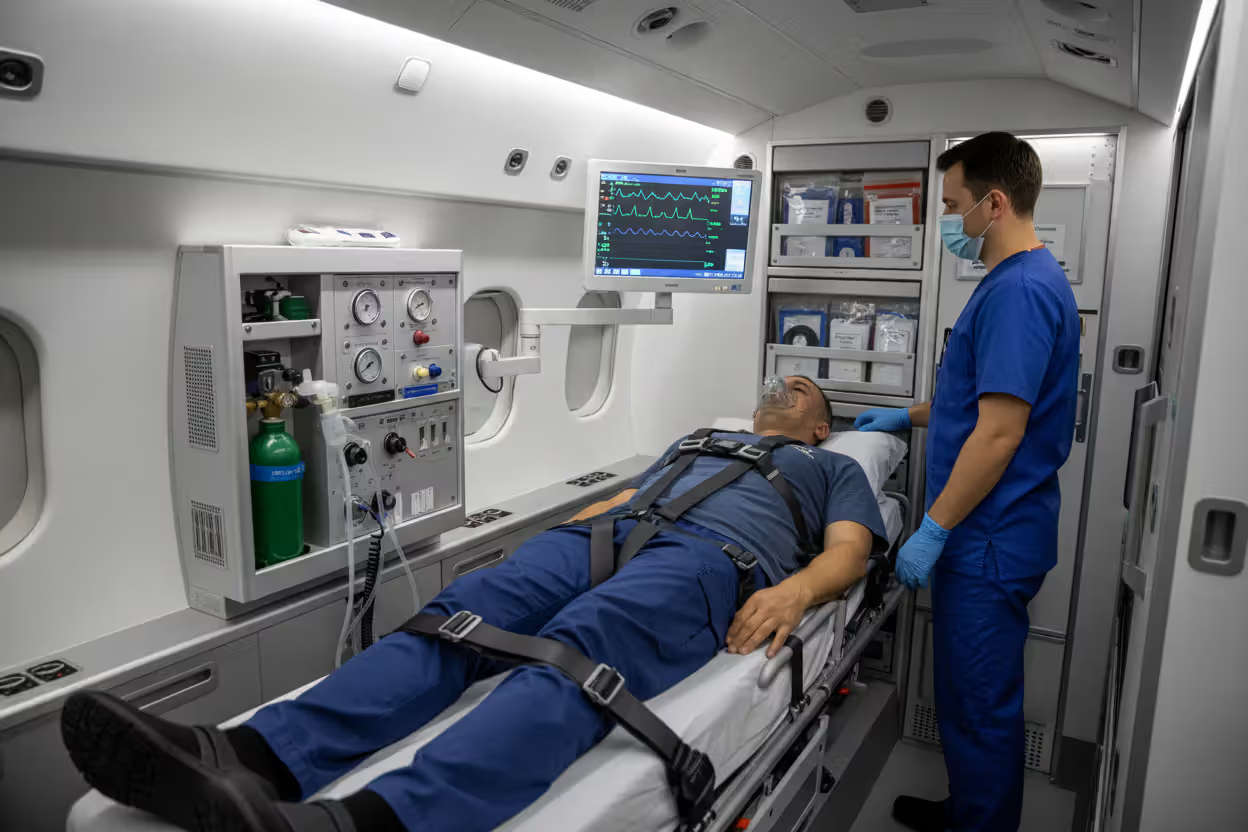
Air ambulance transport: Helicopter or fixed-wing aircraft equipped with medical equipment and staffed by qualified medical personnel. This represents the most expensive component, often $20,000 to $200,000 depending on distance and aircraft type.
Ground ambulance transport: When roads are passable, ground ambulances move patients from remote areas to airports or medical facilities. Coverage includes both basic ambulances and specialized vehicles for critical care transport.
Repatriation of remains: If you die abroad, the policy covers the cost of returning your body to your home country, including required preparation, documentation, and transport. This typically falls under the same coverage limit as medical evacuation.
Return home after treatment: Once you're medically cleared but unable to use your original return ticket, the policy covers transport home via commercial flight, potentially in business class if you cannot sit upright or need extra space for medical equipment.
Coverage limits range from $50,000 on basic policies to $1 million or more on comprehensive plans. The right limit depends on where you travel. Evacuations from the Caribbean to the U.S. might cost $25,000-$50,000. Evacuations from Antarctica, the Himalayas, or remote Pacific islands can exceed $200,000.

Author: Samantha Lowell;
Source: visitmuseumcampussouth.com
Common exclusions include:
- Non-emergency transfers requested for comfort or convenience
- Evacuations for cosmetic procedures or elective surgeries
- Injuries from activities specifically excluded in your policy (often including professional sports, racing, or extreme activities)
- Travel to regions under government "do not travel" warnings
- Situations involving illegal activities or substance abuse
A medical evacuation from a remote area can easily cost $100,000 or more.I've seen families forced to crowdfund evacuations or delay critical transport while negotiating payment. The financial stress compounds an already traumatic medical emergency. Adequate evacuation coverage is non-negotiable for anyone traveling beyond easy reach of quality medical care
— Dr. Sarah Chen
Standalone vs. Travel Insurance Including Medical Evacuation
You can purchase emergency evacuation coverage two ways: as a standalone policy or bundled within comprehensive travel insurance that also covers trip cancellation, lost baggage, travel delays, and medical treatment.
Bundled travel insurance packages offer convenience and often better value for most travelers. A comprehensive policy costing $150-$300 for a two-week international trip typically includes $250,000-$500,000 in evacuation coverage plus trip cancellation benefits worth thousands, medical coverage up to $50,000-$100,000, and various other protections. You deal with one policy, one deductible, and one claims process.
Standalone evacuation coverage makes sense in specific situations:
- You already have excellent travel medical insurance through another source but it lacks evacuation benefits
- You need higher evacuation limits than bundled policies provide (some standalone policies offer $1 million+ limits)
- You're traveling for an extended period and want evacuation coverage without paying for trip cancellation insurance on a six-month journey
- You have unique coverage needs not addressed by standard travel insurance packages
Cost comparison reveals that standalone evacuation policies typically run $100-$200 for annual worldwide coverage with $250,000-$500,000 limits. A comprehensive travel insurance policy for the same person might cost $200-$400 annually but includes significantly more benefits.
Annual Plans for Frequent Travelers
If you take three or more international trips per year, annual travel insurance plans—including evacuation coverage—cost less than buying separate policies for each trip. Annual plans typically cost $300-$800 depending on age, coverage limits, and whether they include trip cancellation benefits or just medical and evacuation coverage.
Annual medical and evacuation plans (without trip cancellation) cost $200-$400 and cover unlimited trips up to a specified duration per trip (commonly 30, 60, or 90 days). These work well for business travelers or retirees who travel frequently but book trips on points or don't need trip cancellation protection.
Full annual comprehensive plans cost more ($500-$1,200) but include trip cancellation, interruption, and delay benefits for all trips taken during the year, subject to per-trip limits. Calculate your annual travel insurance spending to determine whether an annual plan saves money.
How to Choose the Right Evacuation Insurance Policy
Start with your destination's medical infrastructure and your distance from quality care. Traveling to Western Europe, Japan, or Australia? A $100,000-$250,000 evacuation limit suffices—you're never far from excellent hospitals, and evacuation costs remain relatively modest. Heading to sub-Saharan Africa, rural Asia, or remote regions of South America? Consider $500,000 or more, especially if your itinerary includes areas requiring helicopter rescue.
The phrase "medically necessary" appears throughout evacuation policies. Insurers don't evacuate you simply because you prefer treatment in the U.S. or dislike the local hospital. A physician must document that local facilities cannot adequately treat your condition. Some policies provide more generous interpretations than others. Look for policies that evacuate you to the "nearest appropriate facility" rather than requiring you to use the absolute closest hospital regardless of quality.
Provider network and assistance services separate good policies from great ones. The insurance company's assistance team arranges your evacuation, and their experience and resources matter enormously. Research the insurer's track record: How many evacuations do they handle annually? Do they maintain relationships with air ambulance providers worldwide? Can they communicate in multiple languages? Do they have personnel on the ground in your destination region?

Author: Samantha Lowell;
Source: visitmuseumcampussouth.com
Compare these features across policies:
Policy Features Checklist
- Coverage limit appropriate for destination: Minimum $250,000 for most international travel; $500,000+ for remote areas
- 24/7 multilingual assistance line: Confirm actual availability, not just claims of 24/7 service
- Direct payment to providers: You shouldn't need to pay upfront and seek reimbursement
- Pre-existing conditions waiver available: Purchase within 10-21 days of initial trip deposit
- Repatriation of remains included: Should be part of or separate from evacuation limit
- Return home coverage after treatment: Ensures you can get home once medically cleared
- Adventure activity coverage matches your plans: Specifically listed if you'll ski, dive, trek, etc.
- No territorial exclusions for your destination: Confirm coverage in countries you'll visit
- Clear definition of "medically necessary": Less restrictive interpretations provide better protection
- Established provider with strong financial ratings: Check AM Best or similar ratings
Request and read the full policy document before purchasing—not just the summary. The summary highlights benefits; the full policy reveals exclusions and limitations. Pay special attention to:
- Activities excluded from coverage
- Countries or regions excluded
- Pre-existing condition definitions and lookback periods
- Claims documentation requirements
- Coordination of benefits with other insurance
For pre-existing conditions, purchase insurance within the specified window after making your first trip payment (typically 10-21 days). This activates the pre-existing condition waiver, covering evacuations related to conditions you had before buying the policy, provided the condition is stable and controlled.
Compare quotes from multiple providers. Prices vary significantly for similar coverage. Online comparison tools show multiple options simultaneously, but verify details directly with insurers—comparison sites sometimes display outdated information or incomplete policy details.
Common Questions About Travel Evacuation Insurance
Emergency medical evacuation insurance fills a critical gap that standard health insurance leaves wide open. When serious illness or injury strikes far from home, the difference between adequate coverage and no coverage can mean choosing between your financial future and necessary medical care.
The right coverage depends on where you travel, what you do there, and your health status. Basic coverage suffices for low-risk trips to developed countries. Remote destinations, adventure activities, cruises, and travel with pre-existing conditions demand more robust policies with higher limits and fewer exclusions.
Purchase coverage before you leave home, ideally within the window that activates pre-existing condition waivers. Read the full policy document, not just the summary. Verify that your planned activities are covered and that the insurer maintains strong assistance services and provider networks.
The cost of adequate evacuation coverage—typically $100-$300 for most trips—pales against potential evacuation expenses that routinely exceed $50,000 and can reach $200,000 or more from remote locations. Consider it a necessary component of trip planning for any international travel or domestic trips to remote areas. The goal isn't to use the coverage; it's to ensure you never face an impossible choice between bankruptcy and your health when you're most vulnerable.
Related Stories

Read more

Read more




The content on this website is provided for general informational and educational purposes only. It is intended to offer guidance on travel insurance topics, including coverage options, premiums, deductibles, trip cancellation protection, travel medical insurance, baggage coverage, travel delays, emergency medical evacuation, and related travel protection matters. The information presented should not be considered legal, medical, financial, or professional insurance advice.
All articles and explanations published on this website are for informational purposes only. Travel insurance policies can vary between providers, and details such as coverage limits, exclusions, reimbursement conditions, waiting periods, eligibility requirements, and claim outcomes may differ depending on the insurer, policy type, destination, traveler age, health status, and trip details.
While we strive to keep the information accurate and up to date, this website makes no guarantees regarding the completeness or reliability of the content. Use of this website does not create a professional relationship. Visitors should review the official policy documents provided by insurance companies and consult with licensed insurance professionals or qualified advisors before making decisions about travel insurance coverage.