
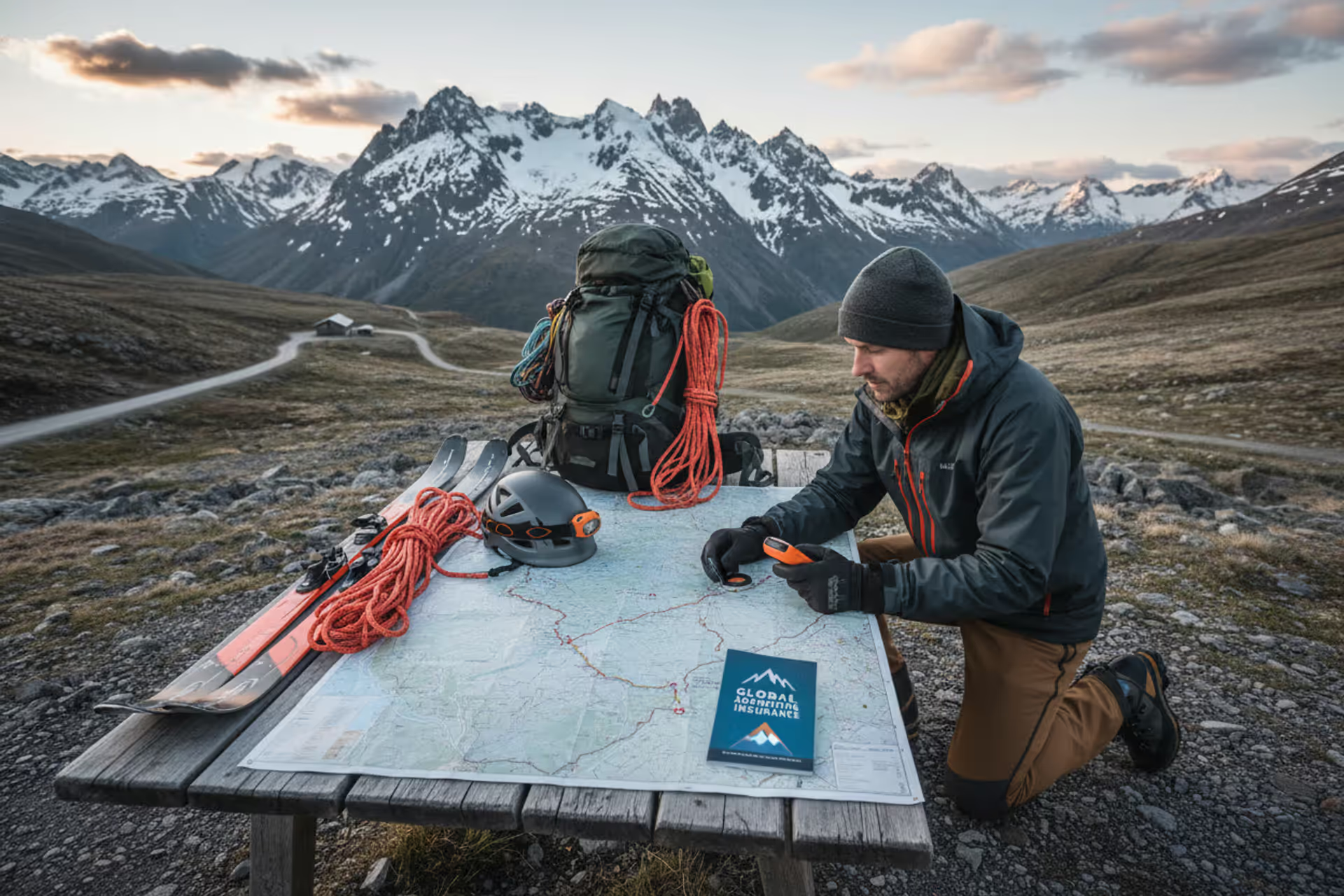
Traveler preparing adventure gear for a mountain expedition
Adventure Travel Insurance Guide

Booking a heli-skiing trip in British Columbia or a multi-pitch climbing expedition in Patagonia requires more than just physical preparation and gear. Standard travel insurance policies routinely exclude coverage for high-risk activities, leaving adventurers financially exposed when accidents happen thousands of miles from home. A broken femur during a backcountry ski descent can result in medical bills exceeding $50,000, plus helicopter evacuation costs that run $15,000 or more—expenses that regular policies won't touch.
Adventure travel insurance fills this gap by providing specialized protection for activities that carry elevated risk. Understanding what these policies cover, how they differ from standard options, and how to select appropriate coverage can prevent devastating financial consequences when things go wrong in remote locations.
What Is Adventure Travel Insurance?
Adventure travel insurance is specialized coverage designed for travelers participating in activities that standard travel insurance policies explicitly exclude. These policies acknowledge the increased risk associated with pursuits like mountaineering, backcountry skiing, whitewater rafting, and rock climbing, then price and structure coverage accordingly.
Standard travel insurance typically covers common risks: trip cancellations due to illness, lost luggage, minor medical emergencies, and travel delays. The fine print in these policies contains exclusion lists that rule out coverage for "hazardous activities"—a category that often includes skiing off marked trails, scuba diving below certain depths, any form of climbing, and dozens of other adventure pursuits.
The distinction matters because insurers assess risk differently for someone walking through European museums versus someone attempting technical ice climbs in the Alps. Adventure travel insurance underwriters factor in injury statistics, evacuation complexity, and the specialized medical care these activities may require. A policy covering heli-skiing in Alaska needs provisions for helicopter rescue operations, avalanche-related injuries, and treatment at facilities equipped for severe trauma—none of which appear in standard travel policies.
Author: Samantha Lowell;
Source: visitmuseumcampussouth.com
Travel insurance for adventure sports also addresses equipment considerations. A standard policy might cover $500 for lost luggage, but adventure policies can extend coverage to $3,000+ in specialized gear like climbing equipment, skis, or diving apparatus. The medical coverage limits are typically higher as well, recognizing that treating a climbing fall or decompression sickness costs substantially more than addressing food poisoning or a sprained ankle.
Activities Covered by Adventure Travel Insurance
Adventure policies organize activities into risk tiers, with coverage availability and pricing varying by category. Insurers evaluate each activity based on injury frequency, severity potential, and evacuation complexity.
Winter and Snow Sports Coverage
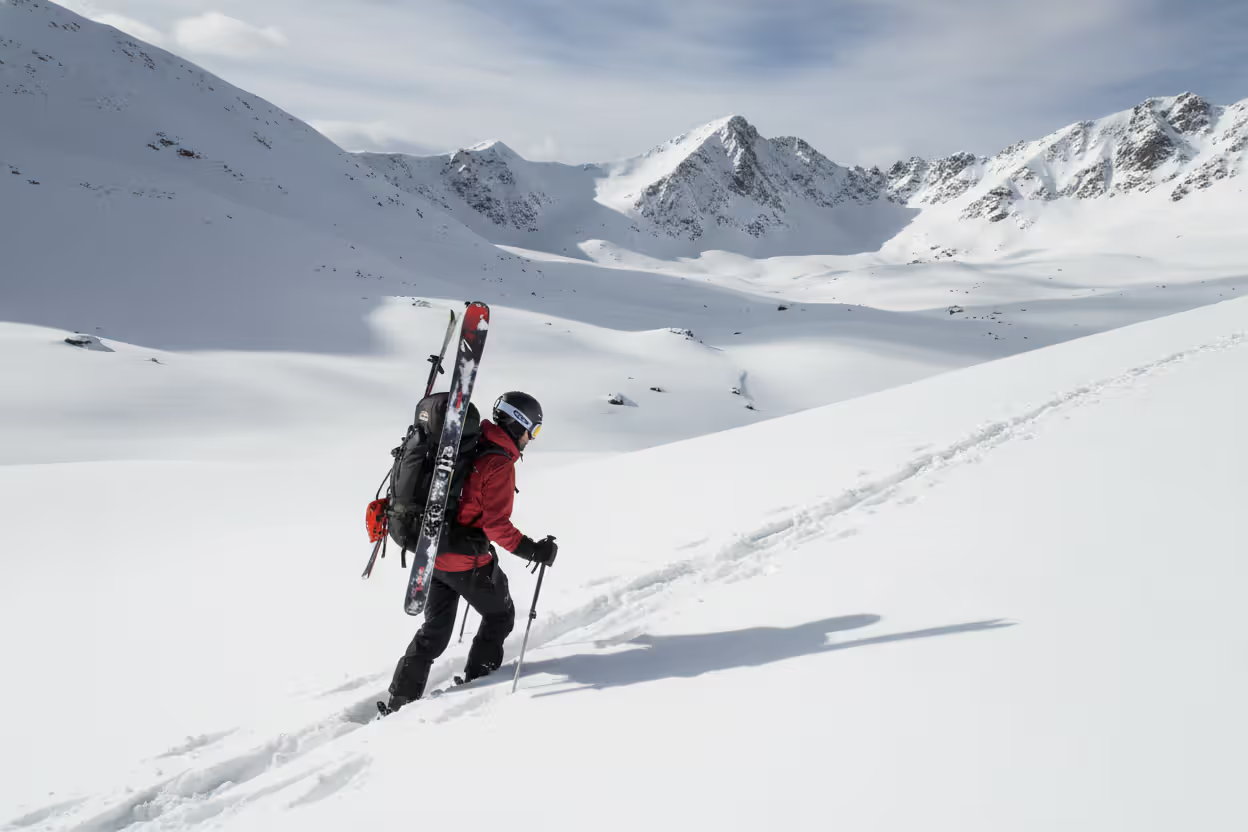
Winter sports travel insurance addresses the specific risks associated with snow-based activities. Standard ski and snowboard coverage on groomed resort runs appears in many mid-tier policies, but true adventure coverage extends to backcountry skiing, heli-skiing, ski mountaineering, and snowboarding in unpatrolled areas.
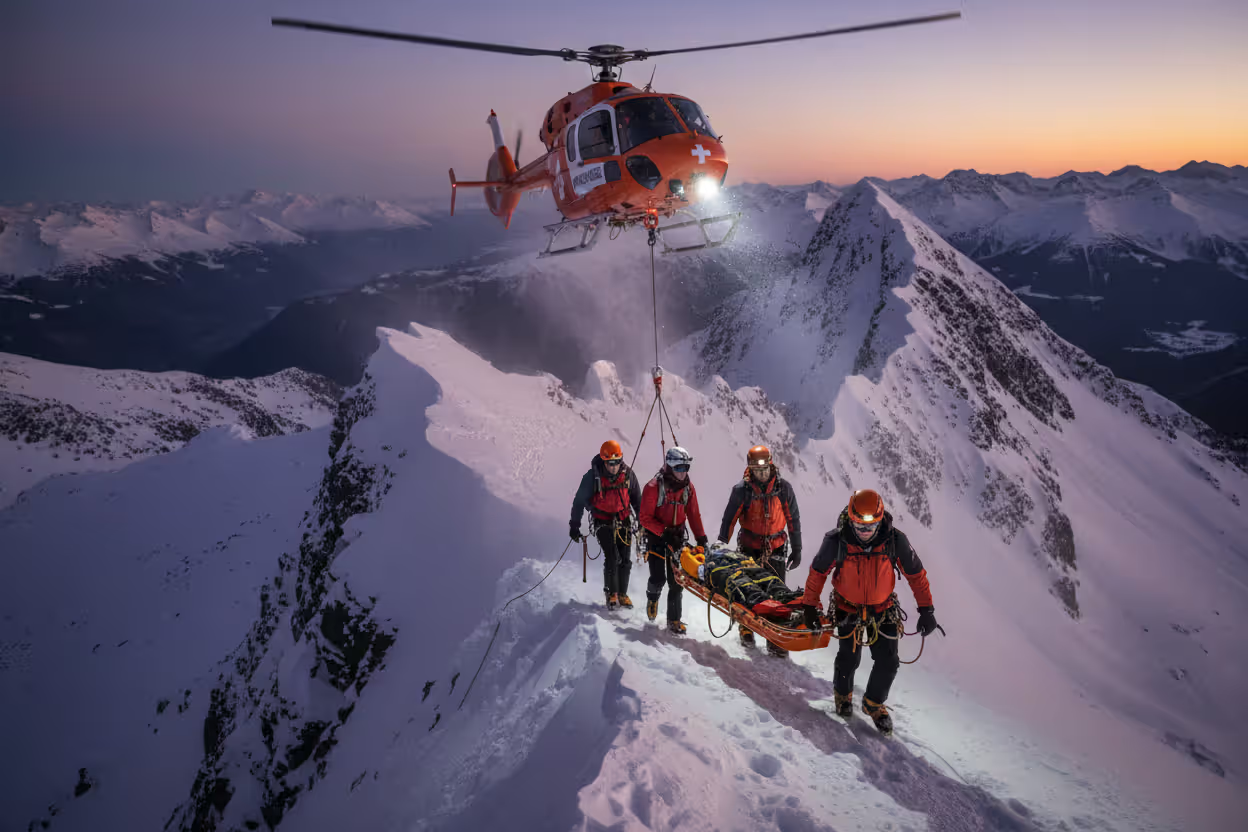
Snow sports travel insurance becomes essential when leaving resort boundaries. Backcountry skiing carries avalanche risk, requires specialized rescue operations, and often occurs in areas where helicopter evacuation is the only extraction option. Policies covering these activities typically include avalanche-related injuries, off-piste rescue costs, and medical treatment for cold-weather trauma like frostbite or hypothermia.
Ski touring, snowshoeing in avalanche terrain, ice climbing, and glacier skiing also fall under specialized winter coverage. Some policies differentiate between guided and unguided activities, with lower premiums for trips using certified guides. Altitude limits may apply—activities above 4,000 or 5,000 meters often require additional riders or upgraded policy tiers.
Author: Samantha Lowell;
Source: visitmuseumcampussouth.com
Mountain and Climbing Activities
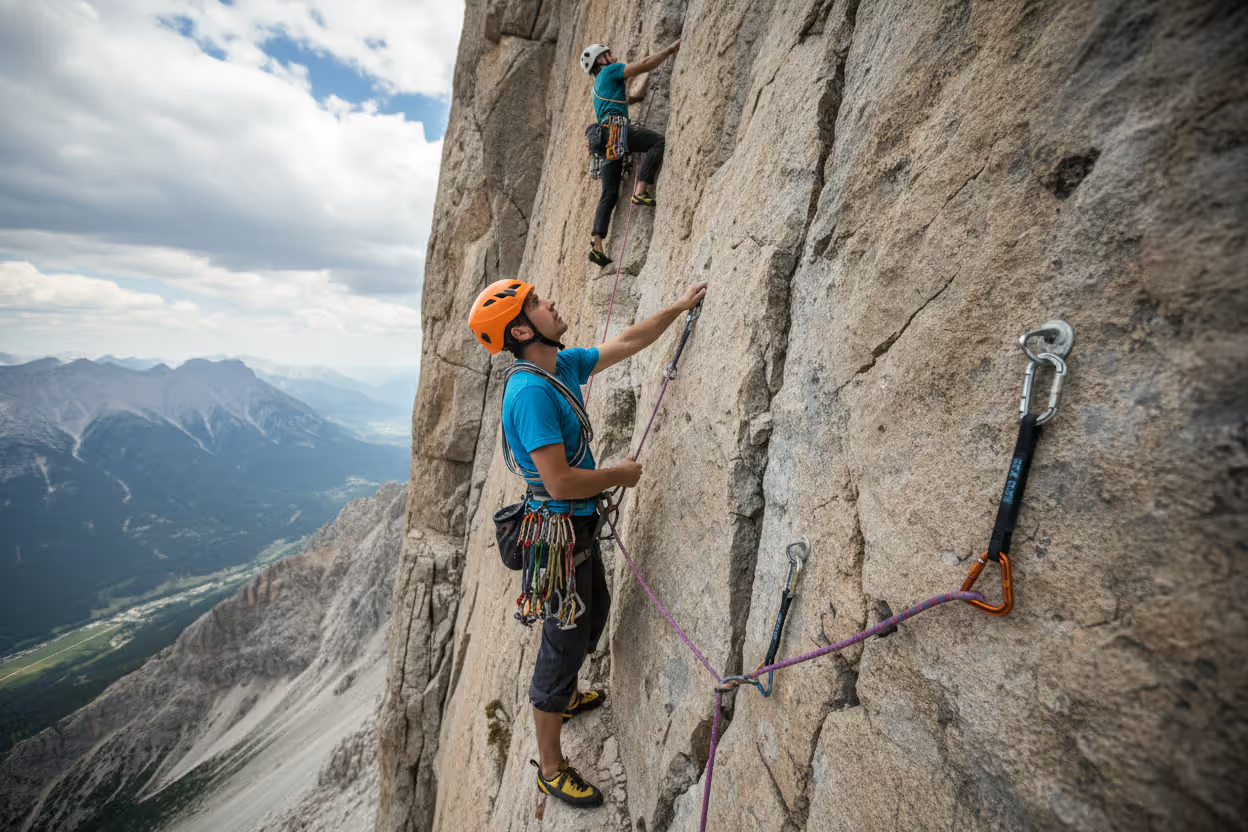
Mountain activities represent some of the highest-risk categories in adventure insurance. Rock climbing coverage typically extends to sport climbing, traditional climbing, and bouldering up to certain heights. Multi-pitch climbing, alpine climbing, and mountaineering expeditions require enhanced coverage that accounts for extended rescue operations and high-altitude medical complications.
Via ferrata routes, despite their fixed protection, still fall outside standard policies in many cases. Trekking coverage depends on altitude and terrain—walking the Inca Trail differs significantly from attempting high passes in the Himalayas. Policies specify maximum altitudes, often with tiers at 4,000m, 5,000m, and 6,000m+ elevations.
Ice climbing, mixed climbing, and expeditions to peaks requiring technical skills need explicit coverage confirmation. Some insurers exclude specific peaks or ranges entirely, particularly those above 6,000 meters or with high fatality rates. Mountain biking on technical terrain, downhill racing, and enduro riding may require sports-specific endorsements.
Author: Samantha Lowell;
Source: visitmuseumcampussouth.com
Water and Marine Sports
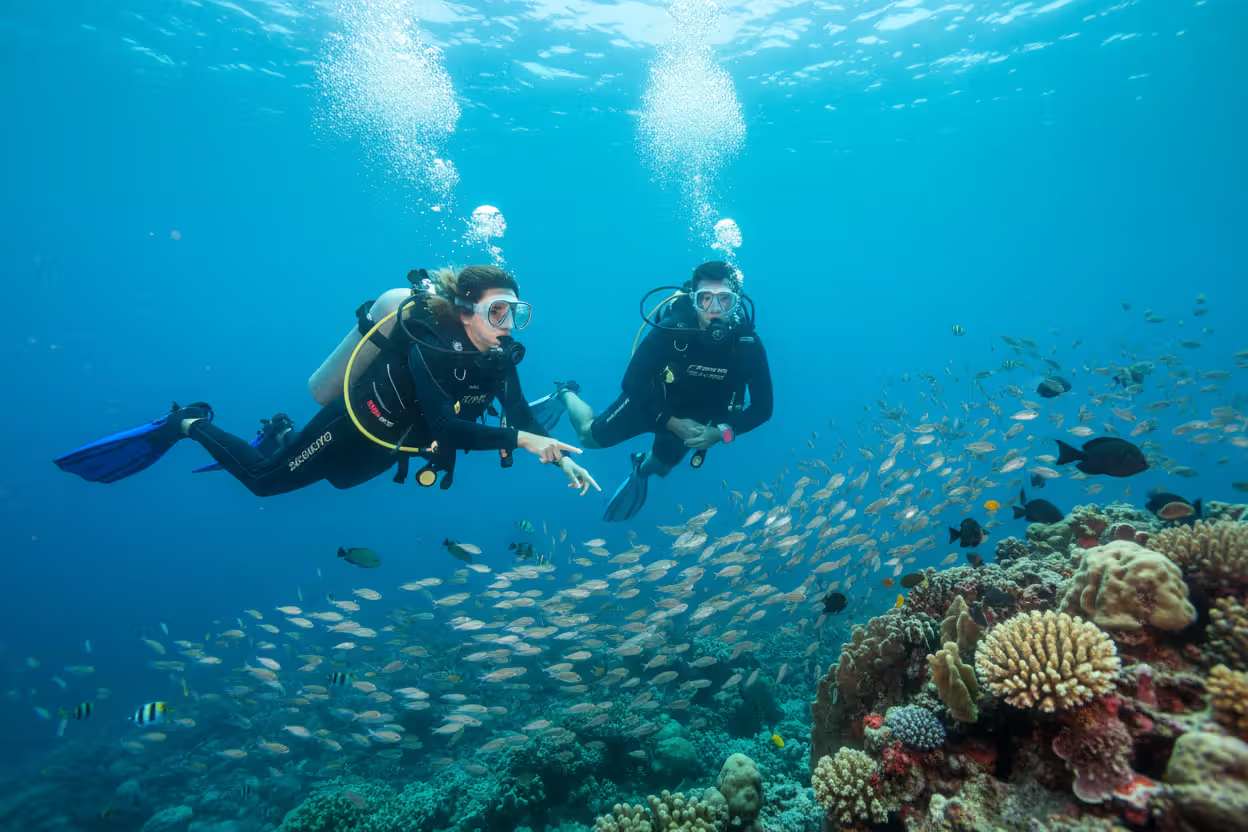
Water-based adventure activities carry their own risk profiles. Recreational scuba diving typically receives coverage up to specific depth limits—commonly 30 or 40 meters—with technical diving, cave diving, and wreck penetration requiring upgraded policies. Decompression sickness treatment, which can cost $20,000+ per incident, makes proper diving coverage critical.
Surfing in standard conditions often appears in base adventure policies, but big wave surfing, surf trips to remote breaks, or surfing in shark-prone areas may need additional coverage. Whitewater rafting and kayaking coverage depends on river classifications—Class III rapids differ from Class V expeditions. Sea kayaking in open water, particularly multi-day expeditions, requires verification of coverage for offshore activities.
Kitesurfing, windsurfing, wakeboarding, and jet skiing typically need explicit inclusion. Sailing coverage varies by boat size and distance from shore, with offshore passages requiring marine-specific policies. Stand-up paddleboarding in calm water rarely needs special coverage, but SUP surfing or river running does.
Author: Samantha Lowell;
Source: visitmuseumcampussouth.com
What Adventure Travel Insurance Policies Typically Cover
Adventure policies bundle several protection components, each addressing specific risks associated with high-intensity activities.
Medical expense coverage forms the foundation, paying for injury or illness treatment during your trip. Adventure policies typically offer higher limits than standard travel insurance—$250,000 to $500,000 is common, with some policies extending to $1 million or more. This matters because treating a compound fracture from a climbing fall, especially in remote locations requiring patient stabilization before transport, easily exceeds $100,000.
Emergency medical evacuation coverage pays for transport from the injury site to appropriate medical facilities. This includes helicopter rescue from mountains, boat evacuation from remote coastlines, or air ambulance flights to hospitals equipped for specialized treatment. Evacuation costs vary dramatically by location—helicopter rescue in the Alps might cost $8,000, while extraction from a Himalayan peak can exceed $50,000. Policies should cover at least $250,000 in evacuation expenses, with $500,000+ recommended for expeditions to extremely remote areas.
Equipment coverage reimburses damaged, stolen, or lost gear. Adventure policies recognize that replacing technical climbing equipment, specialized skis, or diving gear costs more than typical luggage contents. Coverage limits range from $1,500 to $5,000 per trip, with per-item limits that accommodate expensive pieces like avalanche transceivers, GPS devices, or camera equipment.
Trip cancellation and interruption coverage related to adventure activities protects your financial investment when you can't complete your trip. If you break your ankle two days before a mountaineering expedition, this coverage reimburses non-refundable deposits and prepaid expenses. Some policies cover cancellation due to insufficient snow conditions for ski trips or dangerous weather that closes climbing routes.
Search and rescue coverage specifically addresses the costs of locating and extracting injured or lost adventurers. This differs from medical evacuation—search and rescue covers the operation to find and reach you, while evacuation covers transport to medical facilities. Mountain rescue operations can cost $10,000 to $30,000, especially when multiple teams, helicopters, and extended search periods are involved.
Common Exclusions and Coverage Limitations
Understanding what adventure travel insurance doesn't cover prevents unpleasant surprises when filing claims.
Pre-existing medical conditions typically face exclusion or limitation. If you have a heart condition and suffer cardiac issues at high altitude, the insurer may deny the claim. Some policies offer pre-existing condition waivers if you purchase coverage within 14-21 days of your initial trip deposit and meet health requirements, but these waivers rarely extend to conditions directly related to the adventure activity's risks.
Activities without proper licensing, certification, or guides often void coverage. If your policy covers scuba diving but you're not certified, or if you're diving beyond your certification level, the insurer can deny claims. Similarly, climbing without appropriate permits, skiing in closed areas, or participating in activities explicitly prohibited by local authorities may eliminate coverage.
Altitude restrictions appear in most policies. Coverage might extend to 4,000 meters automatically, require notification for 4,000-5,000 meters, and demand premium increases or special riders above 5,000 meters. Expeditions to peaks above 6,000 meters often need specialized mountaineering insurance rather than standard adventure policies.
Racing, competitions, and professional activities face exclusion in most adventure policies. Entering a ski race, competing in climbing competitions, or participating in organized endurance events typically requires separate sports insurance. The distinction between recreational and competitive participation matters—a casual mountain bike ride differs from entering a downhill race.
Specific high-risk activities may require additional coverage even within adventure policies. BASE jumping, wingsuit flying, big wave surfing, cave diving, and solo climbing often appear on exclusion lists unless you purchase specific endorsements. Some activities remain uninsurable through standard channels, requiring specialty insurers.
Alcohol and drug-related incidents typically void coverage. If you're injured while intoxicated, insurers can deny claims entirely. This includes prescription medications that impair judgment or physical capability—skiing while taking sedatives or pain medications that affect coordination may result in claim denials.
How to Choose the Right Adventure Travel Insurance
Selecting appropriate coverage requires matching policy features to your specific activities and trip characteristics.
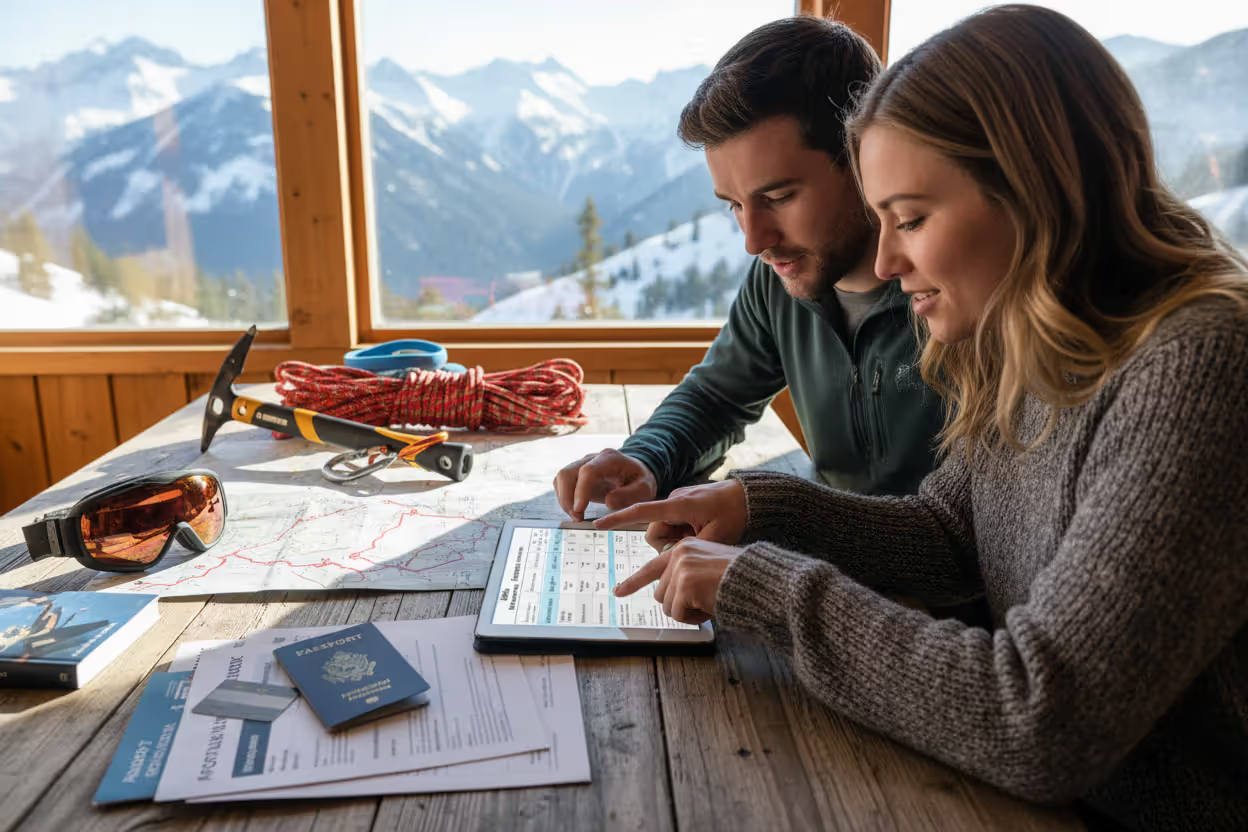
Start by listing every activity you'll do, then verify each appears in the policy's covered activities list. Don't assume "adventure coverage" includes your specific sport—read the policy document, not just the marketing materials. If you're planning both skiing and scuba diving, confirm the policy covers both without requiring separate add-ons.
Compare medical coverage limits against your destination's healthcare costs and evacuation complexity. A trip to France needs lower limits than an expedition to Nepal—European healthcare is accessible and relatively affordable, while Himalayan evacuation and treatment costs escalate quickly. For remote destinations, prioritize policies offering $500,000+ in medical coverage and equivalent evacuation limits.
Verify geographical coverage matches your itinerary. Some policies exclude certain countries or regions entirely. Others have restrictions on travel to areas with government warnings or conflict zones. If your adventure crosses multiple countries, confirm the policy covers all destinations, including any transit points.
Check the policy's definition of "adventure activities" against your risk tolerance. Some insurers define backcountry skiing as any skiing outside resort boundaries, while others only consider it backcountry if you're beyond a certain distance from lifts. These definitional differences affect coverage and claims.
Evaluate the insurer's claims process and reputation for adventure sports claims. Some companies specialize in adventure coverage and understand the nuances of these activities, while others offer adventure policies as an afterthought. Read reviews from travelers who've filed claims for activities similar to yours—an insurer that quickly processes ski injury claims might dispute mountaineering claims aggressively.
Examine policy exclusions for deal-breakers. If altitude limits stop at 4,000 meters but you're trekking to 5,000 meters, the policy won't work. If the policy excludes unguided activities but you're climbing independently, you need different coverage.
Consider annual policies if you take multiple adventure trips yearly. Single-trip policies make sense for one big expedition, but frequent adventurers often save money with annual coverage that includes multiple trips up to a certain duration (commonly 30-45 days per trip).
Author: Samantha Lowell;
Source: visitmuseumcampussouth.com
Cost Factors for Adventure Travel Insurance
Adventure travel insurance premiums reflect the elevated risks these policies cover, with several variables influencing final costs.
Destination significantly impacts pricing. Coverage for a ski trip to Colorado costs less than equivalent coverage for heli-skiing in Alaska, which costs less than ski mountaineering in the Himalayas. Insurers assess destination-specific factors: local healthcare quality and costs, evacuation complexity, political stability, and historical claim frequency for that region.
Trip duration directly affects premiums—longer trips mean more exposure to risk. A one-week ski vacation costs proportionally less to insure than a month-long climbing expedition, but per-day costs often decrease for longer trips due to the way insurers calculate risk accumulation.
Activity risk level represents the primary cost driver. Hiking on established trails costs less to insure than rock climbing, which costs less than alpine mountaineering. Policies often tier activities into risk categories, with premiums increasing at each level. A policy covering skiing on groomed runs might cost $75 for a week, while adding backcountry skiing coverage increases the premium to $150, and including ski mountaineering pushes it to $250.
Age affects pricing substantially. Insurers charge higher premiums for travelers over 50, with significant increases at 60, 65, and 70. A 35-year-old might pay $120 for coverage that costs a 60-year-old $200, all other factors equal. Some insurers cap coverage at age 70 or exclude certain activities for older travelers.
Coverage limits and deductibles create trade-offs between premium costs and financial protection. Choosing $100,000 in medical coverage with a $500 deductible costs less than $500,000 in coverage with a $0 deductible. For adventure travel, skimping on coverage limits to save premium dollars creates false economy—the cost difference between adequate and inadequate coverage is minimal compared to potential out-of-pocket expenses from a serious incident.
Pre-existing condition waivers, cancel-for-any-reason riders, and equipment coverage upgrades add to base premiums. Each enhancement increases costs by 10-40% depending on the feature and your risk profile.
The biggest mistake I see is travelers assuming their credit card or standard travel insurance covers adventure activities. I've worked with clients facing six-figure medical bills from skiing accidents because they didn't verify coverage before their trip. Adventure insurance isn't expensive relative to trip costs—a $200 premium can protect a $5,000 trip and cover potential $100,000+ in medical expenses. The question isn't whether you can afford adventure insurance; it's whether you can afford to go without it
— Jennifer Martinez
Comparison of Average Adventure Travel Insurance Costs
The following table shows estimated premium ranges for a 35-year-old U.S. traveler purchasing adventure travel insurance in 2026, based on activity type and trip duration. Actual costs vary by insurer, specific coverage limits, destination, and individual risk factors.
| Activity Type | 1 Week | 2 Weeks | 1 Month |
| Skiing/Snowboarding (resort) | $45–$75 | $75–$125 | $140–$220 |
| Skiing/Snowboarding (backcountry) | $95–$165 | $160–$280 | $300–$475 |
| Scuba Diving (recreational, <30m) | $55–$90 | $90–$150 | $170–$265 |
| Mountaineering (<5,000m) | $125–$210 | $210–$350 | $400–$625 |
| Mountaineering (5,000m–6,000m) | $185–$310 | $310–$520 | $590–$925 |
| General Adventure (multi-activity) | $80–$135 | $135–$225 | $255–$400 |
These figures assume medical coverage limits of $250,000–$500,000, emergency evacuation coverage of $250,000+, and standard deductibles of $250–$500. Premium costs increase significantly for travelers over 50, trips to high-risk destinations, or policies with enhanced coverage limits.
Frequently Asked Questions About Adventure Travel Insurance
Adventure travel insurance transforms from optional to essential when your itinerary includes activities that standard policies won't cover. The financial exposure from a single backcountry skiing accident, climbing fall, or diving incident can exceed $100,000 when factoring medical treatment, emergency evacuation, and rescue operations. Specialized coverage addressing these risks costs a fraction of potential expenses—typically 2-5% of total trip costs.
Selecting appropriate coverage requires matching policy features to your specific activities, destinations, and risk tolerance. Verify every planned activity appears in the covered activities list, confirm coverage limits adequately address worst-case scenarios for your destination, and understand exclusions that might void coverage. The policy details matter more than marketing claims—a few hours spent reading policy documents and comparing options provides clarity that prevents claim denials when you need coverage most.
For travelers venturing beyond standard tourist activities into skiing, climbing, diving, or other adventure pursuits, the question isn't whether adventure travel insurance is worth the cost. The real question is whether you're prepared to self-insure against six-figure medical and rescue expenses in remote locations. For most adventurers, the answer makes specialized coverage not just worthwhile, but necessary.
Related Stories

Read more

Read more




The content on this website is provided for general informational and educational purposes only. It is intended to offer guidance on travel insurance topics, including coverage options, premiums, deductibles, trip cancellation protection, travel medical insurance, baggage coverage, travel delays, emergency medical evacuation, and related travel protection matters. The information presented should not be considered legal, medical, financial, or professional insurance advice.
All articles and explanations published on this website are for informational purposes only. Travel insurance policies can vary between providers, and details such as coverage limits, exclusions, reimbursement conditions, waiting periods, eligibility requirements, and claim outcomes may differ depending on the insurer, policy type, destination, traveler age, health status, and trip details.
While we strive to keep the information accurate and up to date, this website makes no guarantees regarding the completeness or reliability of the content. Use of this website does not create a professional relationship. Visitors should review the official policy documents provided by insurance companies and consult with licensed insurance professionals or qualified advisors before making decisions about travel insurance coverage.